Jun 02 2026.
views 232By Hafsa Rizvi
When was the last time you sat through an entire dinner without glancing at your phone? Or watched a full sunset without the urge to photograph it? Or just... existed, quietly, without a notification pulling you somewhere else?
If you had to think hard about that, you are not alone. And neither, it turns out, are the millions of young people around the world who have found a surprisingly old-school answer to a very modern problem.
They are buying dumb phones.
Wait. Are We Actually Going Backwards?
Yes. And no.
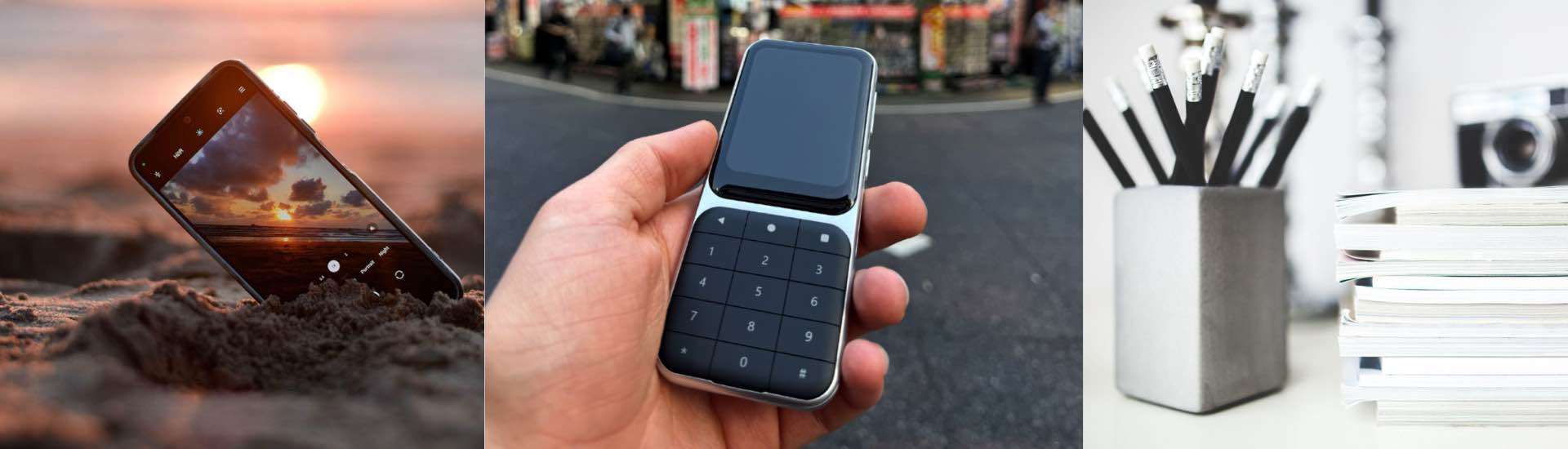
A dumb phone, if you haven't come across the term, is basically any phone that only does the basics: calls, texts, maybe a camera. No Instagram. No TikTok. No endless scroll. Think Nokia brick. Think flip phone. Think the kind of phone your older sibling had in 2004 and thought was the coolest thing alive.
Here's the twist that nobody saw coming. The people buying these phones in 2026 are not grandparents looking for simplicity. They are Gen Z, the very generation that grew up online, that basically learned to walk and scroll at the same time. The dumb phone has evolved from an outdated relic into a modern status symbol of self-control and intentional living. Think about that for a second. A phone that does less is now considered cooler than one that does everything.
Something has clearly shifted.
The Quiet Breaking Point Nobody Talked About
To understand why this is happening, you have to understand what daily life actually feels like for a young person today.
Imagine waking up and, before your eyes have even properly adjusted to the light, your brain is already processing 47 notifications. A friend liked your photo. Someone replied to your story. There's breaking news. There's a reminder. There's a meme someone sent at 2 a.m. And within minutes, without even meaning to, you've lost 40 minutes to a scroll that started with one innocent tap.
The constant stream of notifications, likes, and instant gratification from smartphones hijacks the brain's dopamine pathways. Gen Z is increasingly aware of this, actively seeking a reset to allow the brain to find joy in slower, more meaningful activities, rather than endless scrolling.
This is not dramatic language. This is neuroscience. And young people, who are perhaps more digitally literate than any generation before them, have started connecting the dots between their phones and their anxiety, their poor sleep, their shrinking attention spans, and their constant low-level feeling of being drained.
Meditation, journaling, silent retreats, and books have become a widespread cultural phenomenon in response to what many are calling "brain rot", not a clinical illness, but a very real condition of mental fatigue caused by overexposure to social media and online content.
Being Offline Is the New Luxury
Here is something that would have sounded absurd even five years ago: being unreachable has become desirable.
In a world where everyone is "always on," the ability to be "offline" is the new luxury. Wealthy professionals are bragging not about the latest iPhone but about the fact that they cannot be reached after 6 pm. Young creatives are showing up to social events without their smartphones, carrying a £20 flip phone instead, and people are impressed.
Movements like the "Luddite Club" in New York City involve teens meeting up to read paper books and sit in silence, leaving their smartphones at home. In the United States, programmes like "Month Offline" are emerging, a thirty-day challenge encouraging participants to swap their smartphones for a flip phone, meet weekly, and rediscover creative activities away from screens.
It sounds almost revolutionary. But really, it is just people trying to remember what it felt like to be bored. To daydream. To have a thought that wasn't interrupted.
The Nostalgia Factor (And Why It Makes Sense)
There is also something deeply emotional driving this movement. Younger Gen Zers feel a nostalgia for the early 2000s, a period they perceive as having more authentic human connections before the internet became all-consuming. There is even a word for it: "anemoia", the feeling of nostalgia for a time one never actually lived through.
That is a remarkable thing. Teenagers today are romanticising an era they barely remember, or were not even born into, because it represents something they desperately want: presence. Connection without performance. A life that did not need to be documented to feel real.
The hashtag #BringBackFlipPhones has amassed nearly 60 million views on TikTok. Ironically, the movement to escape social media is being shared across social media. But perhaps that is exactly the point: people are telling the algorithm, loudly, that they are tired of it.
But Is This Realistic for Everyone?
Let's be fair. A dumb phone is not for everyone, and nobody is pretending otherwise.
Practical realities remain; banking apps, navigation, work emails, and basic tasks that are now only accessible through smartphones make a full switch genuinely difficult for most people. A medical student who needs to access research databases cannot simply go back to a Nokia. A young professional who works across time zones cannot go dark at 6 pm.
But the movement is not really demanding perfection. This is not an anti-tech revolution; it is a pro-balance one. Young people are choosing fewer notifications, less noise, and more freedom. Many are carrying two phones: a smartphone for work hours, and a dumb phone for their personal life. Others are using apps that deliberately strip their home screen down to the bare minimum, turning their iPhone into something that behaves like a dumb phone even if it isn't one.
The goal is not to throw the technology away. It is to stop letting it run the show.
What This Means for All of Us
Whether you are 14 or 44, there is something worth sitting with here.
We were sold the idea that more connection equals more happiness. More apps, more features, more access, more convenience. And in many ways, that is true; technology has genuinely improved lives. But somewhere along the way, the phone stopped being a tool and started being a demand. Something that required our constant attention, our emotional energy, our time.
Young people noticing this is not a crisis. It is actually one of the most thoughtful things a generation raised entirely inside the digital world could do.
They did not reject technology out of ignorance. They understood it completely, and then made a choice.
Maybe that is the smartest thing any of us can do.










0 Comments