Jul 07 2026.
views 116By Lughadarini Yogaraja
Every day, thousands of Sri Lankan women make what feels like a healthy choice. The problem is, many of those choices aren't nearly as healthy as the packaging suggests.
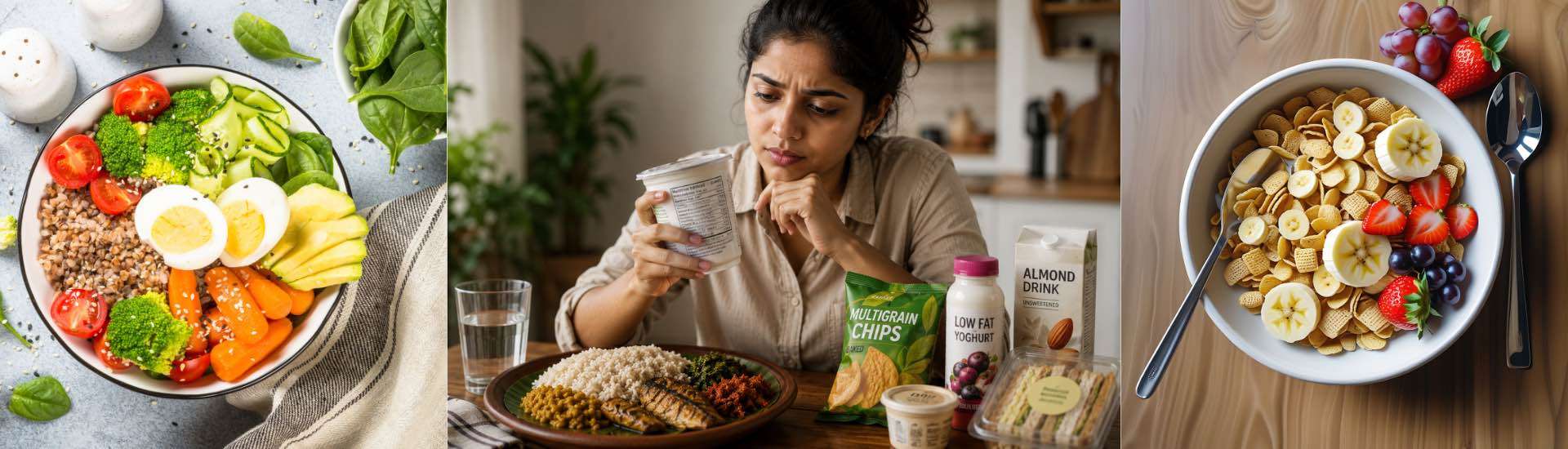
In Sri Lanka today, food has changed faster than daily life routines. Between Colombo office jobs, university schedules, school runs, and rising living costs, convenience food has become a quiet dependency. Supermarkets, cafés, and delivery apps now shape what many women eat more than kitchens do. At first glance, it looks harmless. Packaged snacks, flavoured yoghurts, bottled drinks, energy bars, low-fat biscuits, all neatly labelled, all designed to feel modern and safe. But the shift happening now is about what is inside those labels, not just what is written on them.
Many processed foods in the Sri Lankan market are designed for taste and shelf life, not long-term nourishment. That means higher levels of sugar, salt, refined oils, preservatives, and stabilisers that keep food looking fresh long after it is made. Even products marketed as healthy can contain surprising amounts of added sugar or artificial flavouring.
Take everyday examples. Flavoured yoghurt that claims to support digestion may contain more sugar than a dessert. Packaged fruit juices often lose fibre but gain concentrated sweetness. Some “plant-based” or “almond” drinks may contain very low nut content, replaced with emulsifiers and flavour enhancers. These are not necessarily harmful in small amounts—but they are very different from the simple food image they project.
Sri Lanka’s traditional diet makes this contrast even clearer. A simple meal of rice and dhal, a coconut sambol, a mallung (leafy greens), or a fish curry cooked with spices from home gardens is built on visible ingredients. There is transparency; you know what is on your plate because you can literally see it.
But convenience food removes that visibility. And with it, it removes awareness. One of the biggest health concerns linked to ultra-processed foods is how they affect energy regulation. Foods high in refined carbohydrates and sugar cause rapid spikes in blood glucose levels. This gives a short burst of energy, followed by a crash that leads to fatigue, irritability, and more cravings.
For Sri Lankan women balancing multiple roles, professional work, family care, studies, and household responsibilities, this energy cycle becomes very real. A snack eaten at 11 a.m. can lead to tiredness by 1 p.m., followed by another craving, creating a loop that feels like constant low energy.
Digestive health is another growing concern. Many processed foods contain emulsifiers, artificial stabilisers, and preservatives that extend shelf life but may affect gut balance. In everyday experience, this can show up as bloating, discomfort, irregular digestion, or a feeling of heaviness after meals. While research is still evolving globally, more people are linking gut health with immunity, mood, and overall well-being.
In Sri Lanka, this is becoming especially relevant because dietary habits are shifting quickly. Traditional home-cooked meals are being replaced - at least partially - by fast food, instant noodles, bakery items, and ready-made snacks. These foods are not inherently “bad,” but frequent consumption changes how the body responds over time.
There is also a strong marketing layer shaping food choices. Low-fat products often compensate with added sugar. Diet or fitness snacks may be highly processed to improve taste. Even breakfast cereals marketed for health can contain high levels of refined sugar. For busy women, these labels create the illusion of making a healthy choice, even when the nutritional reality is more complex.
Over time, these patterns are linked to rising lifestyle conditions in Sri Lanka, including type 2 diabetes, high blood pressure, cholesterol imbalance, and weight fluctuations. Importantly, these conditions are not caused by one meal, but by repeated long-term exposure to processed diets combined with stress, inactivity, and irregular eating patterns.
Mental well-being is also part of this picture. Many women report mood swings, lack of focus, or mental fatigue after consuming highly processed foods regularly. This is partly because stable energy and brain function depend on consistent nutrient intake—something whole foods provide more reliably than packaged alternatives.
This is where a quiet shift is happening: a return to home cooking, not as tradition alone, but as awareness. Cooking at home in Sri Lanka does not mean complexity. It often means simple rice, dhal, vegetables, eggs, fish, coconut-based dishes, and seasonal fruits. These foods are naturally rich in fibre, protein, and essential nutrients, without hidden additives.
More importantly, home cooking restores control. It allows women to decide salt levels, oil use, sugar content, and ingredient quality. It removes uncertainty. And in a world of hidden food composition, that control feels increasingly valuable.
There is also a cultural layer. Sri Lankan food traditions already offer balance, carbohydrates, protein, fats, and fibre on one plate. The issue is not a lack of healthy food options, but reduced time and attention given to preparing them. What is changing now is not just diet, but awareness. Women are beginning to connect how they feel, energy, digestion, mood with what they eat. That connection is slowly shifting food choices from automatic to intentional.
This is not about rejecting modern food systems or eliminating convenience completely. It is about balance and about making informed decisions in a food environment that is increasingly complex. Because in the end, the real question is not whether food is fast or fancy. It is whether it is real enough for your body to recognise it and strong enough to support your life beyond the next two hours.
Quick Tips











0 Comments