Sep 29 2026.
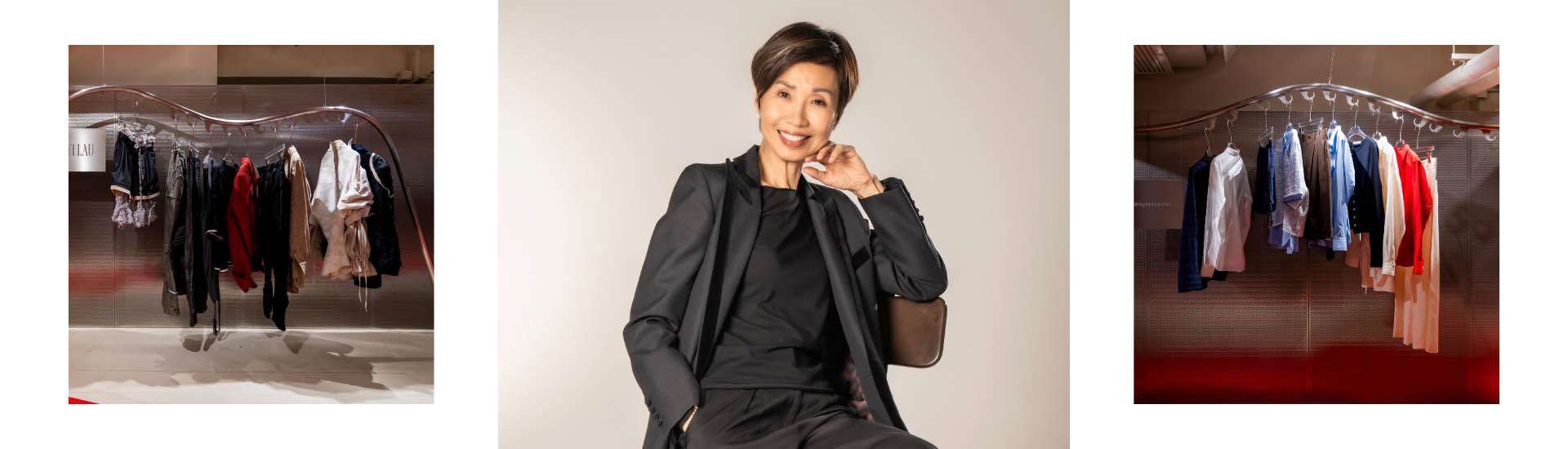
views 18At Hong Kong Fashion Fest, a conversation with Hong Kong Design Centre's Rainy Chan went beyond fashion, touching on the less glamorous infrastructure behind creative careers: business, retail, international exposure, technology and the freedom to remain original.
By Rihaab Mowlana
Fashion likes to celebrate the moment a designer steps into the light. The runway, the clothes, the applause, the photographs. Less attention is usually paid to what happens afterwards, when the lights go down, and the designer has to turn a collection into an actual business. For Rainy Chan, that part of the story matters enormously.
As Executive Director of the Hong Kong Design Centre, Chan works closely with Hong Kong's creative ecosystem and the programmes supporting its next generation of designers. During Hong Kong Fashion Fest, our conversation moved quickly beyond clothes and collections into something more fundamental: what does a young designer actually need to build a career? Her answer was not simply funding, or another platform to show a collection. It was an ecosystem.
THE CITY IN THE DESIGNER
Chan describes Hong Kong's creative character as a product of two impulses that coexist rather naturally in the city.
There is an outward-looking side, shaped by Hong Kong's instinct to travel, explore and engage with the wider world. Then there is the eastern side, rooted in tradition, family and relationships. “I think this combination affected us in everything in the city,” she says, describing Hong Kong as a “multi-layer city” where the more closely you look, the more you discover. She sees the same quality in its designers.

Some may look young enough to have graduated yesterday, she says, before you discover that they have already spent 15 years working in the industry. What stays constant is their curiosity and willingness to keep learning.
That combination of experience and openness is part of what Chan believes gives Hong Kong designers their particular character. It also explains why she is less interested in simply finding people who can make beautiful clothes. Creativity is the starting point. It is not the entire business.
LET THEM BE CREATIVE
Hong Kong already has a strong educational foundation for young designers, according to Chan, with several established design institutions and support available to students beyond the formal curriculum. The harder question begins when they graduate.
Chan is refreshingly candid about the things creative people are not always naturally drawn towards. “Creative people don't like numbers; they don't like to plan,” she says. That isn't necessarily a criticism. In fact, she sees it as part of their appeal. Their authenticity and instinct are precisely what make them creative.
The role of an organisation supporting them, therefore, is not to interfere with that. “We don't help them with their creativity. We let them be.”
Instead, the support needs to exist around the creative process: helping designers understand business plans, planning for growth, articulating their vision and figuring out how to turn an idea into something commercially sustainable.
Funding matters, she says, including government support. But money on its own cannot build a fashion business. A designer needs to understand where the brand is today, where it wants to go, what its story is and how that growth might be structured over the next five years. And if the designer isn't good at that part? “Find someone who can,” Chan says.
It is a deceptively simple piece of advice. Creative industries tend to romanticise the solitary genius, but businesses rarely work that way. The designer does not necessarily have to become an accountant, strategist and sales director overnight. They do, however, need people around them who understand those worlds.
THE SHOP WINDOW PROBLEM
One of the more practical challenges facing Hong Kong's young designers is also one of the most obvious: space.
Hong Kong is an expensive city in which to establish a physical retail presence. Chan says she regularly attends design school graduation ceremonies and finds herself wondering where all that emerging talent will find its opportunities. This is where the ecosystem becomes tangible.
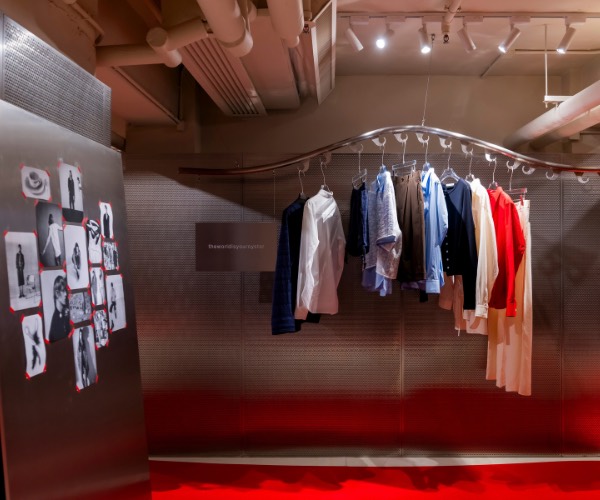
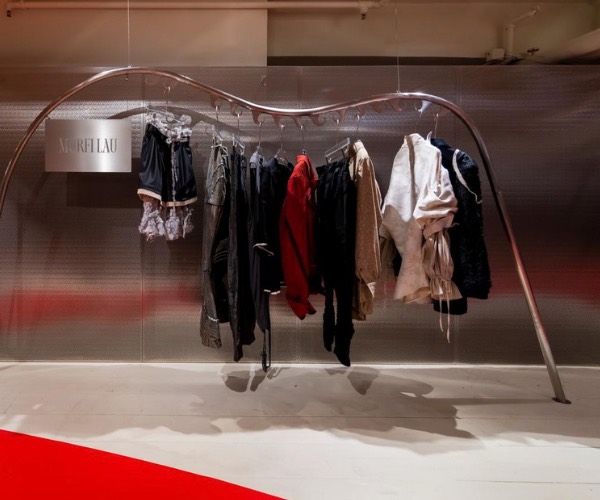
Chan points to Hong Kong Design Centre's Fashion Pop-up, a retail initiative created specifically to give Hong Kong brands a physical place to sell. Around 30 brands can be presented in one location, with the selection rotated every three or four months to give more designers an opportunity to participate. The initiative does more than provide a shop.
There is sales support and visual merchandising assistance, allowing designers to concentrate on their products while gaining experience of what happens when those products meet actual customers.
Chan says the response has demonstrated something important: when the product is right, and people can see it, there is an audience willing to engage with it. For young designers, that physical encounter can be difficult to achieve independently.
A beautiful collection can exist on Instagram. A brand can have a website. A designer can appear on a runway. But there is still something powerful about walking into a space, seeing the clothes hanging in front of you and being able to buy them. Fashion eventually has to become commerce.
GO OUT. COME BACK DIFFERENT.
International exposure is another part of Chan's approach. She talks about programmes that give young designers opportunities to spend time overseas, whether through work or study, and the difference she sees when they return.
Some come back with their original ideas reinforced. Others return having discovered new ways of thinking, new friends, new collaborators and sometimes new business relationships. That exchange is crucial because Hong Kong's designers are not operating in isolation.
The region's fashion market has become increasingly competitive, and the old assumption that Asian designers can simply arrive on the international scene and find an eager audience no longer holds as easily. Chan believes young designers need the confidence to go outward and the ability to bring what they learn back home.
Fashion Asia, she says, provides one part of that bridge by connecting designers with international buyers, media and people who are genuinely interested in fashion. The objective is not simply to put a designer in front of a buyer, but to put them into a room full of possibilities.
THE AI QUESTION
There is another room in that conversation now, and it is increasingly difficult for creative industries to avoid it. Artificial intelligence. Chan is enthusiastic about technology, but not about handing over authorship to it.
She sees AI as a tool that can help designers execute ideas, develop presentations and work more efficiently. What it should not do is replace the thing that made the designer worth noticing in the first place. “Never replace their authentic creativity,” she says.
The point is not to reject the technology. That, she believes, would leave young creatives behind. The challenge is learning how to use it without allowing it to flatten their individual voice.
For a generation growing up alongside increasingly sophisticated creative tools, that distinction may become one of the most important skills of all.
WHAT MAKES A DESIGNER STAND OUT?
Chan's observations of younger designers have also changed the way she thinks about talent. A strong aesthetic still matters. Fashion needs to catch the eye. But increasingly, she looks at the story behind the product, the designer's attitude, authenticity, sustainability, technique and commercial potential.
And then there is communication. She describes younger designers as surprisingly confident when they talk about their work. They may be shy personally, but when asked to explain what they believe in, many can stand in front of a crowd and speak with conviction. That matters because consumers are no longer buying only a garment. “They buy the story,” Chan says.
The story cannot be manufactured as an afterthought, either. Chan describes designers whose work is rooted in personal research, cultural references and techniques they have spent time understanding properly.
One young designer she encountered had gone out to study traditional craft in depth before bringing that knowledge back into contemporary design. That kind of curiosity matters to her.
Fashion may be commercial, but commercial viability and creative depth do not have to be opposing ideas. As Chan puts it, “If you don't make money, you can't survive.”
SUSTAINABILITY, BEYOND THE GARMENT
Chan is equally careful not to reduce sustainability to a single conversation about materials.
At Hong Kong Design Centre, she describes sustainability as one of the organisation's guiding principles, but its approach extends into education, exhibitions and culture.
The Centre has used exhibitions to introduce audiences to ideas around circularity, bringing designers and artists into the conversation rather than simply presenting sustainability as an abstract concept. There is also a cultural dimension that is particularly interesting.
Chan talks about traditions that risk fading from everyday life and the importance of finding ways to make them relevant again. A culture does not necessarily survive by being placed behind glass. Sometimes it survives because somebody finds a way to make it useful, desirable or interesting to a new generation. That, perhaps, is where her ideas about fashion and design come full circle.
The future of a creative industry isn't built only by producing new things. It is also built by deciding what is worth carrying forward.
BUILDING THE CONDITIONS FOR CREATIVITY
There is a tendency to look at a successful designer and focus on the talent that made the work possible. Chan's perspective shifts the camera slightly wider.
Talent still matters. So do beautiful clothes, original ideas and a strong point of view. But around those things sits a less glamorous infrastructure: schools, mentors, funding, business planning, retail spaces, international connections, customers, media and the freedom to experiment.
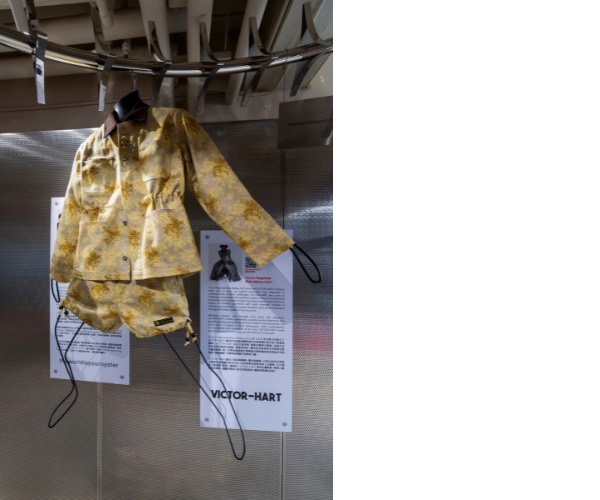
That is why Chan talks about the ecosystem around young creatives so often. She is not interested in telling designers what their work should look like. The creative part belongs to them. The support comes in helping them understand the parts of the business they may not naturally understand, and giving them opportunities to test their ideas in the real world.
Perhaps that is the part of fashion we see least. We see the finished collection. We see the designer's name. We rarely see all the things that have to work around that talent for a career to take shape.
And that is where Chan's argument becomes bigger than fashion. Creativity needs room to grow, but it also needs somewhere to go.










0 Comments