Sep 15 2026.
views 35Five very different shows at Hong Kong Fashion Fest offered a glimpse of an Asian fashion landscape that is becoming increasingly difficult to define by a single aesthetic.
By Rihaab Mowlana
There is a persistent temptation to talk about Asian fashion as though it were a category waiting to be defined: a recognisable aesthetic, a shared visual vocabulary, perhaps even a particular idea of what makes a garment feel distinctly Asian.
After moving through five very different fashion shows at Hong Kong Fashion Fest, that definition seemed increasingly difficult to sustain.
At the Hong Kong Palace Museum, couture occupied a setting where fashion could be considered alongside art and cultural history. At the Hong Kong Convention and Exhibition Centre, Hong Kong designer and visual artist Kit Wan took the runway into a world of machinery, mythology and imagined futures. At Rosewood Hong Kong, ten emerging designers from across the region presented collections that shared a geography but little else in terms of aesthetic language. Seoul brought sustainability into the conversation through contemporary tailoring and material experimentation, while a denim showcase high above Victoria Harbour placed fashion firmly among music, street culture and commerce.
Seen individually, the shows belonged to very different worlds. Seen together, they offered a compelling picture of a region whose designers are increasingly comfortable drawing from several worlds at once. The clothes don't necessarily agree with one another. They don't need to.
VIRTUOSE: WHERE COUTURE MEETS CULTURE
The Hong Kong Palace Museum is an unusual place to encounter couture. Its galleries are built around objects with histories that stretch across generations, while fashion has the peculiar ability to disappear almost as quickly as it arrives.
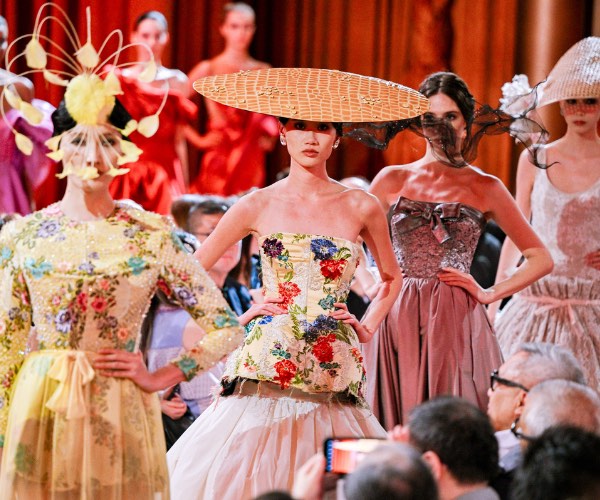
For VIRTUOSE: The Artistry of Couture 2026, however, the setting felt entirely appropriate. The show brought together 40 couture ensembles by Guillermo Décimo, Phan Huy, Tigerstrolling Artisanal and Vivian Luk Atelier, placing couture within a space already concerned with craftsmanship, cultural exchange and the value of objects made by hand. The clothes themselves demanded a slower gaze.
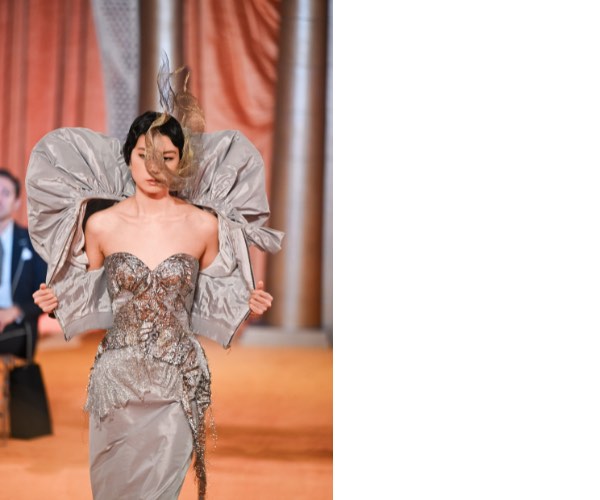
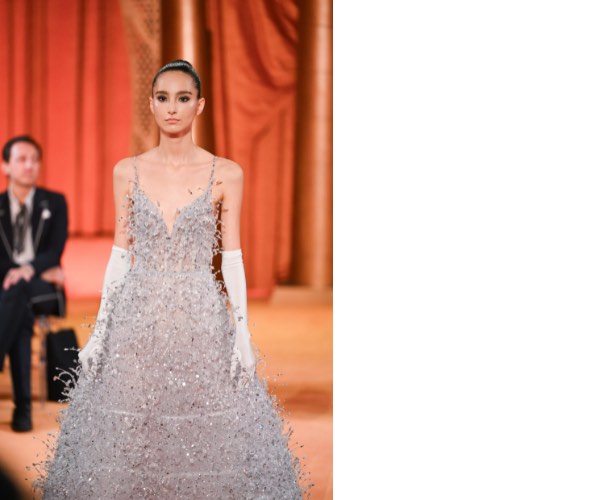
There were gowns whose surfaces seemed almost to shimmer independently of the fabric beneath them, densely worked with embellishment that caught the light as the models moved. Delicate sheer layers gave some silhouettes an almost weightless quality, while other pieces relied on more sculptural construction, allowing the garment to hold its shape rather than simply fall around the body.
Some looks were romantic and fluid, with fabric trailing or gathering softly around the figure. Others had a much more deliberate architecture, with carefully constructed volumes and details that transformed the silhouette.
There was also an intriguing tension between fragility and structure. A seemingly delicate garment could be punctuated by a highly worked shoulder, an elaborate surface or a sculptural accessory. Something that looked simple from the back of the runway could reveal a surprising amount of construction when the model turned. And that is precisely the difficulty with photographing couture on a runway.
A couture garment is easy to admire from a distance. The silhouette catches the eye first, followed by the surface, the movement and whatever theatrical quality the designer has given it. Yet much of the work that makes couture extraordinary can be almost invisible from a runway seat. That became particularly apparent to me the following day, when I had the opportunity to speak with the designers.
Details that had registered simply as beautiful on the runway acquired another dimension in conversation. A particular material or embellishment could be traced back to an idea; a construction detail might have involved hours of experimentation; something that appeared effortless could represent an extraordinary amount of labour.
There is something slightly unfair about asking couture to pass before us at runway speed. The clothes are made to be examined. Their stories are often embedded in details that need time, proximity and a certain amount of curiosity to reveal themselves.
At VIRTUOSE, fashion felt particularly close to art because the process mattered as much as the finished image. The garment was not simply a look to be photographed. It was the accumulated result of decisions, techniques, references and human labour. The runway gave us the spectacle. Looking closer gave us the work. And that distinction would prove useful throughout the rest of the week.
KIT WAN: IMAGINING THE FUTURE, LOOKING BACK
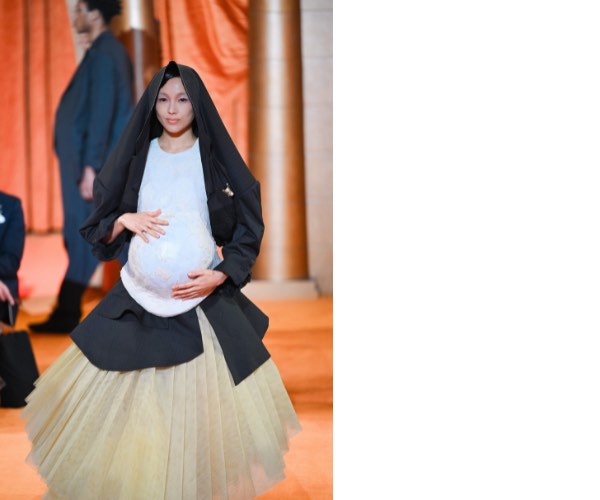
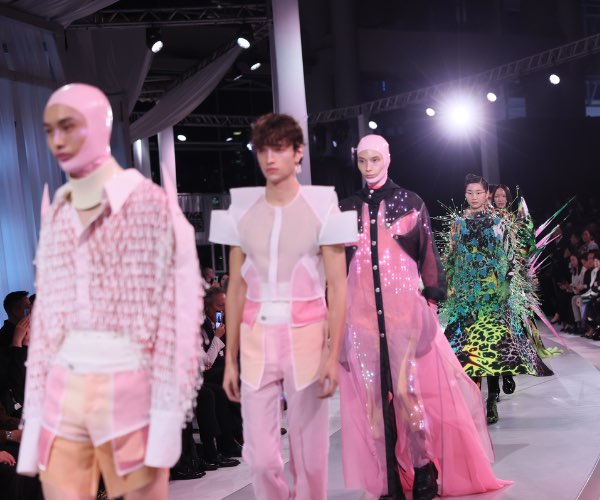
If VIRTUOSE asked us to look more closely at fashion, Kit Wan's MUTANT // MYTHOLOGY asked us to reconsider what we were looking at in the first place.
Presented as the grand opening show of CENTRESTAGE ELITES at HKCEC, the collection came from a designer whose practice already sits comfortably between fashion and visual art. The clothes drew on science fiction and mechanical aesthetics, occupying an intriguing space between the wearable and the collectable. The first impression was one of construction.
Oversized outerwear, exaggerated proportions and sharply manipulated tailoring gave the clothes a slightly engineered quality. Familiar garments appeared stretched, enlarged or reconstructed, turning jackets and suits into something more imposing. The body was still recognisable beneath the clothes, but its proportions had been deliberately disrupted. Then the collection began to soften.
The show was structured in three acts, moving from industrial futurism into nature before arriving at romanticism. The shift could be felt in the clothes themselves, as harder, more mechanical forms gave way to more organic shapes and eventually to pieces with a softer, more poetic quality.
One look might suggest a machine designed for a future city; another introduced something almost botanical. Elsewhere, tailoring was pared back into elegant, elongated lines, creating a quieter form of futurism.
There were moments when the styling felt almost deliberately strange, but never without purpose. The clothes seemed to exist in the space between something you could wear and something you might encounter in a gallery. The collection's starting point was equally intriguing: a mid-1990s vision of the year 2035.
There is a pleasing circularity to that idea. A future once imagined from the perspective of the 1990s has now become something we can look back on from 2026. The futuristic references therefore carry a kind of nostalgia, even as the collection itself looks forward.
Kit Wan's approach makes the familiar language of futuristic fashion feel less straightforward. Rather than simply covering the body in metallic surfaces and calling it tomorrow, the collection considered how our idea of the future changes with time. The future, in this case, had already become vintage. And fashion was using it again.
10 ASIAN DESIGNERS TO WATCH: TEN VISIONS, ONE REGION
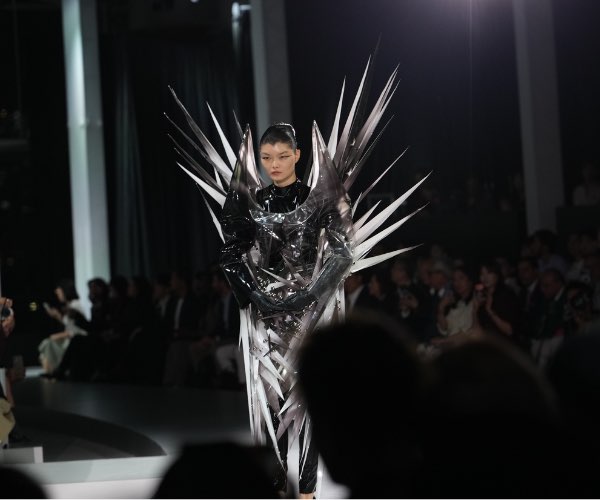
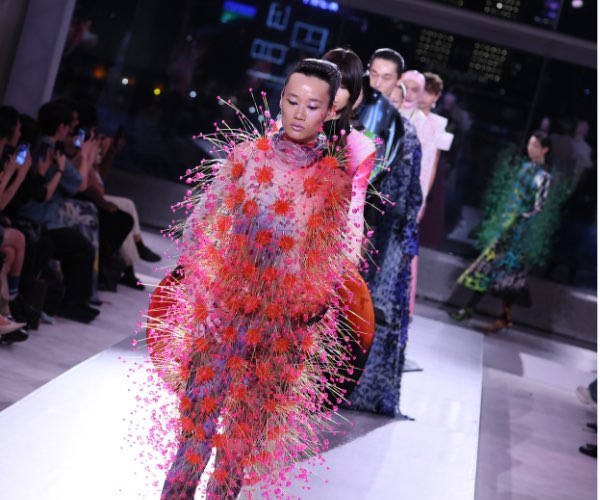
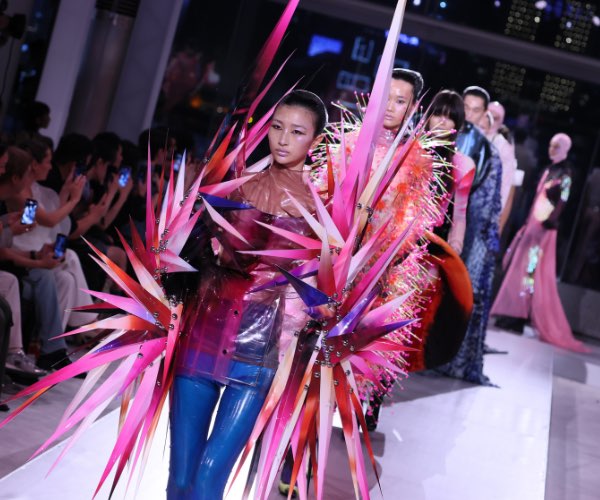
If there was one place where the idea of a single Asian fashion aesthetic became particularly difficult to maintain, it was the 10 Asian Designers to Watch Fashion Show and Award Presentation at Rosewood Hong Kong.
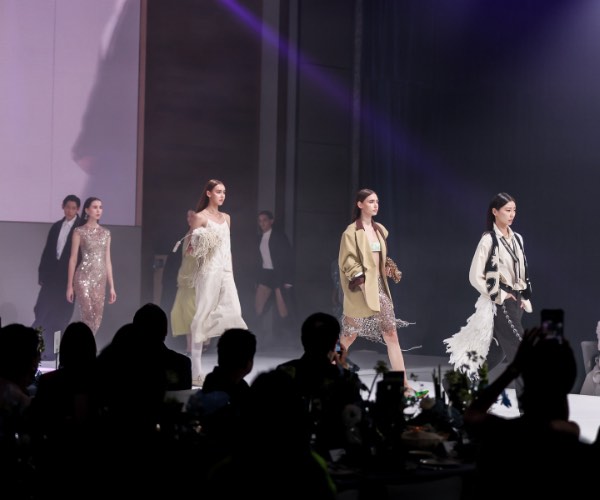
Ten designers from the Chinese mainland, Hong Kong, South Korea, Thailand and the Philippines shared the runway, but there was little visual agreement between them, and that was precisely what made the show interesting.
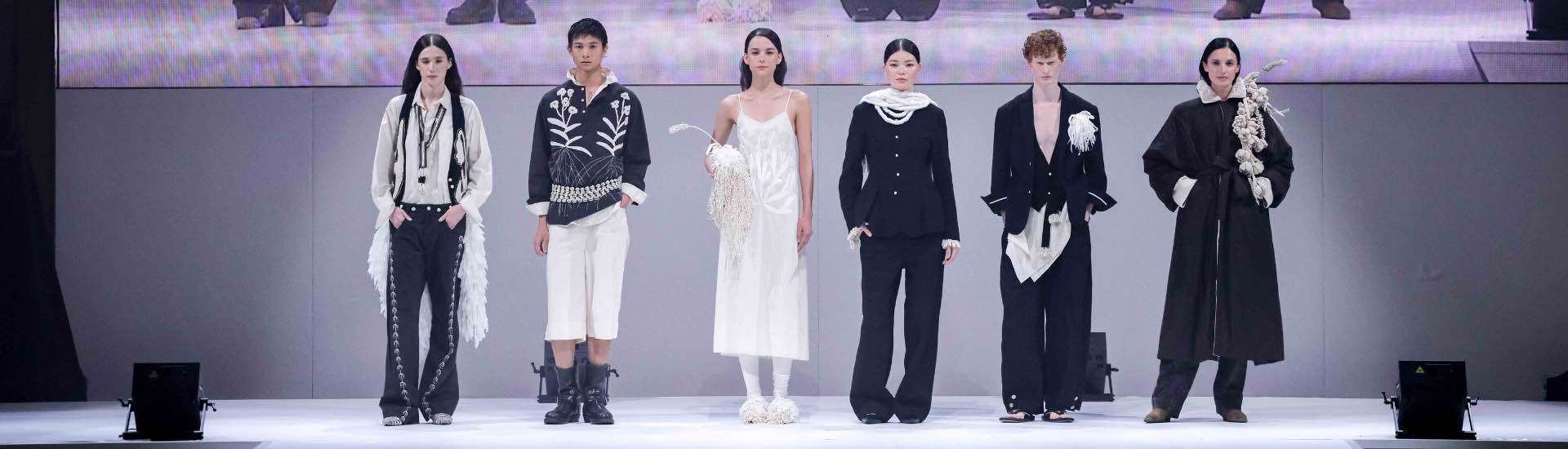
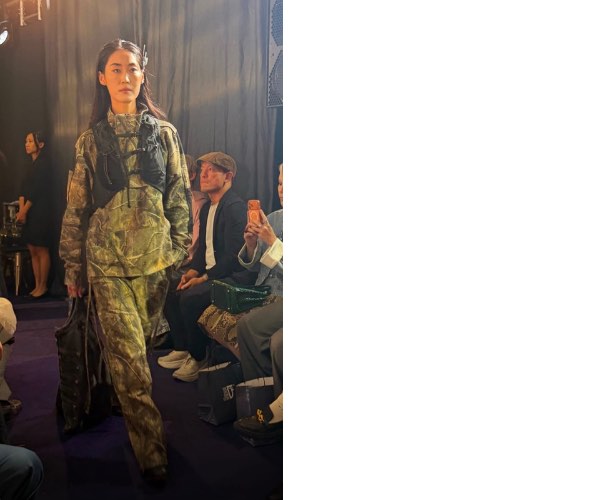
A pale yellow look played with softness and volume, its textured top defined by a pointed collar, generous sleeves and wide cuffs, while a dramatically oversized charcoal suit exaggerated the proportions of classic tailoring. A more sharply cut beige suit, styled with a black high-neck layer and gloves, pushed the familiar two-piece somewhere more theatrical.
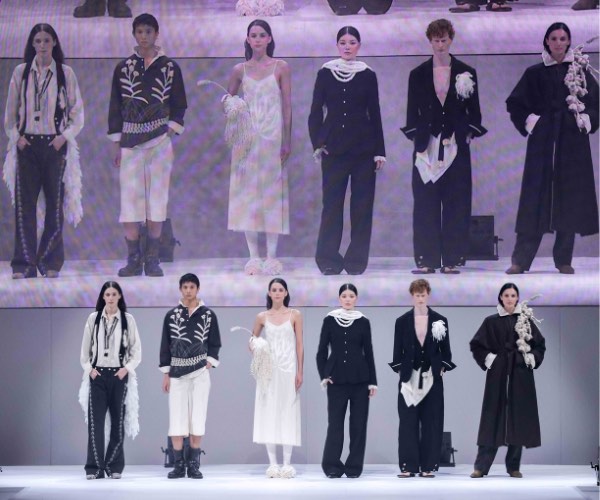
Elsewhere, a short silver-toned dress caught the light through its densely worked surface, while a fluid red dress and a slender white look with sculptural detailing brought entirely different ideas of femininity to the runway. Dark tailoring appeared again, this time interrupted by striking white botanical forms that became almost part of the silhouette. There was no single visual formula tying these collections together.
And that matters. Asian fashion can be useful as a geographical description, but aesthetically it becomes far less useful when placed in front of clothes this varied. These designers were drawing from different traditions, different cities and different ideas about how a contemporary wardrobe should look and behave. The region provides the geography, but the clothes tell much more complicated stories.
SEOUListic: WHEN SUSTAINABILITY BECOMES DESIGN
Sustainability has become one of fashion's most frequently discussed subjects. It appears in brand strategies, collection notes, industry panels and consumer conversations with increasing regularity.
The challenge now is perhaps a more difficult one: what happens when sustainability has to exist on the same terms as everything else that makes fashion desirable?
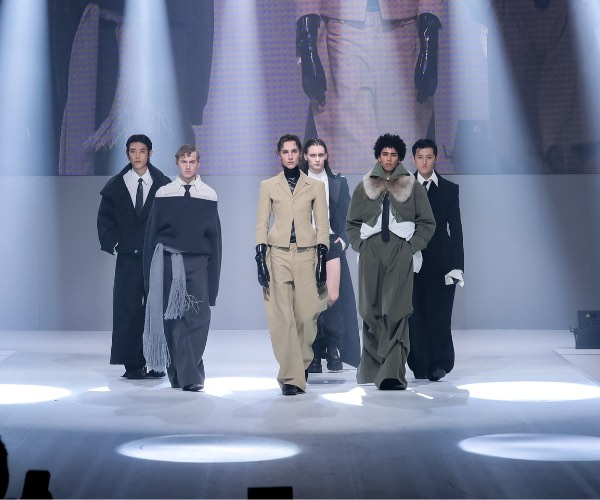
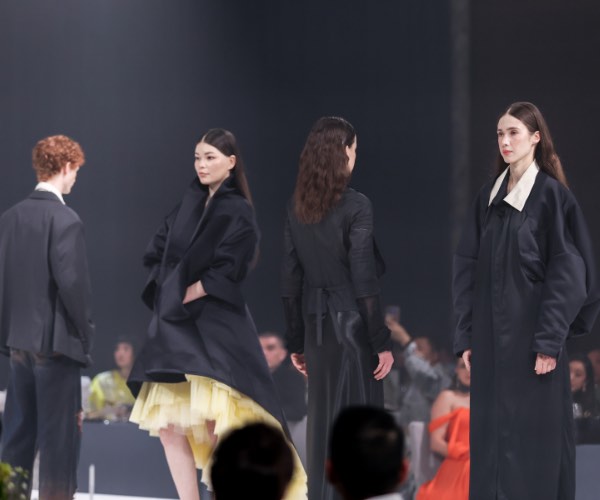
At SEOUListic: The Future Is Sustainable, the Korea Pavilion runway showcase at CENTRESTAGE, 12 Korean labels approached that question through circular design, eco-conscious craftsmanship and contemporary tailoring. The visual language was distinctly different from the futuristic drama of Kit Wan.
There were softly constructed garments alongside sharper tailoring, loose silhouettes beside more controlled ones, and pieces that played with texture and proportion rather than relying on spectacle.
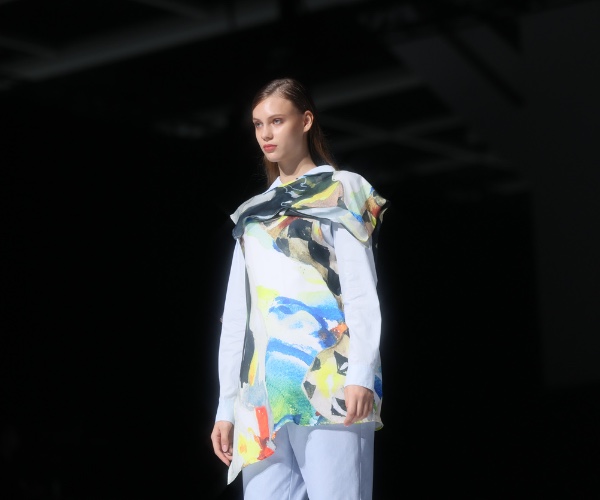
One look in a muted yellow had an almost tactile quality, with fine textural lines giving movement to the fabric. Another model appeared in a dramatically oversized dark suit, the proportions deliberately enlarged around the shoulders and body.
There were sleek neutral-toned suits, sculptural outerwear and delicate dresses, including pieces where transparency and layered fabrics created depth without relying on heavy ornamentation. Elsewhere, white and ivory garments were treated almost as canvases, with raised or dimensional details creating texture across the surface.
The clothes could be directional without appearing burdened by the need to explain their environmental credentials. And that is important. Sustainability did not have to dominate the clothes visually in order to be present.
The collections could still be directional. They could still be desirable. They could still belong to the fashion conversation rather than sitting outside it as an ethical footnote. Because fashion ultimately runs on desire. People want clothes because they like how they look, how they feel and what they allow them to express.
The more interesting possibility is for responsible design to become so integrated into the creative process that the consumer does not have to choose between aesthetics and conscience. SEOUListic placed that idea firmly within the language of contemporary Korean fashion.
Sustainability was not treated as an apology for fashion. It was fashion.
DENIM VOYAGE: WHEN FASHION LEAVES THE RUNWAY
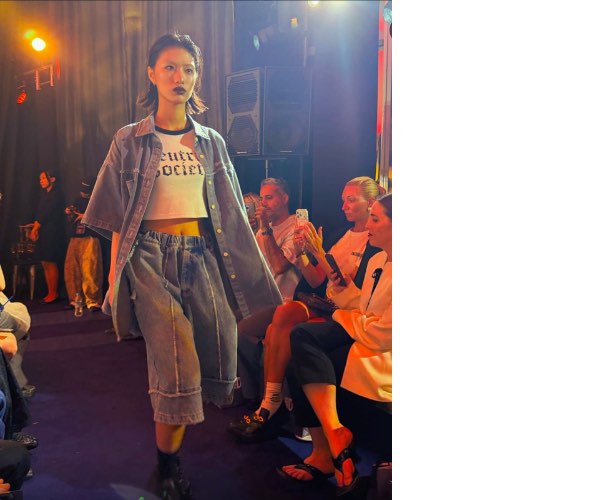
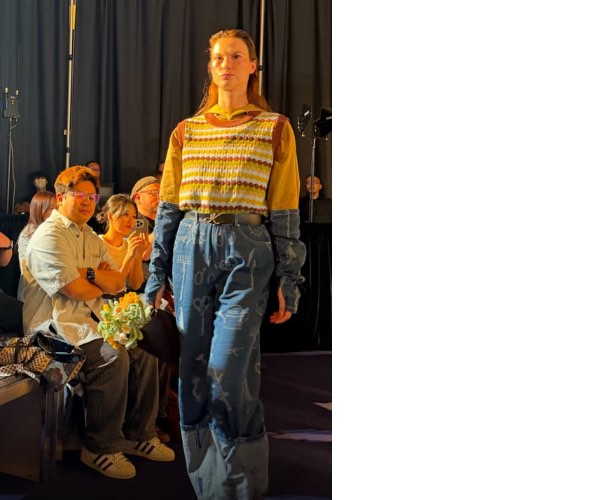
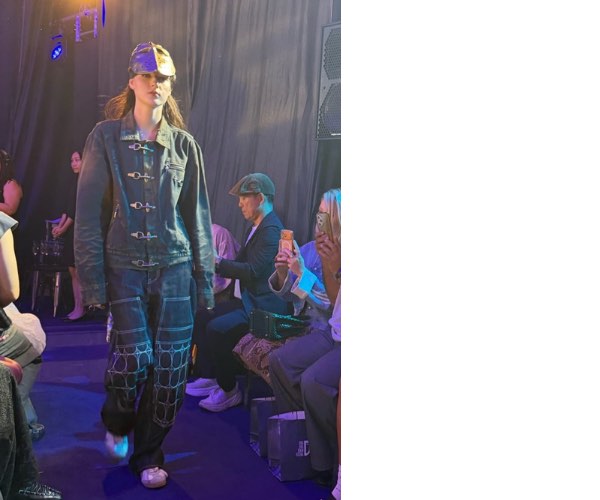
By the time the Denim Voyage Party arrived, the mood had changed completely. The venue was the Sky Lobby on the 46th floor of Central Plaza, with Victoria Harbour providing the backdrop. There were more than 30 looks, designers from Hong Kong and Korea, emerging talent from The Denim Edit, local labels, a DJ and the Hong Kong debut of Korean label THUG CLUB. It was a fashion show, but it was also unmistakably a party. And perhaps denim was the perfect fabric for that transition.
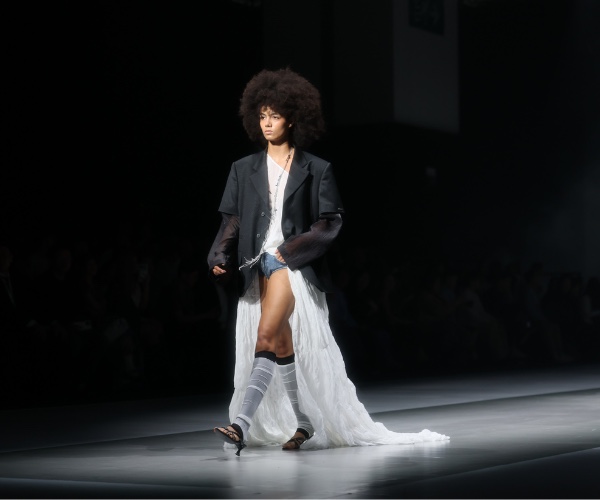
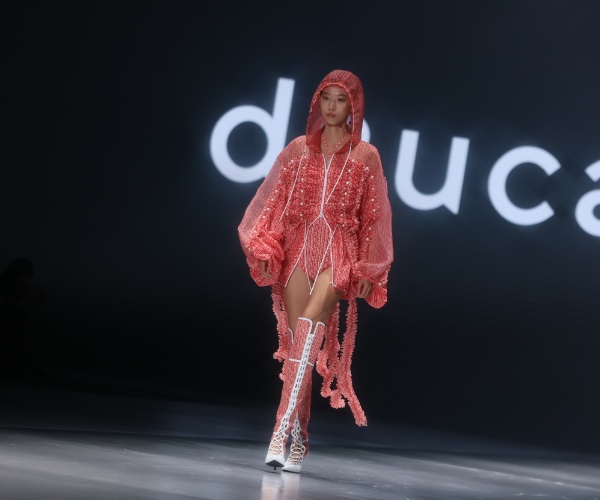
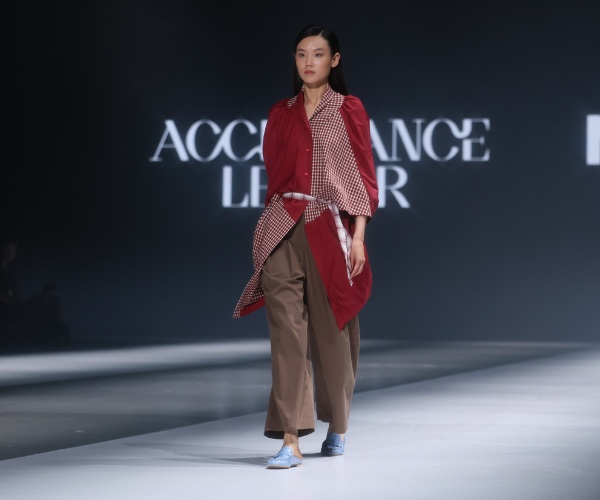
The clothes had considerably more ease than the couture pieces earlier in the week. Wide-leg jeans moved with exaggerated volume. Oversized jackets and loose trousers played with the familiar proportions of denim workwear, while other looks pushed the fabric towards something more directional.
There were pieces that looked deliberately distressed or reworked, garments where familiar denim codes had been pulled apart and rebuilt. Some silhouettes leaned heavily into streetwear, while others played with tailoring and proportion, making denim feel unexpectedly polished.
The Korean influence brought another layer to the presentation, with bolder, more youth-driven styling sitting alongside the Hong Kong designers and emerging talent. The result was denim in several different personalities at once. That is part of its appeal.
Unlike couture, denim has never required an invitation to enter everyday life. It has moved effortlessly between workwear, streetwear, youth culture, luxury fashion and the ordinary wardrobe. Its ability to absorb different identities is part of its longevity. And the evening itself reinforced that flexibility.
The music mattered. The setting mattered. The audience mattered. The clothes had to exist within an atmosphere that was social and commercial as much as it was aesthetic. For all the attention given to runway spectacle and conceptual design, fashion eventually has to leave the runway. It enters shops, wardrobes, streets and social lives.
It becomes something people wear to dinner, to work, to a concert or, in this case, to a party overlooking one of the world's great city skylines. The Denim Voyage Party brought that reality back into view. Fashion can be an art form. It can be an industry. It can be cultural expression. Sometimes it can simply be a very good night out in a great pair of jeans.
A REGION THAT REFUSES ONE DEFINITION
Five shows are hardly enough to define the state of an entire continent's fashion industry. They are, however, enough to complicate some of the assumptions we continue to make about it.
The designers encountered in Hong Kong were not working from one common script. Their references moved between heritage and popular culture, craftsmanship and technology, sustainability and commercial reality, local identity and international influence.
Even the clothes themselves resisted easy categorisation. A sheer romantic dress could appear beside an oversized suit. A heavily embellished couture piece could share a week with a pair of exaggerated denim trousers. Botanical embroidery could sit on contemporary menswear.
Mechanical forms could soften into romantic silhouettes. Sustainability could be expressed through the construction and materiality of a garment rather than announced as its defining feature. That movement is perhaps more significant than any particular silhouette.
There is a tendency to speak about Asian fashion in terms of arrival, as though designers from the region are finally stepping onto a global stage that has been waiting for them. But that framing can make the conversation seem rather one-dimensional.
The more interesting thing happening now is that the designers are increasingly shaping the conversation themselves.
At VIRTUOSE, couture was given the space to be considered as craftsmanship and cultural expression. Kit Wan treated fashion as a place where mythology, visual art and speculative futures could coexist. The ten designers at Rosewood demonstrated how little sense it makes to reduce an enormous region to a single aesthetic. Korean labels brought sustainability into the construction of contemporary style, while denim demonstrated how fashion continues to move between creativity, commerce and popular culture.
Even beyond these five shows, the wider festival reflected a similar expansion. CENTRESTAGE brought together a broad range of brands and programming spanning craftsmanship, accessories, urban fashion, athleisure and circular design, while Future Threads created a dialogue between emerging menswear designers from Italy and Hong Kong. The boundaries keep shifting.
Maybe that is where the new language lies. Not in finding one look that can stand for Asia, but in accepting that the region's fashion conversation is too varied, too historically layered and too commercially ambitious to fit comfortably inside one. For a Sri Lankan watching from within that conversation, there is something particularly interesting about it.
We are a country that knows how to make clothes. We have an apparel industry with global reach, skilled craftsmanship and textile traditions of our own. But watching these designers work across art, technology, heritage, sustainability and popular culture raises another question for countries like ours: What happens when the places known for making fashion are given more room to imagine it?
Hong Kong Fashion Fest did not provide a neat answer. Nor did these five shows. Thankfully, they did something more useful. They made the question bigger. And perhaps that is the most interesting thing happening in Asian fashion right now: not that it has finally found one identity, but that it seems increasingly unwilling to have one.






0 Comments