
Feb 17 2026.
views 400By Rihaab Mowlana
The question is rarely asked directly. It arrives gently, often after dessert, or during the lull between wedding speeches. A relative leans closer. A family friend lowers her voice.
“So, what next?”
For women in their late twenties and early thirties, the question is rarely about work. It is not about promotions, degrees or business plans. It is about marriage. The inquiry carries a tone that is both affectionate and evaluative, as though the person asking is checking in on a delayed milestone.
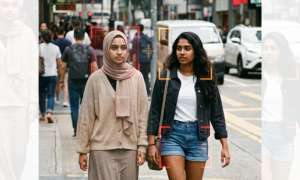
Sri Lanka has changed dramatically over the past decade. Economic upheaval has reshaped households. Women have entered and remained in the workforce in increasing numbers. In urban centres like Colombo, it is common to meet women who are financially independent, professionally ambitious and socially visible. They rent apartments alone, invest in property, support ageing parents and, in many cases, out earn their male peers.
Yet the timeline attached to marriage has remained remarkably intact.
A 31 year old consultant described it this way: “In my office, I am treated like an adult. At family gatherings, I feel like I am still figuring life out.”
The pressure is seldom explicit. It is expressed as concern. “Don’t wait too long,” one woman recalled being told. “Men can get intimidated.” Another said that when she mentioned applying for a postgraduate degree abroad, the response was immediate: “But what about settling down?”
The assumption underlying these conversations is clear. Professional advancement is commendable, but it is secondary. Marriage is the marker that confers completion.
This expectation persists even as the practical conditions surrounding marriage have grown more complicated. Weddings in Sri Lanka remain elaborate, often involving significant financial investment. Even modest ceremonies can require sums that, in a country still recovering from economic crisis, are not easily assembled. Families may save for years. Loans are quietly discussed.
“I sometimes feel like my wedding is being planned before my relationship exists,” said a 29 year old architect. “There is more anxiety about the event than about the partnership.”
The economics are only one dimension of the tension. The other is ideological.
Many men express a preference for partners who are educated and employed. The language of equality is now common in urban dating circles. But women describe a gap between stated values and lived expectations.
“They want someone modern,” said a 32 year old lawyer, “but the distribution of responsibility still feels traditional.”
Several women spoke about being encouraged to pursue careers, yet simultaneously expected to shoulder the bulk of domestic and emotional labour in future marriages. The model of partnership, in practice, has not always kept pace with women’s independence.
As a result, some women are choosing to delay marriage, not out of indifference but out of caution.
“They call it being picky,” said a 34 year old in finance. “I call it being careful.”
At the same time, single women past 30 continue to be scrutinised in ways their male counterparts are not. A bachelor in his mid thirties is often described as focused on his career. A woman of the same age is described as late.
The distinction reflects longstanding cultural assumptions. Marriage in Sri Lanka is not solely a personal decision. It is a social event that affirms family reputation, continuity and stability. For generations, it has been treated as the central milestone in a woman’s life course.
When that milestone is postponed, even voluntarily, it can create discomfort.
This discomfort exists alongside evidence that many single women are leading full and self directed lives. They travel, form tight social networks, pursue advanced degrees and engage in therapy and self development at rates that would have been unusual a generation ago. They are not necessarily rejecting marriage. Many say they want it. But they also want it on terms that feel equitable.
“I don’t want to marry because I am afraid of turning 35,” one woman said. “I want to marry because it makes sense.”
The notion of a deadline persists partly because of biology and partly because of tradition. Fertility is frequently invoked in private conversations as a reason for urgency. Yet medical timelines are often conflated with cultural ones. The age by which a woman is considered late socially is not always aligned with medical realities.
More broadly, the fixation on timing reflects a lag between structural change and social imagination. Women’s access to education and employment has expanded. Economic necessity has pushed families to rely on dual incomes. Public discourse increasingly acknowledges concepts like emotional labour and shared responsibility.
But the symbolic weight of marriage has not diminished at the same pace.
The result is a generation of women navigating two sets of expectations at once. In professional spaces, they are encouraged to lead. In personal spaces, they are encouraged to conform to a familiar sequence: education, marriage, motherhood.
For some, the tension produces anxiety. For others, it produces resistance.
The marriage deadline, then, may say less about women’s choices and more about collective unease. As women’s lives become more varied and less predictable, the traditional timeline offers a sense of order.
Yet order does not necessarily reflect reality.
In Colombo today, there are women who marry at 25 and women who marry at 40. There are women who remain single and content. There are women who prioritise careers, caregiving, travel or entrepreneurship. There are women who attempt to balance all of it.
The diversity of paths challenges the idea that there is a single correct schedule.
The question “So, what next?” will likely persist. It is embedded in habit and in care. But perhaps the more relevant question is not when a woman will marry, but whether the timeline by which she is judged still serves her.
In a country that has undergone profound political and economic change, the endurance of the marriage clock suggests that cultural transformation is slower and more uneven.
For many women, the issue is not opposition to marriage. It is opposition to the assumption that their lives are incomplete without it.
And in that distinction lies a quiet, ongoing shift.







0 Comments