Sep 08 2026.
views 189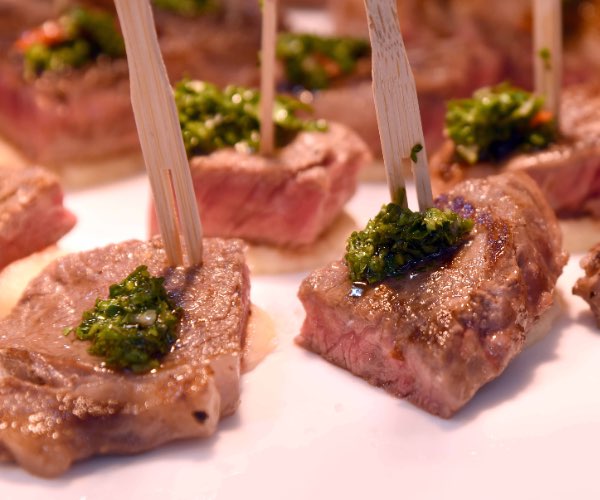
By Rihaab Mowlana
Pics Kushan Pathiraja
There is a particular moment in the life of a restaurant when the opening-night excitement has worn off, the first reviews have been written, the photographs have made their way around Instagram, and the owners are left with the more difficult question: now what?
Belle Colombo has reached that point.
The restaurant recently marked its first anniversary, but there was little sense of a business stopping to admire itself in the mirror. If anything, the conversation around Belle's first year was about how much it had changed, how much it had learnt, and how much of it was still being worked out. That may be a healthier way to approach a restaurant in Colombo, where the dining scene has become increasingly crowded with places trying to announce themselves as the next big thing. Restaurants open with elaborate concepts, dramatic interiors and menus designed to photograph beautifully. Some survive the opening buzz. Others discover that getting people through the door is considerably easier than giving them a reason to return.
Belle's first year appears to have been less about chasing a fixed identity and more about discovering one.
When I first visited Belle, I knew what I thought it was. A steakhouse, primarily. A very good one. I had spent an unreasonable amount of time in Colombo looking for a steak that did not require the physical determination of a small construction project, so Belle's ability to produce properly cooked, tender meat immediately had my attention.
The restaurant had a clear strength. Its ingredients were serious, its sourcing was deliberate, and the kitchen understood that good produce does not need to be buried under unnecessary theatrics. Oshan Raju, Belle's owner, brought with him years of experience in premium meat sourcing through Maybury Fine Foods, and that knowledge was evident in the way the restaurant approached its steaks.
But a year in, Belle is no longer content to be understood simply as the place where you go when you want a good piece of meat.
For Wishmalak Perera, now a partner in the restaurant, the past year has been a period of revelation and discovery.
It is an unusually candid way to describe the first year of a business. There have been trials, he says, and a few important tribulations. The team has learnt more about itself, its identity and its culinary journey. It has also learnt from the people who have passed through its kitchen.
The Chef's Table series has played a particularly interesting role in that process. Rather than keeping the kitchen enclosed within its own ideas, Belle has invited chefs in, giving them a space to experiment and share techniques. The team has picked up new tips, tricks and approaches along the way.
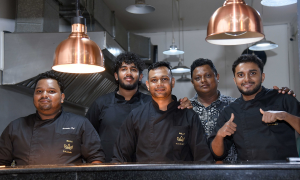
It is the sort of learning that does not necessarily show up on a menu as a dramatic new dish. Sometimes it appears in the way a kitchen thinks. And Belle's thinking seems to be broadening. The restaurant's second season has brought a more refined menu, while a new brand identity finally gives form to something the team had wanted to establish from the beginning. The changes are not necessarily about making Belle bigger. They are about making better use of what is already there.
That means treating the restaurant's different spaces as distinct experiences rather than variations of the same room.
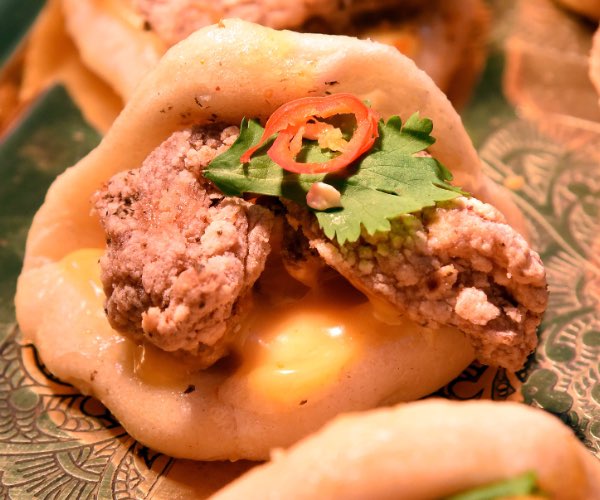
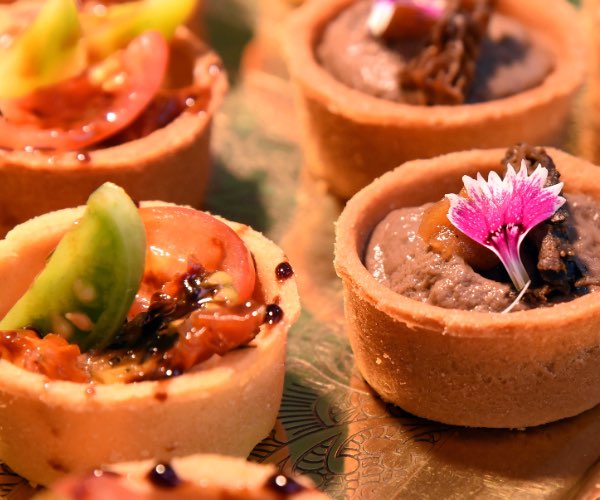
The Garden has its own personality: lighter but hearty lunches, a café atmosphere and somewhere to linger. The restaurant is more suited to diners settling in for an à la carte meal or a proper dinner. The bar has its own language of signature cocktails and bites.
It sounds simple, but it reflects something restaurants often struggle with. A physical space can contain several identities without any of them feeling accidental. The trick is making the differences intentional. Claude Scheffer has become part of that process.
His involvement with Belle began after he attended a wine-pairing dinner and saw Wishmalak's food presentation. He was subsequently brought in as a consultant to help establish standards and oversee a soft renovation. His role has since grown to encompass much of the machinery behind the dining experience: lighting, music, operational equipment, tableware, glassware, the bar and restaurant setup, menu implementation and staff training.
It is the less glamorous side of restaurant evolution, but arguably one of the more important ones.
A restaurant can have excellent food and still feel slightly unfinished. The wrong lighting can flatten a room. Music can change how long people want to stay. The weight of a glass, the presentation of a plate, the spacing of a table and the rhythm of service all quietly tell diners what kind of place they are in.
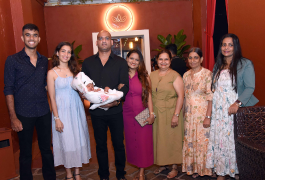
Scheffer's ambition for Belle is an “upmarket restaurant without formalities.” That is an increasingly useful distinction.
Luxury dining in Colombo has often been caught between two extremes: the grand hotel experience on one side and the deliberately casual neighbourhood restaurant on the other. There is room in between for somewhere that takes food and hospitality seriously without requiring its diners to behave as though they are attending a state banquet. Belle wants to be that space. It also wants to remain fluid.
Seasonality and sustainability continue to sit at the centre of the food philosophy, but the menu will change periodically as the seasons shift. The idea is to give diners something familiar enough to return to, while allowing the kitchen the freedom to respond to what is available. That same flexibility extends beyond the menu.
Belle's Chef's Tables have turned the restaurant into a platform for collaboration. Its themed events have pushed it into more theatrical territory, including murder mystery evenings where dinner comes with characters, motives and a fictional body somewhere in the plot. It is a reminder that people do not always go out to eat simply because they are hungry. Sometimes they want a story.
That may be one of the more interesting developments in Colombo's restaurant culture. Dining is increasingly becoming something people build an evening around rather than simply slot between work and home. Chef's Tables, wine dinners, themed nights and experiential events give restaurants another way to become part of people's social lives. Belle appears to understand that.
It is also opening itself up to smaller corporate functions and outside catering for private residences, widening its reach without abandoning the restaurant itself.
None of this means Belle has suddenly transformed into an entirely different establishment. The original foundations are still there. The quality of the produce matters. The kitchen remains central. The restaurant's relationship with premium ingredients remains one of its strongest assets. But perhaps the most interesting thing about Belle at One is that it seems less interested in announcing what it is than it was when it first opened. There is something appealing about that.
The first year of a restaurant is often treated as a victory lap. Surviving the first twelve months is certainly an achievement, particularly in a city where diners are spoiled for choice, and restaurant concepts arrive with increasing frequency. But survival is not the same thing as identity.
Belle's first year seems to have been spent asking the more difficult questions.
What does this restaurant want to be? Who does it want to welcome? How should its spaces feel? How often should its menu change? How much can it experiment without losing what brought people there in the first place? The answers are beginning to emerge.
A year ago, I walked into Belle because I wanted a steak that I could cut without developing a personal grudge against it. I left convinced that Colombo had finally given me a steakhouse worth talking about.
A year later, the steak is no longer the whole story. Belle is still cooking. It is still experimenting. It is still adjusting the lighting, the music, the menus, the glassware, the spaces and perhaps even its own sense of identity. For a restaurant celebrating one year, that unfinished quality may actually be its most promising feature. Because the most interesting restaurants are rarely the ones that arrive knowing exactly what they are. They are the ones still becoming.









0 Comments