Oct 13 2026.
views 4By Rihaab Mowlana
Art history has a way of making complicated journeys look inevitable. Artists are celebrated, movements are named, and works find their place in the story of how art evolved. What is less visible is the work that precedes that recognition: the research, the preservation of collections, the arguments made on behalf of an artist, and the people who decide that a body of work deserves to be seen again.
For Sri Lankan art, that work is coming into focus as the late Dr H. A. Karunaratne prepares to take his place at Frieze Masters London.
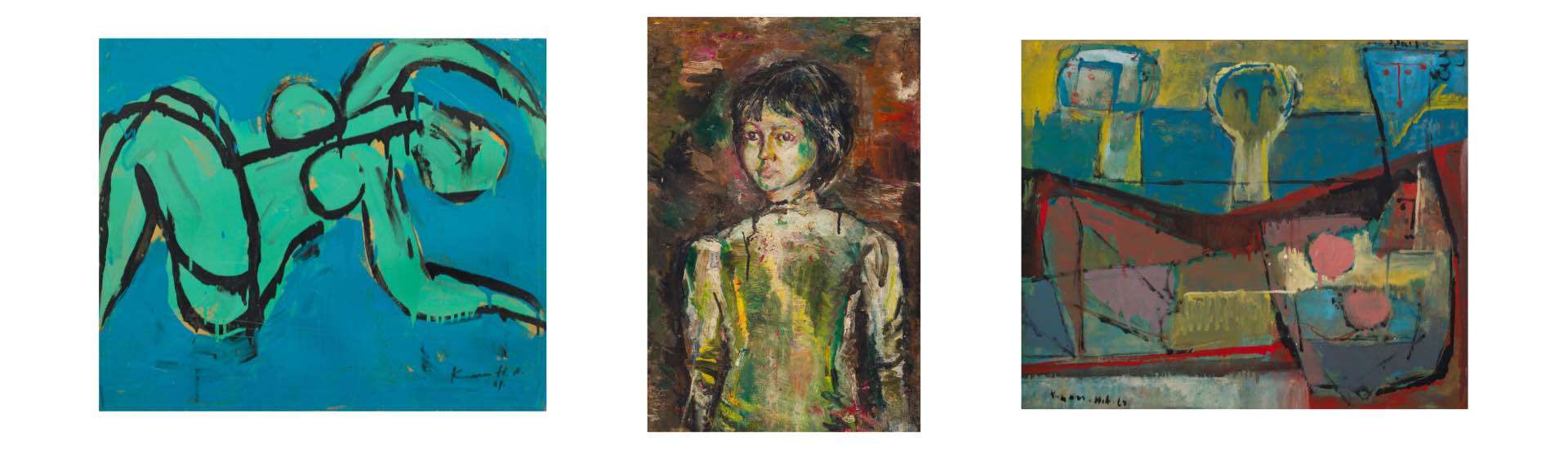
On 14 October, Saskia Fernando Gallery will present works from Karunaratne’s estate at the fair, making him only the second artist of Sri Lankan origin to be featured on the platform since Lionel Wendt in 2014. Organised in partnership with LYNEAR Wealth Management, the presentation draws from a collection preserved by Karunaratne’s family and marks the first dedicated global art fair presentation of his estate.
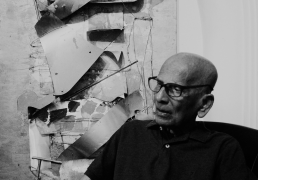
Pictured: Dr H. A. Karunaratne
The timing is significant. Karunaratne, who passed away in February this year, is widely regarded as a pioneer of abstract art in Sri Lanka. His work helped expand the possibilities of the country’s visual arts, while his contribution as an educator shaped a generation of artists. Yet, as his work prepares to enter a wider international conversation, research into his practice is still developing.
The presentation raises a question that extends well beyond one artist: what does it take for a country’s artistic heritage to be recognised internationally, and what responsibility do we have to understand and value it at home?
The Platform Behind the Milestone
For Saskia Fernando, founder and director of Saskia Fernando Gallery, the answer begins with making space for Sri Lankan art within a broader international conversation, without allowing international recognition to become the sole measure of its worth.
Founded in Colombo in 2009, the gallery has established itself as a significant platform in Sri Lanka’s contemporary art landscape. Fernando has spent 17 years taking its programme beyond the local scene, participating in major international platforms including Art Dubai, India Art Fair and Frieze.
Fernando believes international platforms must look beyond the artists and markets that already command attention. India, she notes, has increasingly established its presence in the international art world, but the wider subcontinent has artistic histories that merit equal engagement.
“We already know from our engagement and our growing audience that people are looking at Sri Lankan art internationally,” Fernando says. “We're seeing record amounts now of modernists moving internationally.”
She points to the recent sale of an Ivan Peries work at Christie’s for more than US$600,000 as evidence of the growing international interest in Sri Lankan modernism. For Fernando, this presents an opportunity to bring greater attention to artists whose work has not always received the same international visibility as their counterparts elsewhere.
Frieze Masters offers a platform through which that work can reach a wider audience, lending credibility to the efforts that take place long before an artist appears on an international stage. For Fernando, the invitation matters not because it confers importance on Karunaratne, but because it creates an opportunity for his work to be encountered, studied and understood by people who might otherwise never have come across it.

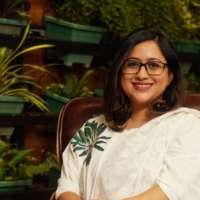
Pictured: Saskia Fernando, Founder and Director of Saskia Fernando Gallery
An Artist Worth Looking at Again
Karunaratne’s contribution to Sri Lankan art was not confined to a single medium or movement. Over six decades, he experimented with materials ranging from tissue, wire and palmyrah to fabric and metal, developing a practice characterised by rhythm, energy and dissonance.
Influenced by Abstract Expressionism and Zen Buddhist philosophy, he explored abstraction through an approach centred on individual expression. His work emerged during a period of change in South Asian art, expanding the possibilities available to artists while resisting easy categorisation within a purely national or Western identity.
As an educator at the Institute of Aesthetic Studies, now the University of Visual and Performing Arts, Karunaratne helped inspire a generation of artists to move away from figurative conventions. Yet, despite his influence, he remained largely uninterested in public attention. “He was not an artist interested in the limelight,” Fernando says.
His children, who oversee his estate, are now working alongside the gallery to preserve his legacy. Fernando sees a quiet strength in that process, but emphasises that introducing an artist of Karunaratne's background to an international audience requires far more than selecting paintings for a wall.
“It's everything,” she says. “It's who was the artist as a teacher? Who was he as a person? Who was he as a practitioner? What materials did he use?”
The questions point to how much remains to be understood about Karunaratne, both as an artist and as a person. While his work is represented in museum collections in Japan and at the National Gallery in India, further research is needed to establish a fuller picture of his practice and its development. The Frieze Masters presentation includes pre-1980s works from his family's collection, including the rare Portrait of Thilani Karunaratne, painted in the 1970s and depicting his daughter, offering a glimpse of his movement from figuration towards abstraction.
His experience in Japan also complicates the familiar tendency to frame abstraction primarily through Western art history. Exposed to Japanese artistic practice during his time in Tokyo, Karunaratne encountered ideas that informed his own approach to painting. As Fernando points out, the development of Abstract Expressionism and related practices cannot be understood through Western influences alone; artistic ideas travel across cultures, traditions and geographies, often in ways that resist neat categorisation.
For Fernando, international presentation does not create an artist’s importance. “These artists don't become important when institutions recognise them,” she says. “I would like to see greater appreciation and research happen at home without needing the international acknowledgement.”
It is a distinction she returns to when discussing the responsibility Sri Lanka has towards its own artists. International platforms can introduce work to new audiences, but a more lasting appreciation requires research, public engagement and a willingness to invest in the country's artistic history on its own terms.
Investing in Legacy
That longer view is also central to the partnership between Saskia Fernando Gallery and LYNEAR Wealth Management, which brings private-sector support to the work of promoting and preserving Sri Lankan art.
For Nabiha Mohamed, Strategy & Growth at LYNEAR Wealth Management, the partnership is intended to extend beyond a single appearance at an international fair. It reflects a commitment to helping Sri Lankan art reach wider audiences while encouraging a more considered culture of collecting at home.
“Sri Lanka's contemporary art scene is gaining global recognition, and we have an opportunity to shape what comes next,” Mohamed says.
She identifies documentation and education as essential to that process, from building archives and supporting academic research to ensuring that artists' work remains accessible to future generations. Without this groundwork, the knowledge required to understand an artist's contribution can remain scattered, leaving future generations with an incomplete record of the work that shaped their cultural history.
While art is increasingly viewed as an alternative asset class, Mohamed cautions against judging it through short-term financial returns. The partnership's broader ambition is to encourage collecting as a long-term commitment, one that supports artists' legacies while helping develop a more informed art market.
“The more appropriate lens is to look at it in terms of legacy,” she says. “In established art markets, collections are often built over generations, becoming part of a family's legacy. We hope to encourage that same culture of thoughtful, long-term collecting in Sri Lanka as well.”
The emphasis on legacy brings the conversation back to Karunaratne and the family that has preserved his work. Presenting the paintings internationally is one step in making the collection more widely known; documenting and studying them will determine how much more can be learned from them in the years ahead.
What Comes After London?
An international fair lasts five days, but the work of understanding an artist's place in history takes considerably longer. Frieze Masters can bring Karunaratne's paintings before new audiences and create opportunities for further engagement, but the lasting value of the presentation will depend on what happens beyond the fair.
Fernando's efforts have helped open international doors for Sri Lankan artists, while the partnership with LYNEAR points towards the role private investment can play in sustaining research, documentation and a culture of collecting. Both are important, but neither can replace the local commitment required to preserve and understand the country's artistic inheritance.
The real opportunity lies in what Sri Lanka chooses to do with the attention. Karunaratne's presentation at Frieze Masters can open doors, but keeping his work in view will require continued research, meaningful documentation and a willingness to invest in the country's own artistic history.
The challenge is to make this more than a moment of international recognition, and to ensure that the work of understanding Sri Lanka's artists continues long after the fair closes.





0 Comments