Oct 13 2026.
views 47By Adrian Jesuthasan
“Something has changed.”
That is often how it starts. The clothes don't fit the same way anymore. The weight seems to sit differently. The workouts that used to work don't seem to work the way they once did. You're more tired, recovery takes longer, sleep isn't what it used to be, and suddenly the body you've known for decades feels slightly unfamiliar. For many women entering perimenopause and menopause, that change can be much more than physical. It can become emotional. Because when your body starts behaving differently, and nobody has properly prepared you for it, it is very easy to believe that you have somehow failed your body. You haven't.
Your body is changing. And perhaps it's time we changed the way we train it. As a man, I want to be careful with this article. I will never experience menopause myself, so I'm not going to pretend I understand what it feels like to go through it. But after more than thirteen years around fitness, and through working with women going through this stage of life, I've had the privilege of watching something that I think deserves far more attention.
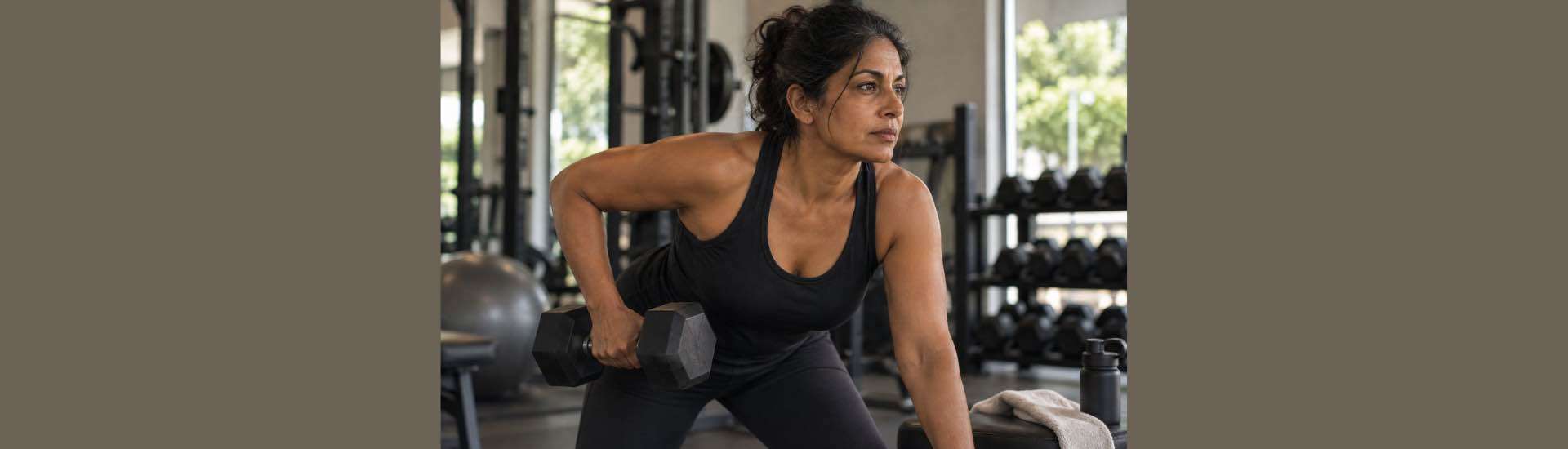
I've watched women who came into the gym frustrated with their bodies slowly begin to understand them again. And the transformation isn't always what you might expect. It's not necessarily about losing ten kilograms. It's not about getting abs. It's not about fitting into a particular dress size. Sometimes it's much simpler. A woman who was once afraid of lifting weights starts becoming stronger.
Someone who didn't have confidence walking into a gym begins taking ownership of her training. Someone who constantly complained about feeling tired begins feeling more capable. Someone who had spent months or years feeling like her body was working against her starts realising that perhaps she wasn't fighting the wrong battle after all. She simply needed a different approach.
For a long time, the fitness industry has treated women as though the solution to every body concern is the same. Lose weight, eat less, do more cardio, burn more calories and repeat. And for some women, that may produce a short-term result. But what happens when your body changes and the strategies that worked ten or twenty years ago don't seem to work anymore?
This is where the conversation around menopause becomes important. Menopause isn't simply about getting older or gaining weight. It is a significant physiological transition, and women can experience changes in things such as muscle mass, bone health, body composition, sleep, recovery, energy and temperature regulation. And yet many women reach this stage having spent years being told to simply eat less and exercise more. Imagine being given the same instructions for decades and then suddenly finding that your body doesn't respond in the same way. It can be incredibly frustrating. And frustration can quickly turn into self-blame.
"Maybe I'm not disciplined enough."
"Maybe I'm eating too much."
"Maybe I'm not training hard enough."
"Why can't I look like I used to?"
That last question is perhaps one of the hardest. Because women aren't just comparing themselves to other women. Sometimes they're comparing themselves to themselves. The woman they were at 25. The woman they were at 30. The woman who could eat certain foods without thinking about it. The woman who could miss a few workouts and seemingly bounce back. The woman who could put on an outfit and not think twice about how her body looked.
And suddenly she's looking in the mirror wondering where that person went. But perhaps the goal shouldn't be to get her back. Perhaps the goal should be to help her discover who she is now. That's where I think fitness can play a much bigger role. Strength training, in particular, has benefits that go far beyond aesthetics. As we age, maintaining muscle and strength becomes increasingly important. Resistance training can help support muscle mass, bone health, physical function and independence. Those things don't sound as exciting as a transformation photograph. But they are incredibly important.
Because the goal isn't simply to look good at 50. It's to be strong at 60. Mobile at 70. Independent at 80. And capable for as long as possible. I've seen this shift happen with women I've trained. The first few weeks can be about uncertainty. They're learning how to lift. They're learning how their body feels. They're learning that being strong doesn't mean they suddenly have to become a bodybuilder.
Then something starts changing. They lift something they couldn't lift before. They move with more confidence. Their posture improves. They feel more capable. And eventually, the conversation changes. It stops being only about the number on the scale. They start talking about what they can do. That, to me, is one of the most rewarding parts of being a trainer. Because there is a moment when someone stops seeing exercise as punishment for what their body has become and starts seeing it as an investment in what their body can still do. That is a completely different relationship with fitness. Of course, menopause isn't the same for every woman.
There is no universal experience, and there certainly isn't a universal training programme. Some women experience significant symptoms. Others experience relatively few. Some may be dealing with medical conditions, previous injuries or other factors that require individual guidance. This isn't about telling every woman to lift heavy weights, eat a particular diet or follow the latest menopause trend on social media. It is about giving women better information and better options. And perhaps, most importantly, giving them permission to stop fighting themselves. Because I think we have spent far too much time teaching women to dislike their bodies whenever they change.
A woman's body changes through pregnancy. It changes after pregnancy. It changes through
different stages of adulthood. It changes through perimenopause. It changes through menopause. It changes afterwards. That's not failure. That's life. The fitness industry needs to become better at recognising that.
We need fewer messages telling women that they have to get their "old body" back. Maybe we should be helping them build a body that supports the life they're living now. There is something incredibly powerful about a woman entering a gym in her 40s, 50s or 60s and realising she isn't there because she has failed.
She's there because she has decided she still matters. Her health matters. Her strength matters. Her independence matters. Her future matters. And I've seen that confidence spill outside the gym. That's the part people don't always see. The woman who becomes stronger in the gym may start feeling more confident carrying things at home. The woman who improves her fitness may have more energy for her family. The woman who learns to trust her body again may stop being afraid of movement.
The woman who once walked into the gym apologising for her age may eventually walk in like she owns the place.
Those are fitness results too. Perhaps some of the greatest ones. We need to stop treating menopause as though it is the end of a woman's physical story. It isn't. It's a transition. And like any transition, it may require a different approach. Different training. Different recovery. Different expectations. Different priorities. But different doesn't mean worse. And getting older doesn't mean becoming weaker, smaller or less capable. If anything, it should make us more intentional about protecting the strength we have and building the strength we still want.
So if you're a woman reading this and you've reached a point where you don't recognise your body anymore, perhaps the answer isn't to punish it until it becomes the body you remember. Perhaps it's time to understand it. Work with it. Strengthen it. Fuel it. Rest it. And appreciate everything it has already carried you through. You don't need to become the woman you were twenty years ago. You need to become the strongest, healthiest and most capable version of the woman you are today. And perhaps that is the real opportunity that comes with this chapter. Not getting your old body back but building a new relationship with the body you have.








0 Comments