Oct 23 2026.
views 12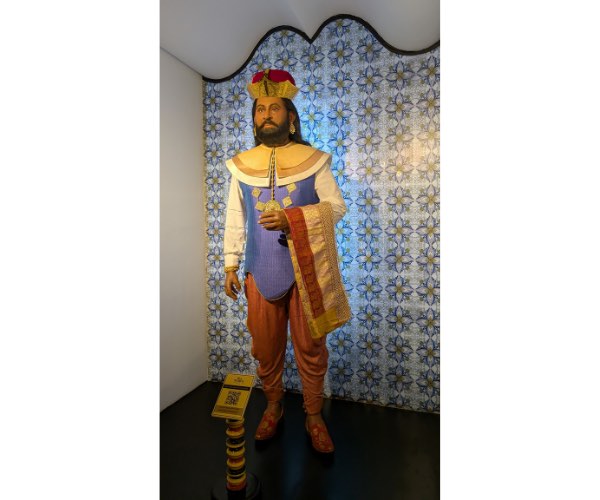
By Jeevani Pereira
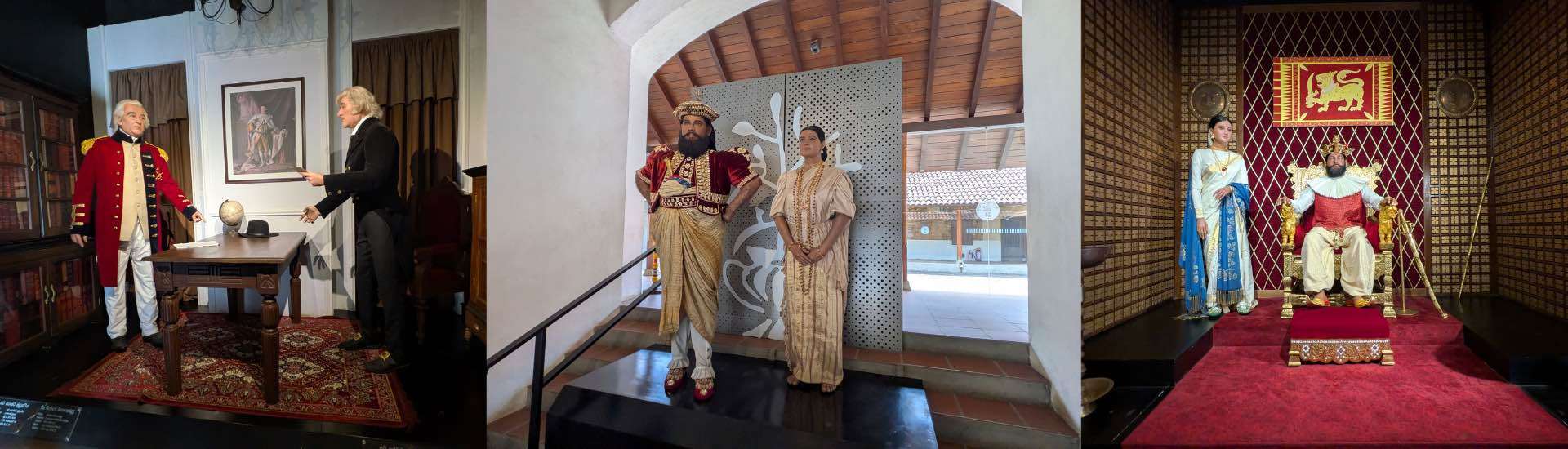
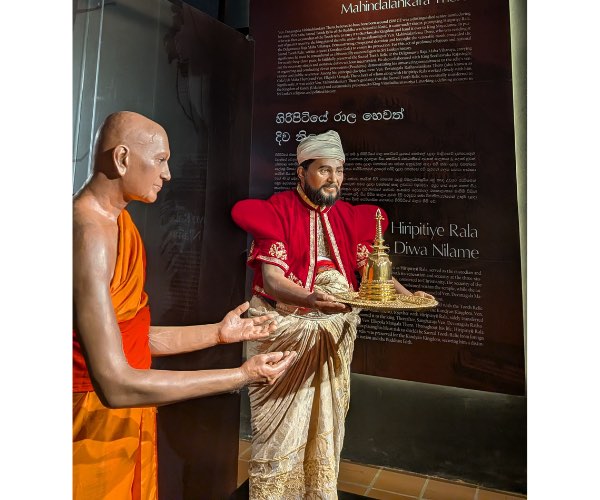
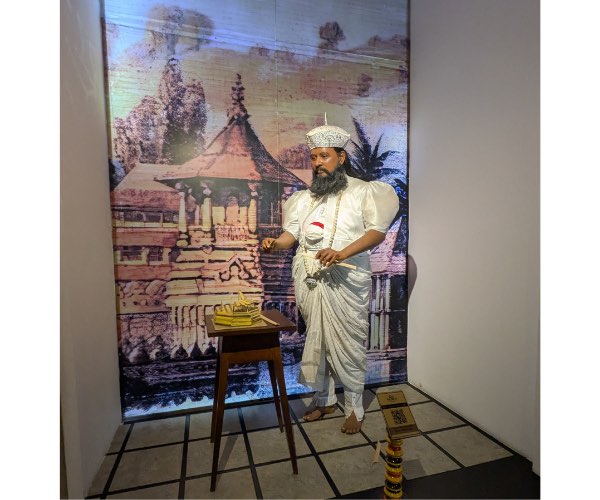
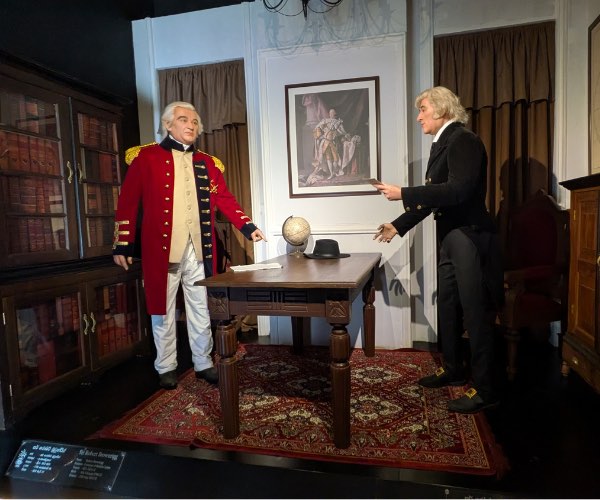
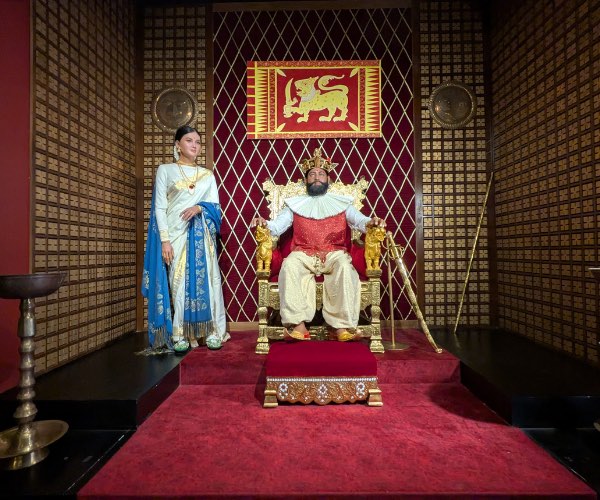
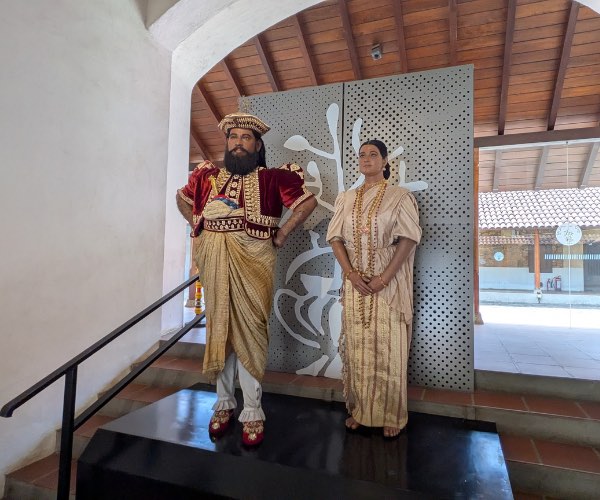
It is hard not to notice the passion and the remarkable effort reflected in the lifelike wax figures at the Ehelepola Walawwa Wax Museum in Kandy - personalities who shaped the history of the Kandyan Kingdom.
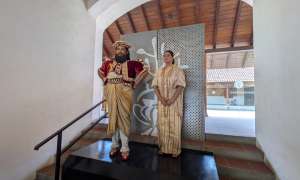
Thirty-six figures, representing kings, officials and the religious, depict the beginning of the Kingdom with the handing over of the Sacred Tooth relic until the Uva-Wellassa rebellion of 1818.
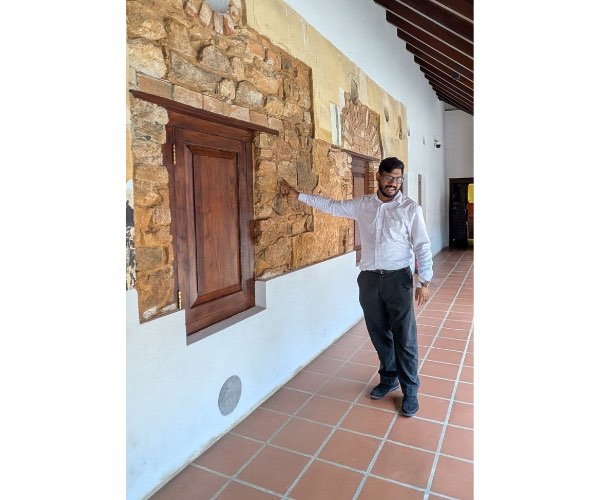
The story comes to life in what was once the last King of Kandy’s Powerful Deputy Ehelepola Adikaram’s administrative quarters, converted into a prison with the arrival of the British, and later became a part of the Bogambara Prison itself.
The Vision to Highlight History
Envisioned by Diyawadana Nilame Pradeep Nilanga Dela Bandara, the Museum is two years of intricate work involving a committee of academic scholars, artists and design experts, chaired by him.
The Diyawadana Nilame said that Ehelepola Walawwa is steeped in rich history, and his goal was to preserve and make use of it with its historical and archaeological value intact.
“Ever since it was handed back by the Bogambara Prisons in 2012, successive governments had proposed various uses for the property, mainly as a hotel,” he explained, adding that he had a different vision for the historic building, which he sustained for well over a decade. “I wanted the Walawwa, with all its history, to serve the purpose of highlighting Kandy and most importantly the Dalada Maligawa,” he continued.
The Ehelepola Walawwa was officially entrusted to the Sri Dalada Maligawa in 2022, prompting the Diyawadana Nilame to explore ways of finally bringing his long-held aspirations for the historic property to life.
“This is when I was approached by wax artist Athula Herath for a different project of his,” he said, adding that he was amazed by Mr Herath’s niche talent of creating sculptures from wax.
It was during this time that the idea for a wax museum took root, progressing into setting up a committee consisting of historians, an archeologist and a sociologist, along with academics in fashion design and a jewellery expert as well.
Giving HIstory it’s Due
Chief Historian and Coordinator of the committee, Professor of History Rohitha Dasanayake, said that they made site visits to find the original sources, from ancient art, sculpture and texts, in order to replicate the figures as close to their original appearance as possible.
Professor of Archaeology Anura Manatunga, Professor of Sociology H.M.D.R Herath and Researcher -Historian Chamikara Pilapitiya were among those who helped gather the data as well.
Professor Dasanayake said that they were deeply dedicated to finding accurate historical data to create the 3D shapes through AI, some of which proved to be near impossible at times.
“There was no evidence of how King Veera Parakrama Narendrasinghe might have looked among any artefacts of the time,” Professor Dasanayake said. “That is, until, after many months of searching, I came across a ‘Yakadadoli’ family - a lineage from an aristocratic concubine, that had a depiction of him.”
He went on to say that, similarly, a traditional depiction of King Senarath, which was supposedly at Araththana viharaya in Hanguranketha, was stolen a few years before. “But luckily, a stamp with that depiction had been made a few decades back, and we could use it for reference,” the professor said.
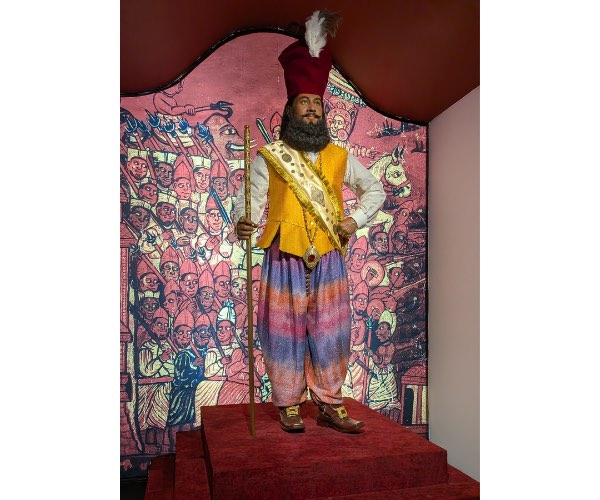
“With Keppitipola Disawe it took nearly six months to get the closest description as we could. We did this by analysing his genealogy, including pictures of his grandchildren and lineage,” he went on to explain.
The gathered data was used alongside AI image creation, which was worked on by Chandula Nanayakkara, to come up with the ultimate, accurate image that would be used by the Wax artist to create the figure.
Historical Fashion
The same dedication to historical accuracy extended to the costumes and Jewellery worn by the figures. The Diyawadana Nilame said he was keen to ensure that they were true to the times, with no imitations or elements that compromised authenticity to the Kandyan era.
Part of the committee, Professors of Fashion Design and Product Development at the University of Moratuwa, Virajini Medagedra and Gayatri Ranathunga, were involved in researching and reproducing historical Kandyan textiles to ensure the garments reflected the clothing of the period as accurately as possible.
“The committee spoke to traditional weavers and got their help to weave the correct type of material,” the Diyawadana Nilame said, highlighting one of the many painstaking efforts that went into bringing the historical figures to life.
Furthermore, the mante, a collar worn by royalty to protect their garments from oil applied to their hair, was another detail recreated for the museum.
Through this, the team not only managed to document the Kandyan era clothing habits but also revived weaving and draping techniques that were of historical significance in their time.
Dhammika Swarnasinghe also played a key role in recreating the jewellery, crafting pieces to match the historical designs that were unavailable in the usual market. This brought all the design aspects together.
.
Moulded into History
With all the data and imaging at hand, it was ultimately the Wax artist, Athula Herath, who brought the Historical figures to life.
“First, a mould is made of the face from a different material, complete with every feature, including the hair,” Mr Herath explained, adding that after accuracy is established, the detail of hair is removed and a special wax is poured into the mould.
“Removing the wax from the mould is a very sensitive process,” he continued. “If one little part of it breaks off, you have to start it all over again.”
Mr Herath added that after completing the wax mould, adding details like hair and working on the eyes and teeth come into play. “Often a figure can have close to 80,000 strands of hair, and you have to make sure it is individually inserted in,” he said.
“Everything has to be observed to a close detail, like the pupil of the eye, how it dilates, how the eyelashes will be for each figure and each detail of the teeth,” he expanded.
Mr Herath said for the Ehelepola Walauwa museum, he made sure that each of the Nine kings on display had different royal poses. “To get the poses for the noblewomen figures, I researched many leading women around the world, to come up with how they would keep their hands when standing still,” he said.
Giving History a Place to Breathe
Furthermore, the architect who worked on the interior of the Ehelepola Walawwa, Mahima Herath, worked to create the right environment to sustain the Wax statues.
According to the Diyawadana Nilame, the challenge was to create a space that respected its archaeological integrity and also a ventilation system that would keep the statues at the correct temperature.
Walking along the museum’s corridors, it was evident how modern architectural elements had been seamlessly incorporated into the historic building, while respecting the character of the Walawwa, which once belonged to one of the most powerful figures in the Kandyan Kingdom.
As Hasitha Gamage, one of the museum’s demonstrators, guided us through its displays, he drew our attention to the artistic details surrounding each figure.
The designs and paintings were not merely decorative additions, but elements carefully chosen to reflect the history and identity of the personalities represented. These touches offered a glimpse into the painstaking attention to detail behind the museum as well.
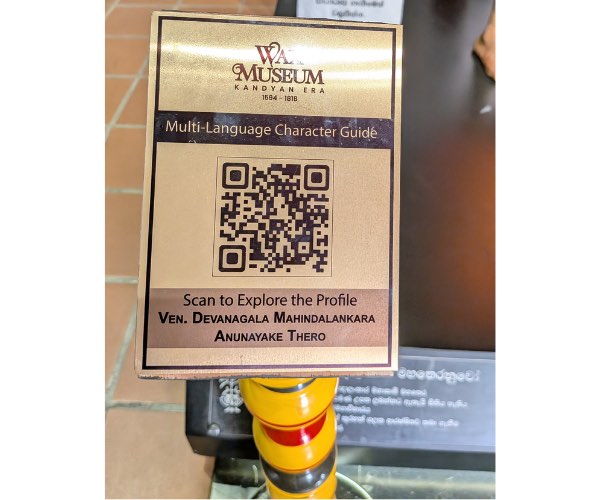
Furthermore, details of each of the kings, their wives, Adhikaram’s prominent Buddhist figures, as well as British Officials who have contributed to preserving Kandyan history, can be either read on the plaque beside it or accessed by QR Code for an easier listening experience.
The Diyawadana Nilame, who remarked about this project as something he lived and breathed for close to two years, said that next in line for the Museum is a virtual reality experience.
“The characters depicted will come alive in a story format, and visitors will be able to experience it through a theatrical journey ” The Diyawadana Nilame said, adding that he hopes the Wax Museum would bring Kandyan history truly alive for people and will leave a legacy for years to come.



0 Comments