Apr 03 2026.
views 185By Paul Topping
We arrive at Kyoto Station, flash our two-week Japan Rail card and get to our platform easily. Where we stand on the platform becomes a question, but we are positioned by a station worker. It is where our carriage will rest in nine and a half minutes. Our train is called the Thunder Bird and leaves on time for a twenty minute trip.
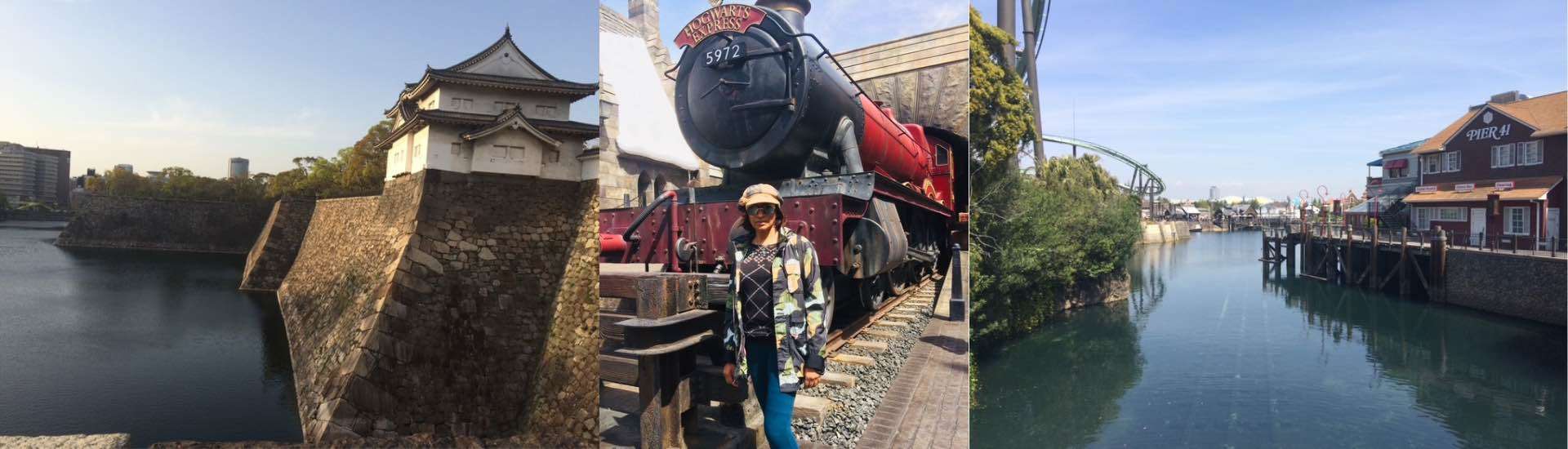
Now it appears that many people put Osaka on their list of cities to visit because of Universal Studio; this is the case for us. By the end of the day we reach a different conclusion as to why a visit to Osaka should be more than a theme park. Another two trains, including one adorned with Harry Potter stickers, get us to Universal. We go through the five key rides, queuing at the Harry Potter ride for fifty minutes. The park is a working monument to what the Americans can build and operate. Built in 2001 , it’s third largest park of its type in the world . An amazing as well an exciting set of rides. Sixteen million visitors a year !
“Parked out”, however, we decide to split into two groups, ladies to shop and boys to visit the International Peace Centre about twenty minutes from Universal by taxi. The taxi driver has never heard of it and has no satnav available. We use our phone and he then understands where to go. The driver says their is a toll on the highway or we go on a slower road
Whinging Pome random rule: “Assume in a strange land , taxi drivers will rip you off
The taxi driver drops us off at the wrong side of a massive park at Osaka Castle. We have to walk through the park and pass a large moat system with an outstanding fort in the centre. We are running out of time as the Peace Centre closes at 4.30 pm. We up the pace and walk quickly to find our target.
Signage is weak, but we find a modern building on multiple floors. Four million people visit this site a year; I suspect mainly foreigners. The population of the city is just under three million and the country over one hundred and twenty million. The centre covers the history of the pre and post WW2. The Americans had developed bombs especially for hitting Japanese cities, which were like massive cluster incendiary devices causing huge fires. Most homes were built from wood. They started bombing in 1944 as Osaka had the largest number of factories supporting the war effort and was home to the military. The last bombing raid on the city on the fourteenth of August 1945 , it was a few days before Japan accepted defeat. There are displays and details outlining how brutal the Japanese were earlier in the century . Look at the Japanese today , humble , helpful and polite .
Our partners ring to say they will meet us at 6 pm at a mall near the railway station. Great. This gives us a chance to go back to the castle and moat walls. It is too late to get into the castle, which has been rebuilt and repaired a few times in the last fifty years. The high wall moats are built with stones that are bigger than a metre square and make British castles of the same era seem somewhat basic.
We are to meet the girls at the Lucua shopping mall. The issue is there are two; we get the wrong one as we hunt for them on the ninth floor. The girls arrive and we dine at one of the many restaurants. It is local but quite Chinese. Osaka is known as the gourmet food city of Japan.
So back to Kyoto on the train, we fall asleep exhausted from our hectic day.
Would we go back to Osaka? Not on this trip, too many other cities to visit. Disappointed not to have done some proper food tastings in a city that is the nation’s kitchen.




0 Comments