Mar 03 2026.
views 227By Rihaab Mowlana
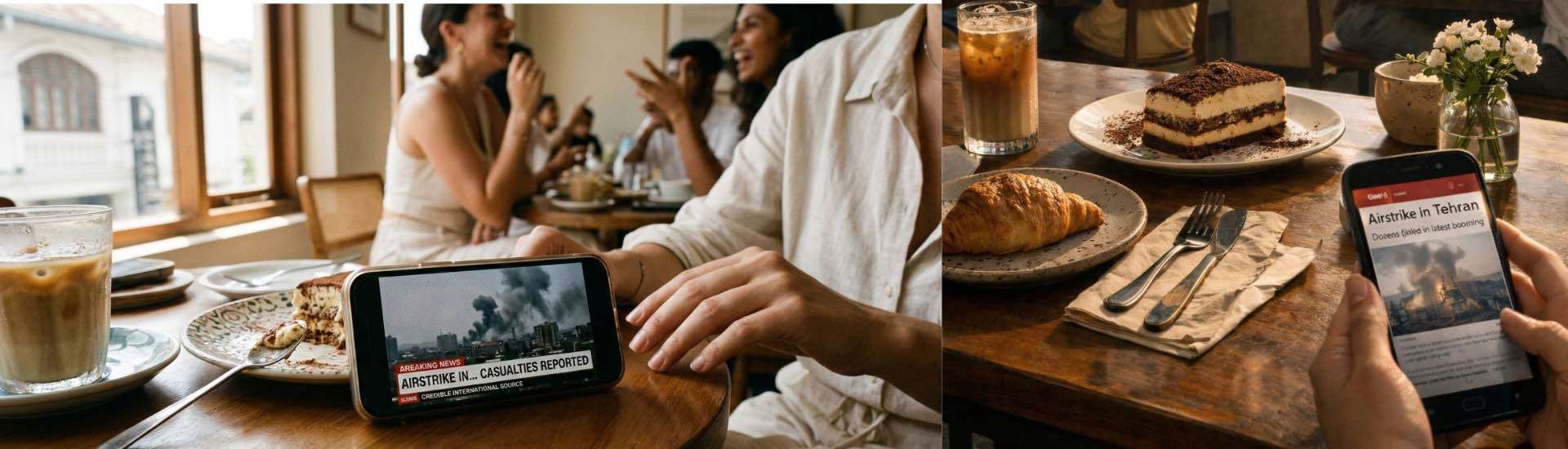
At 11:47 a.m., the café is full.
Sunlight settles in deliberate squares across the floor. Iced lattes bead with condensation. Someone leans forward to adjust the angle of a croissant before taking a photograph. At one table, a group debates the recent cricket match with the seriousness of policy analysts. At another, a bride-to-be scrolls through wedding hashtags, testing how they look in lowercase.
Beneath the table, a phone vibrates. It is not a message. It is not a calendar reminder. It is a headline.
Another escalation. Another airstrike. Another number that feels too large to comprehend and too small to change anything.
Behind each refreshed notification is a family recalculating what safety means, a child learning the sound of sirens, a kitchen table that will not look the same tomorrow. The distance between that table and this one is geographic, not emotional, even if it sometimes feels easier to pretend otherwise.
The screen glows between a skincare reel and an advertisement for linen trousers. A video auto-plays. Smoke rises against a skyline that most people at the table have never seen in person. The footage lasts seconds. The algorithm moves on.
Someone locks the phone.
“Should we get the tiramisu?”
There is a pause. Then a nod. This is not indifference. It is something more complicated.
Psychologists call it compassion fatigue, the dulling that occurs when exposure to suffering exceeds our capacity to process it. The brain, built for local danger, struggles with global simultaneity. It cannot hold a collapsing building and a cappuccino order with equal weight for very long. When there is nothing immediate to fix, nothing tangible to repair, it does what it must to survive. It compartmentalises.
Modern life demands this skill.
The same device that delivers footage of airstrikes also carries restaurant reservations, cricket highlights, birthday reminders, and discount codes. Tragedy arrives formatted like everything else, scaled for a screen that does not distinguish between devastation and entertainment. It is absorbed in fragments. It is swiped past. It is returned to later.
In Colombo, that fragmentation carries a particular weight because crisis is not theoretical here. This is a country that remembers the sound of sirens and the silence that follows explosions. A country that watched Easter Sunday fracture an ordinary morning. A country that stood in fuel queues that stretched across neighbourhoods, while cameras from around the world zoomed in. Sri Lankans know what it means to be reduced to footage, to have grief edited into a segment and broadcast elsewhere.
Perhaps that history is why the guilt feels sharper.
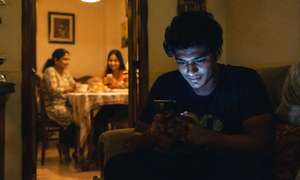
A young professional describes scrolling late at night as “too much and never enough.” Too much information arriving without warning. Never enough agency to alter its outcome. Another hesitates before posting a beach photograph because the light feels almost obscene against images of smoke rising elsewhere. “Am I supposed to stop living?” she asks, and the question lingers longer than the photograph itself.
This is the moral arithmetic of the modern middle class. The negotiation between awareness and endurance. The quiet calculation of how much suffering one can carry without becoming paralysed by it.
Outside the café, the sea looks theatrically calm. Inside, the room is curated for comfort. Linen dresses. Minimalist interiors. A soundtrack soft enough not to intrude. The aesthetic of ease exists alongside a world that is not at ease.
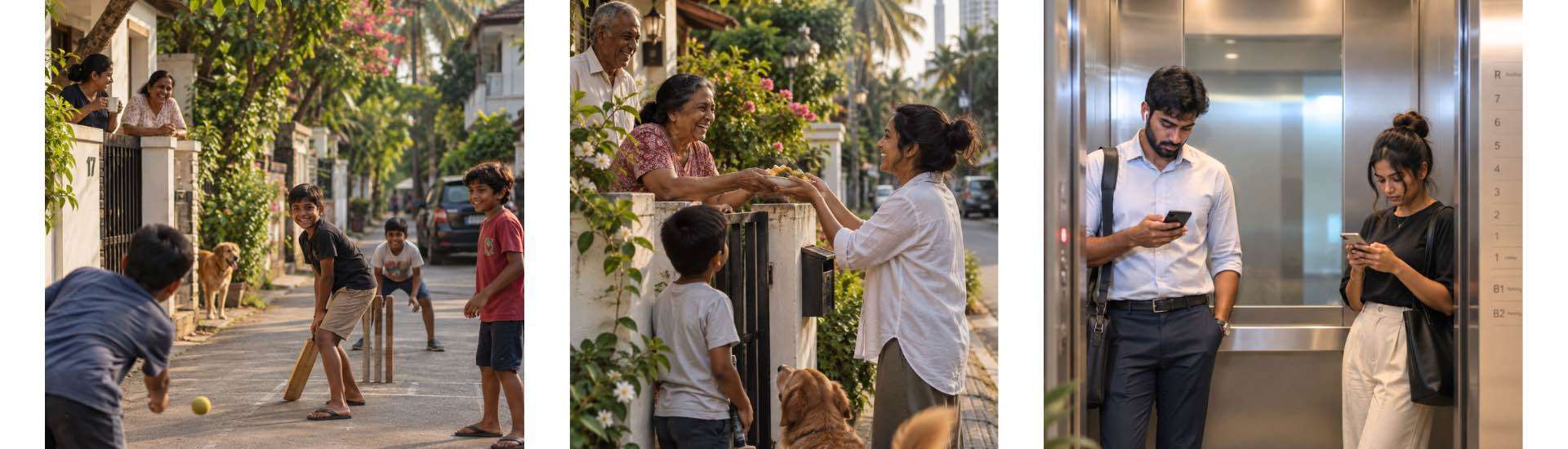
Sociologists often argue that ritual sustains societies during instability. In Sri Lanka, cricket has long served that function. So have weddings. So have Sunday lunches and evening walks at Independence Square, where children race bicycles in widening circles. These are not trivial distractions. They are continuity.
Yet the question lingers, not accusatory but insistent. Is joy an act of resilience, or does it risk becoming retreat?
When the bill arrives, it is split evenly. Phones light up again, briefly, like small private alarms. This time, no one reaches immediately.
The headline will still be there tomorrow morning, refreshed with new numbers, new names, new rearrangements of ordinary lives. The dessert menu will still list tiramisu and flourless chocolate cake, unchanged and indifferent to the scale of loss unfolding elsewhere. The difference between those two realities is not cruelty. It is distance, and distance, however accidental, is its own kind of privilege.
The world does not reorganise itself around a café table in Colombo. Nor does that table exist outside the world. Somewhere between the sweetness of dessert and the cold glow of a notification, a generation is learning how to live with this awareness, how to let grief register without allowing it to consume every ordinary hour. It is not an elegant balance. It does not resolve the discomfort. But it may be the only way to remain human in an age where suffering and sunlight arrive on the same screen.








0 Comments