
Jun 05 2026.
views 489BY PRANAVESH SIVAKUMAR
Social media, children, and its usage has always been a never-ending debate.
Countries that are joining the list for banning social media for U16 are slowly and steadily increasing. With Australia recording a world-first for this, many other countries have already joined the list, with Malaysia joining the ban on socials for U16 children recently.
Neighboring nation India is following selective state restrictions, while Britain is pondering some form of it. Despite many countries having either enforced or announced the blockage, the practicality and achievability for Sri Lanka remains the question, unanswered in many ways. While this remains a big decision for any country and therefore a demanding methodical and meticulous process, the question also remains – how about Sri Lanka?
Specialists’ stance
“You're not going to get a simple yes or no. It is very complicated”, Dr. Sanjana Hattotuwa, a PhD holder in social media, said. “Young people who have grown up with social media understand what some of the risks are, but again, use it in ways that adults do not understand. They use it for peer support”.

Pictured: Dr. Sanjana Hattotuwa
“That is not the way I would frame it. I would say that parents and adults do not understand how it is being used. So, we do not understand how they use it,” he said, in response to whether children are more tech savvy than their parents.
“Do they use Snapchat differently? Do they use DMs differently? Because this is social media, not just Facebook. Social media is an entire range of platforms”, Hattotuwa said.
The Government, too, has been mulling a similar plan for restricting the age to U12. "Has the government undertaken a survey or study for this? Has any kind of university undertaken any kind of study?” he asked.
Parents' Perspective
Sandun Fernando, a father of two U16’s, cemented his stance that under-16s should be barred from socials.
“I am in strong agreement that children under the age of 16 should not be allowed to use social media. It is no secret that there are many research and scientific data available to support the claims that social media is designed to be addictive. It is also very evident that increased use of social media (due to its addictive nature) reduces mental capacities to concentrate and pay attention at length. On top of these, social media has negative effects on emotional regulation and relationship building as well”, Fernando, also an award-winning public speaker, asserted.

Pictured: Sandun Fernando
“I am not too sure how the practical implementation of such a 'law' would look since it requires the total commitment and involvement of social media companies. Do we have jurisdiction over them? How do they verify the actual age of profile users? And is the penalty simply a 'fine' which wouldn't affect these mega-rich corporations in the grand scheme of things?” he said.
Fernando also suggested a way forward for the parties propagating social media for U16’s.
“I am also of the opinion that there should be serious consequences for people/ groups responsible for promoting social media for younger children. This would be more practical to implement as a 'law' in my opinion”.
“My son's school recently conducted a very insightful lecture on 'digital detox' for all parents by a subject matter expert. This was followed up by a group assignment for the family to engage in practical exercises to keep children away from digital devices. We are still in the middle of it, and I find it very practical and encouraging. The program is designed to get both parents and children involved in a fun and meaningful way”, he explained.
In the meantime, another parent, Ruwanthi Gunawardena, also endorsed Fernando’s stand that socials should be restricted. “It’s about time. Our kids are spending way too much time glued to their screens, and it’s completely ruining their sleep and cutting into their schoolwork. These apps are built to be addictive, so as parents, we must step in when it starts messing with their lives.”

Pictured: Ruwanthi Gunawardena
“We're all for strict rules, but a total ban across the board won't work. Kids always find a way around things. Instead, we should regulate it heavily. We need real age verification and strict limits on screen time. That way, they still learn how to use technology but in a safe, disciplined way”, Gunawardena said. She also endorsed blocking for U12 as a better alternative move.
“Banning it completely for kids under twelve is the right move; they are just too young to handle it. But for the thirteen to sixteen crowd, a total ban is too much. It's better to let them have access but keep them under close supervision. It gives them a bit of independence while keeping them safe”.
U16s not happy
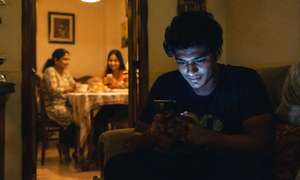
At least half-a-dozen children Life spoke to are, unsurprisingly, against the move. A 13-year-old girl speaking to Life said that though she understands from her parents’ side, blocking it completely is only unfair and unreasonable.
“I get why parents worry because some kids just scroll all day and forget to do their homework or sleep. But for me, it’s just where I talk to my friends after school and see fun videos”, she said.
Adding that rare line for a 13-year-old – “It’s not that bad if you know when to stop”.
The student urged that their recreation should not be snatched away.
“Don’t block it completely. Instead of a total ban, parents can just help us set timers on our phones or lock the apps when it's time to study. It's not such a bad thing if you know how to control it”, she said.









1 Comments
R K says:
Jul 06, 2026 at 11:47 pmSocial media is not just for recreation. It has become the primary media through which businesses engage in communicating with their stakeholders to promote their products and services, conduct PR campaigns, conduct research etc. The features, tools, strategies and mechanisms used for such purposes are evolving at an exponential rate, especially with the developments in AI. This being the case it is not a wise move at all to impose an adhoc ban on social media for generation who will be the custodians of our nation and its economy in the coming years. Just because it's addictive we shouldn't be quick to ban something which is not only informative and plays a role in how in-tune with technology our future population would be, it would also deny them entertainment and social networking opportunities which add value to their lives. For example Sugar is addictive, but can you imagine what childhood would be like if all children were banned from anything that contains sugar ? Another point is that a lot of adults support such a ban for ego based reasons where they feel a sense of control. and superiority over children by limiting their access to the outside world and technological innovations. Whenever it comes to placing limitations on access to information and communication, one should understand that there's a significant cost of liberty at stake and a state should try its level best not to impose such measures unless absolutely necessary , which is never the case.