Mar 31 2026.
views 149By Rihaab Mowlana
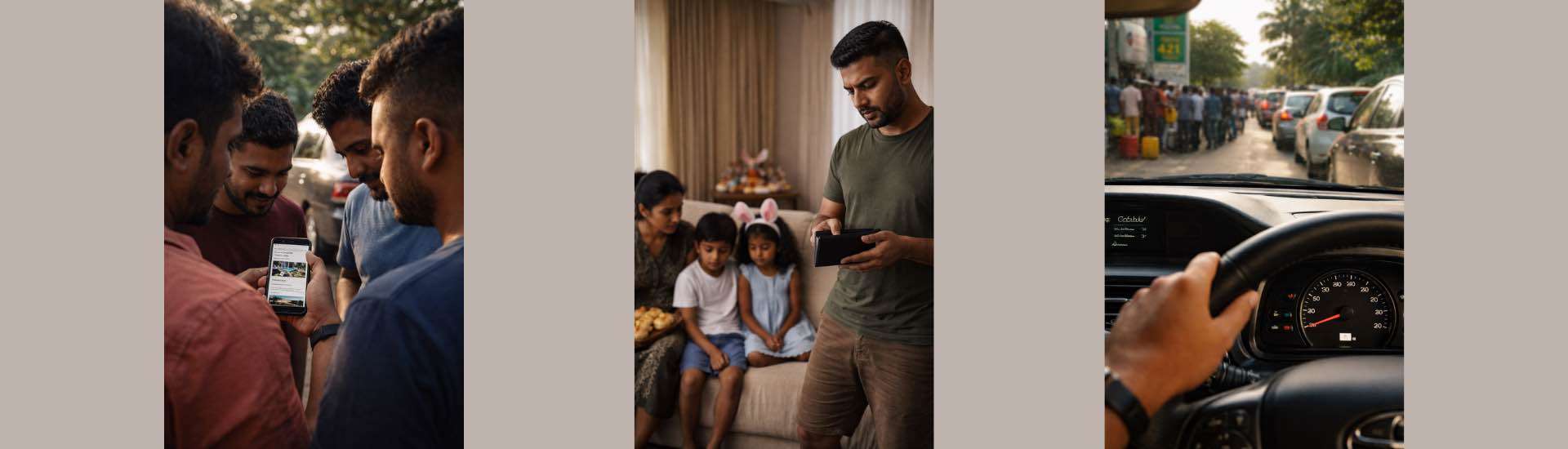
A long weekend in Sri Lanka usually begins in a group chat. Someone throws out a casual “shall we go somewhere?” and within minutes, it’s no longer casual. There are suggestions. South, Ella, somewhere “not too far.” A villa link appears. Someone insists on leaving at 4 a.m. Nobody wants to wake up at 4 a.m. Everyone agrees anyway. By Thursday, it feels like a plan.
This year, there’s a pause in the middle of all that excitement. It comes in the form of one question. “Fuel ok da?” It sounds simple, but it shifts the entire conversation. Because now, it’s not just about where to go. It’s about whether going makes sense. How far is it really? How much will it take to get there and back? What happens if things don’t go as planned?
No one says it too seriously, but everyone is doing the same calculation. You can see it in how plans start to shrink. Galle becomes Kalutara. Kalutara becomes Mount. Mount becomes “honestly, let’s just stay in Colombo.” It happens quietly. No big decision. Just a gradual scaling down.
Fuel used to sit in the background of these trips. You filled up and left. Now it sits right at the centre. You check the tank before you get excited. You think about routes more carefully. Even the idea of getting stuck somewhere feels different when you’re not sure how easy it is to move around. And then there’s everything else.
The villa price, which always goes up during long weekends, suddenly feels more noticeable. Meals out are no longer just part of the experience. You catch yourself estimating before you order. Even small stops start to feel like decisions. At some point, the plan stops feeling like a break and starts feeling like something you have to think through.
Still, the pressure to do something doesn’t go away. A long weekend isn’t supposed to be wasted. That’s the unspoken rule. You don’t just stay home while everyone else is going somewhere. You don’t want to be the one with no plans.
So people go anyway.
By Friday afternoon, the roads are full. Cars packed, playlists ready, everyone convinced they’ve timed it right. Then the traffic builds. Slowly at first, then all at once. The quick trip stretches out. Someone in the group chat sends a voice note that starts with, “aiyo, we should have left earlier. It’s familiar. Almost expected.
What’s different this year is how many people stop before they even get there. Plans get cancelled mid-week. Trips quietly dropped. Destinations replaced with something closer, easier, or nothing at all. “Let’s see.” “Too much hassle.” “Next time.”
Sometimes staying in isn’t even a proper decision. It’s just what’s left when everything else starts to feel like too much effort.
There’s also a difference in how people are moving through the weekend, even if it’s not always obvious. For some, nothing has really changed. The trips are booked, the costs are absorbed, and the plans go ahead as usual. For others, everything feels a bit more tentative. Plans depend on how things look closer to the date, or whether it feels manageable at all. You don’t always see that difference. Because once the weekend starts, it all looks the same.
Photos go up. Beach, pool, road, food. The usual angles, the usual captions. It’s easy to assume everyone is having the same experience. But they’re not.
For some, it’s still a break. For others, it’s something they almost did. And for many, it’s just a weekend they’re trying to figure out as they go. It also raises a question that doesn’t usually come up when things are easy. What does a long weekend actually need to look like? Does it have to involve leaving? Does it have to be planned weeks in advance? Does it have to cost this much to feel like it counts?
This year, those questions feel closer to the surface. Because when every part of a simple trip starts to require more thought, more money, and more effort, you begin to notice it differently. Even the idea of getting away feels heavier than it used to. And sometimes, the best parts of a long weekend don’t come from plans at all.
They come from the gaps. A slow morning with nowhere to be. A short drive instead of a long one. An afternoon that isn’t scheduled. Nothing big. Nothing dramatic. Just something that feels easy. This year, that might be enough.








0 Comments