Jun 23 2026.
views 294By Gayantha Perera
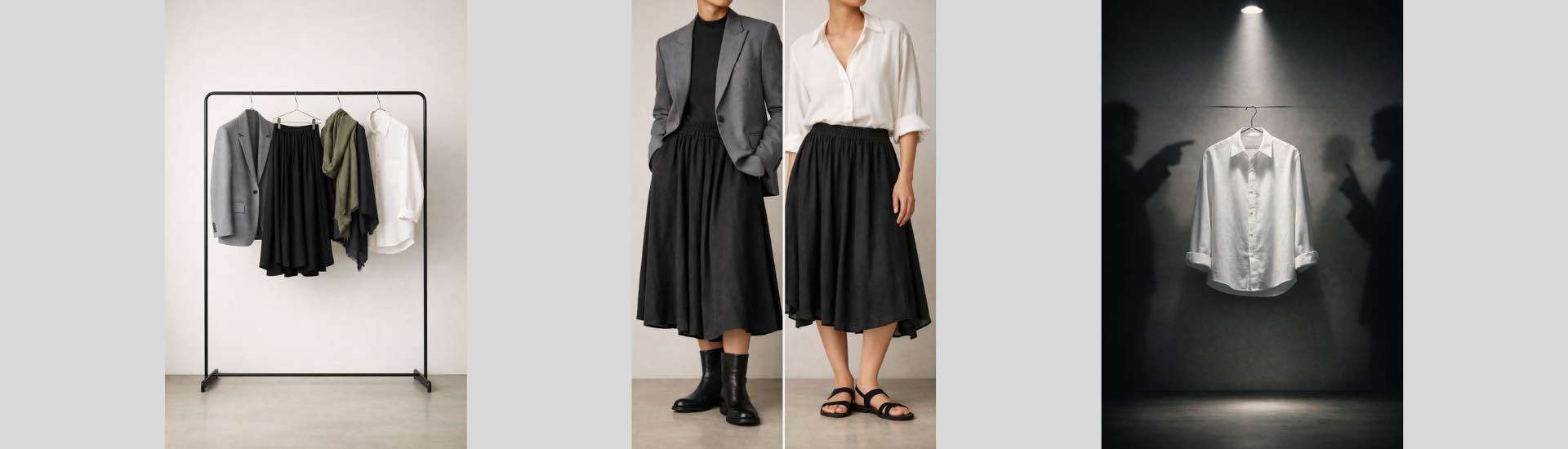
South Asia has a long history of drape, softness, and unstructured silhouettes, but somehow, in 2026, the most controversial thing a person can do is wear the wrong piece of clothing. Not because the garment is offensive. Not because it’s inappropriate. But because someone decided it belongs to a specific gender, and we don’t even want to mention whether we agree or disagree with that decision.
A shirt is a shirt, a skirt is a skirt. Clothing is neutral until culture assigns it a role. And yet we continue to behave as if cotton has chromosomes.
Control Disguised as Culture
The truth is simple: the gendering of clothing has nothing to do with culture and everything to do with control. Clothing becomes political only when someone wants to regulate who gets to express themselves freely and who doesn’t. The policing of garments is never about the garment — it’s about maintaining archaic control in a very evolved society.
Let’s think about it: if a man can’t wear softness, who benefits? If a woman can’t wear structure, who benefits? If a person can’t choose what they’re drawn to, who benefits? It’s certainly not the wearer. Isn’t it crazy to think that you can’t wear what you purchased without considering someone’s outdated opinion of it?
History Never Cared About Gender
Human history is full of silhouettes that never cared about gender — drapes, wraps, robes, layered textiles, garments tied, folded, or knotted in ways that belonged to the body, not to a category. For most of our past, clothing followed reasons of climate, craft, movement, and comfort. It was practical. It was expressive. It was personal.
The idea that garments must declare masculinity or femininity is a relatively modern anxiety — one that has more to do with social control than with culture. Clothing didn’t become rigid until people decided ambiguity was a threat and expression needed rules.
When Clothing Becomes a Weapon
And there’s a quieter, more calculated layer to all of this. The people who benefit when clothing becomes a battlefield. Gendered clothing is one of the easiest tools for manufacturing outrage. It’s cheap, it’s visual, it’s emotional, and it requires no real literacy to participate in. All someone has to do is point at a shirt, a skirt, a silhouette and declare it wrong, and suddenly a harmless garment becomes a referendum on morality, identity, and social order.
These shadowy arbiters of tradition and decency thrive on that reaction. They know that scandalising something as simple as a shirt is an efficient way to radicalise otherwise tolerant people. It’s a distraction tactic: turn clothing into a cultural fault line, and you never have to address the real issues — inequality, governance, economic instability, or the erosion of personal freedoms. A politicised shirt is easier to weaponise than a nuanced conversation.
The Gaze, Not the Garment
That’s how we end up in a world where a man wearing a skirt is treated like a political act, while a man wearing a sarong is treated like a champion of heritage. The template of the garment didn’t change — the gaze did. And that gaze is still stuck in a world where clothing is a tool for enforcing norms rather than expressing individuality.
Expression Is Not a Crime
Clothing has always been one of the most accessible forms of self-expression we have. It’s immediate. It’s intimate. It’s instinctive. And when we gender it, we’re not protecting culture — we’re restricting people. If someone is drawn to a shirt, a skirt, a drape, a silhouette — that attraction is personal, aesthetic, emotional. It does not need to be justified by gender. It does not need to be defended. It does not need to be explained. It certainly does not need to be policed.
The politics of a shirt only exist because we keep insisting they do. The moment we stop assigning gender to clothing, the debate collapses. The moment we stop asking “Should a man wear this?” or “Is this feminine?” the conversation becomes what it should have been all along: Does this garment express who I am? That’s it. That’s the whole point of clothing. Everything else is noise.
What Queer People Teach Us Without Trying
And queer people often become the centre of these conversations not because they’re trying to provoke anything, but because they refuse to shrink themselves to fit someone else’s idea of appropriate. What looks like bravery from the outside is, for many, simply their baseline — the way they’ve always dressed, moved, expressed, and existed. They’re not performing rebellion; they’re performing themselves. But because they step outside the narrow script society hands them, their clothing becomes a talking point, a spectacle, a debate. Again, the garment didn’t change. The gaze did.
The Real Lesson
Maybe that’s the lesson. Queer people aren’t showing us how to be radical — they’re showing us how to be honest. Their relationship to clothing is rooted in instinct, desire, and self-knowledge, not in fear of judgment or the need for approval. They remind us that expression is a human impulse, not a political act. If anything, the rest of us are the ones who have been conditioned into caution. What we call courage in them is simply the freedom we haven’t allowed ourselves yet.









0 Comments