Oct 20 2026.
views 36By Hafsa Rizvi
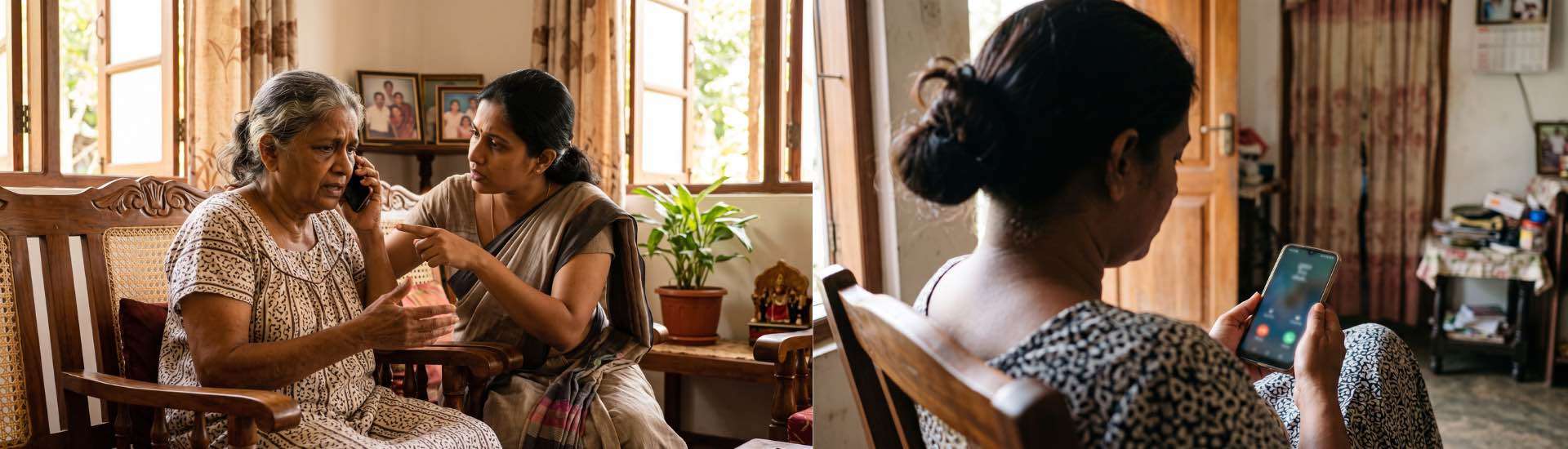
A grandmother gets a call from her grandson: panicked, crying, saying he's been in an accident and needs money wired immediately. The voice sounds exactly right, the tone, the little verbal habits, even the way he says her name. Except he's not in an accident. He's asleep in his own bed. The voice on the phone was never his at all.
This isn't a hypothetical anymore, it's one of the fastest-growing scams in the world right now, and it's exactly why global technology researchers have started treating it as a top-level priority. Analysts at Gartner have formally named disinformation security, protecting people from fake news, deepfakes, fake documents, bot networks, and impersonation, as one of the Top 10 Strategic Technology Trends for 2026, driven largely by how good AI-generated video and voice cloning have gotten. This isn't just a workplace problem for banks and governments anymore, it's a kitchen-table problem, and everyone from teenagers to grandparents needs to understand it. Here's the plain-language version.
What's actually changed
A few years ago, fake video meant something clumsy: bad lip-syncing, a flickering face, an obviously robotic voice. That's no longer true. The tools behind deepfakes have advanced to the point where real-time deepfake video and cloned voices are now convincing enough to fool people who know the real person well, not just strangers. Someone only needs a short clip of your voice, sometimes just a few seconds pulled from a social media video, to build a convincing fake.
That's the uncomfortable part: the more publicly you post your voice and face online, the more raw material exists for someone to copy them.
The three scams you're most likely to actually encounter
All three rely on the same trick: using a voice or face you already trust to bypass the healthy scepticism you'd normally have toward a stranger.
How to check if something's real, without needing to be a tech expert
You don't need special software to protect yourself. A few simple habits go a long way.
Hang up and call back. If you get an urgent call from a relative or official, end the call and dial that person back yourself using a number you already have saved, never a number they give you during the call.
Ask something only the real person would know. A quick, unscripted personal question, not something posted publicly online, is still one of the fastest ways to catch a fake, since even a good clone can't answer what it was never told.
Slow down on purpose. Every one of these scams depends on urgency: "right now," "don't tell anyone," "hurry." That pressure is the biggest warning sign of all, more reliable than any visual glitch.
Watch for small mismatches in video, like blinking that looks slightly off, lighting that doesn't quite match the background, or audio that's a fraction of a second out of sync with the mouth. These are getting harder to spot, but they still show up sometimes.
Never send money or codes based on a single message or call alone, no matter how real the voice or face sounds; verify through a completely separate channel first.
Why this matters for every age group differently
For older family members, the emergency-call scam is the biggest risk. It's built specifically to exploit love and panic, and it works precisely because it doesn't feel like a tech problem.
For teenagers and young adults, the bigger risk is often fake videos and voice clips spreading on social media: believing and reposting something fake, or having their own voice or photos used without permission.
For working adults, workplace impersonation is on the rise. A fake voice note from a manager asking for an urgent payment or password is now a real corporate security risk, not just a personal one.
The one habit worth teaching your whole family
If there's a single rule to pass on to every generation in your household, it's this: a familiar voice or face is no longer proof of anything on its own. It used to be that hearing someone you love was enough to trust what they were saying. That's no longer a safe assumption, and it's not paranoia to double-check; it's just the new normal, the same way locking your front door isn't paranoia. Talk about this openly at home, especially with elderly relatives and younger kids, before an emergency call ever comes in, because the moment it does, there won't be time to think it through calmly.
This article is for general awareness. If you or someone you know has already sent money or information in a scam like this, contact your bank and local authorities immediately. The faster you act, the better the chance of stopping the transfer.












0 Comments