May 26 2026.
views 578By Gayantha Perera
Sri Lanka’s relationship with fashion has long been shaped by a quiet but persistent hierarchy of value: the foreign is aspirational, the local is supplementary, and the imported is inherently superior.
This hierarchy is not merely aesthetic; it is historical, psychological, and deeply embedded in the postcolonial imagination. The reverence we attach to anything purchased abroad - the duty-free perfume, the Dubai sneaker, the London handbag - is not simply consumer enthusiasm. It is a cultural reflex shaped by decades of internalized belief that legitimacy must come from elsewhere. In this sense, Sri Lanka’s fashion landscape is not suffering from a lack of creativity, but from a lack of confidence, a condition that can be understood only by situating it within broader Asian trajectories of cultural self-definition.
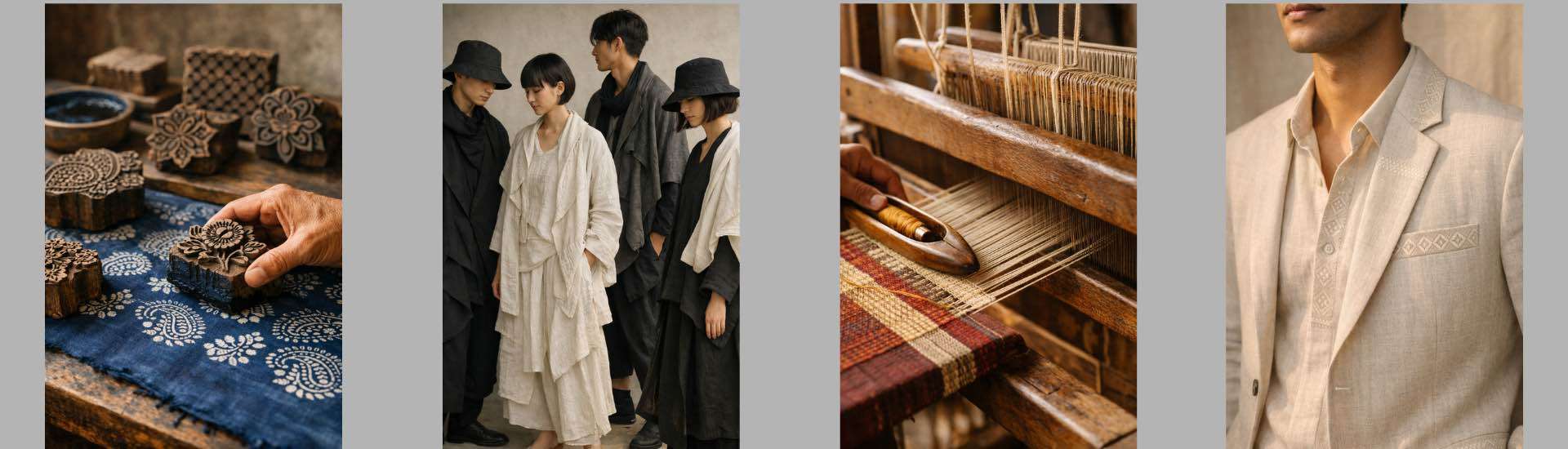
In the late 20th century, Indian urban fashion was similarly dominated by Western aspiration, with global brands functioning as markers of modernity. Yet over the past decade, India has undergone a significant aesthetic recalibration. Designers such as Sabyasachi Mukherjee, Raw Mango, NorBlack NorWhite, and Pero have not merely revived traditional textiles; they have repositioned them as contemporary luxury. This shift was not accidental. It emerged from a deliberate cultural project: the revaluation of handloom, the institutional support for craft clusters, and the articulation of a design language that treated Indian identity not as a nostalgic relic but as a living, evolving aesthetic. India’s fashion confidence today is not the result of rejecting global influence, but of integrating it on its own terms. The West did not validate Indian fashion; Indian fashion validated itself.
Japan, meanwhile, demonstrates a different but equally instructive trajectory. Post-war Japan was inundated with Western clothing, yet instead of succumbing to imitation, Japanese designers transformed foreign influence into a platform for innovation. The avant-garde movements of the 1980s - led by Rei Kawakubo, Yohji Yamamoto, and Issey Miyake - did not seek Western approval; they disrupted Western norms entirely. At the same time, Japan’s mastery of denim, workwear, and Americana did not result in derivative fashion but in globally recognized excellence.
Japanese consumers and designers alike developed a cultural disposition that treated foreign aesthetics as raw material rather than instruction. The result was a fashion identity that is both globally influential and unmistakably Japanese. Japan’s example illustrates that cultural confidence is not about purity or isolation, but about authorship - the ability to reinterpret external influences through an internal logic.
Sri Lanka, by contrast, has yet to undergo such a transformation. Despite possessing a rich textile heritage - from dumbara weaving to batik traditions, from sarong drape cultures to tropical tailoring, these elements remain largely peripheral to mainstream fashion consumption.
Local designers often find themselves pressured to mimic global aesthetics in order to be taken seriously, while consumers continue to equate value with foreignness. The phrase “looks imported” remains one of the highest compliments a Sri Lankan garment can receive, revealing the extent to which external validation still governs local taste. This dynamic not only undermines the development of a distinct Sri Lankan design language but also perpetuates a cycle in which originality is treated as risk rather than opportunity.
What makes this particularly striking is that global fashion is moving in the opposite direction. The contemporary luxury market increasingly prioritizes provenance, craft, and cultural specificity - precisely the qualities Sri Lanka possesses but underutilizes. As India exports its textile identity and Japan exports its design philosophy, Sri Lanka remains caught in a pattern of aesthetic dependency.
The issue is not the presence of global influence - which is inevitable and often productive - but the absence of a confident local framework through which to interpret it. Imported insecurity has created a fashion culture that consumes globally but creates cautiously, admires outwardly but doubts inwardly.
Overcoming this requires more than celebrating local craft in abstract terms. It demands a structural shift in how Sri Lankans perceive value. It requires consumers who can evaluate quality without relying on logos, designers who feel empowered to innovate from within their cultural context, and institutions willing to support the development of a national design identity. It requires, above all, a reorientation of taste — away from the assumption that style must be authenticated abroad and toward the recognition that cultural identity is not a liability but an asset.
Sri Lanka does not lack the resources to build a distinctive fashion identity. What it lacks is the confidence to believe that such an identity is possible. India and Japan demonstrate that cultural confidence is not inherited; it is constructed. It emerges when a society decides that its own aesthetic traditions, climates, bodies, and histories are worthy of shaping its future. Until Sri Lanka makes that decision, imported insecurity will continue to dictate its fashion choices.
The irony is that the most radical shift Sri Lankan fashion could make right now is not toward the foreign, but toward itself. And perhaps the most subversive garment a Sri Lankan can wear today is not a logo from elsewhere, but a sense of cultural authorship — the quiet certainty that style does not need a passport to be legitimate.










0 Comments