Jun 16 2026.
views 15By Rihaab Mowlana
We were midway through a WhatsApp call - Chandrasekaram navigating an afternoon in Australia, me on the other end in Colombo - when the question about his rural, Sinhala-speaking, Buddhist protagonist prompted him to pause, step off a bus, and then continue as though there had been no interruption at all. Here was a man who had just made literary history, fielding questions between bus stops.
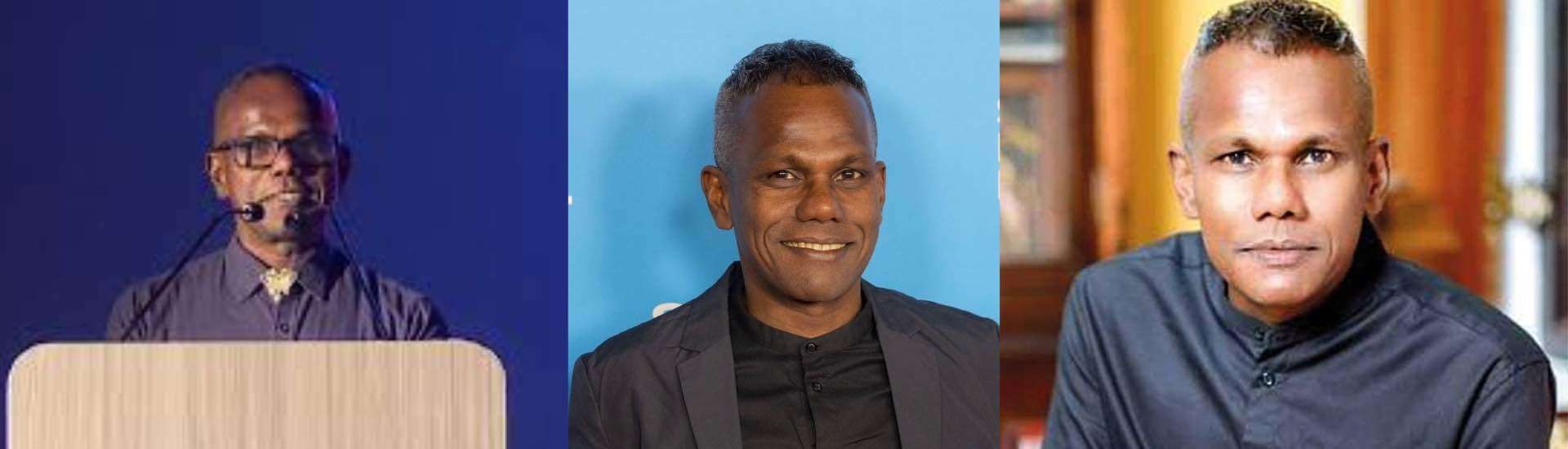
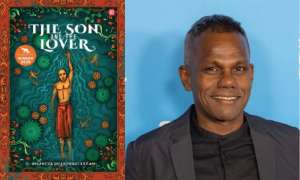
Days earlier, Visakesa Chandrasekaram had become the first writer to win the Gratiaen Prize twice. The novel that did it - The Son and the Lover - is a queer love story centred on a young Buddhist monk and an Australian man. It is the kind of book that, he acknowledges, some people might find confronting on the surface. He does not seem particularly troubled by that.
"It is my story, and I will tell the story that I want to tell," he says. Not defensively. As a matter of fact.
When Chandrasekaram first won the Gratiaen in 1999 for his play Forbidden Area, he was thirty years old and, by his own account, largely unaware of what he had received. "I didn't know the value of the prize," he says. He hadn't yet read Michael Ondaatje, whose Booker Prize winnings funded the award. English was still a language he was growing into; Sinhala was where his thinking lived. "I was not a very good writer in English."
A quarter century later, he understands it differently. His colleagues at the University of New South Wales reached out when the news broke, describing Gratiaen as the Sri Lankan equivalent of the Booker. He concedes that the prize carries real weight, particularly for Sri Lankans abroad. "I feel very content, I guess," he says.
For a man who has just achieved something no other writer in the prize's history has managed, it is a remarkably understated response. But understatement seems to be part of how he operates.
The Son and the Lover took ten years. He only confirmed as much when the shortlist was announced, and he went back to check his files. It began as a screenplay — a cross-cultural love story he had tried and failed to get made as a film, stalled by the logistics and expense of production across two countries. When it became a novel, it expanded. The screenplay had the shape of the story. The prose gave him the interior.
"I had total freedom," he says of the shift from screen to page. "It's not only about visual expression; you can explain feelings, emotions, histories." The characters, he insists, are fictional. But the experience of cross-cultural relationships (he has had two, with an Australian partner and a German partner) gave the dynamic its texture.
The Buddhist monk at the novel's centre is, in part, a way into something he has been thinking about for a long time: the way Buddhist philosophy frames ageing and transition, the movement between stages of a life. "Being young and then becoming mature and then becoming older," he says. How that is navigated, and what it costs.
And then there is the title itself. "The son and the lover." He coined it, he explains, from a third strand of the book: the relationship between the protagonist and his mother, which runs alongside the love story. It is a different kind of intimacy from the one the novel is best known for. But it is, he suggests, equally central.
The choice to make the protagonist rural, Sinhala-speaking and Buddhist was deliberate on multiple fronts.
The most direct: to dismantle the persistent claim that queer identity is a Western import, a foreign idea that arrived with globalisation and has no roots in Sri Lanka. "There are no factual bases for that," he says flatly. Queer people have existed across cultures and throughout history, including here. Choosing a rural Buddhist youth as the story's anchor is, among other things, an argument.
But it is also a strategic one. If you want the majority to understand the lives of a community it has largely ignored, you have to tell stories in which the majority can see themselves. "I always have a political agenda in my work," he says, without apology or qualification. "In order for the majority to understand the stories, you have to address them."
He is aware of the limitations. The Son and the Lover is written in English, which means its direct readership in Sri Lanka is small. "Couple of hundred people who might end up actually reading it," he says, with characteristic bluntness. But there is a translation into Sinhala being discussed. His Sinhala, he notes, is as strong as his English, possibly stronger, though he doesn't have the patience to do it himself, and he believes the ideas travel even when the text doesn't. Stories get told and retold.
The judges described The Son and the Lover as brave. Chandrasekaram prefers a different word. "I would say honest," he says. He was not hiding his vulnerabilities as a person or a writer. He was not self-censoring. The bravery reading, he thinks, comes from outside, from commentators who have been applying it to his work since Forbidden Area, when writing a play that criticised state military action during the peak of the war carried its own kind of risk.
He does not exactly dismiss the label. But he offers an alternative explanation for why he doesn't feel it: naivety.
"I call myself somewhat naive, even now," he says. The logic is disarmingly simple. He does not consider himself important enough, internationally, to be a target. "Who would really care to come after me?" This is not false modesty; it is a genuine assessment, delivered with something close to amusement. He imagines, briefly, a fictional prosecution: a complaint lodged, an attorney general charging him under some provision, a stretch of remand. It has happened to writers for less. But then he imagines someone actually reading the book, all the way through, and finding nothing in it that would sustain the charge.
"If you actually read the whole book," he says, "the judge can't simply argue that this involves any sort of blasphemy."
For decades, queer literature in the Western tradition tended toward a particular kind of ending. Isolation. Violence. Death. The story of a life that could not be lived.
Chandrasekaram is conscious of that inheritance and deliberate about departing from it. Not because the hardships are not real - for most queer people in Sri Lanka, he is clear-eyed about what daily life looks like, particularly outside Colombo - but because he believes artists have an obligation that goes beyond documenting reality.
"Most of them are living under severe hardships," he says. "Because of that, we have the obligation to keep that hope."
It is, he explains, why he is careful about endings. Why he is wary of narratives that resolve into tragedy or despair, however truthful those outcomes might be to the lives being depicted. The community is not waiting for more confirmation of its suffering. It needs something else from the stories told about it.
He is also precise about a second obligation: representation that does not cause harm. His background as a human rights lawyer means he approaches this with a kind of professional rigour. What some tabloids do - rushing to cover a queer person's death by suicide, misgendering someone in transition, effectively outing people - is one form of harm. But what fiction does matters too. The responsibility, as he sees it, is cumulative. An obligation to accuracy, to dignity, and to the possibility of a future worth imagining.
Chandrasekaram has had more careers than this sentence can reasonably contain - lawyer, human rights advocate, filmmaker, academic, writer, and that is before we get to the rest. Asked which role taught him most about human nature, he does not hesitate long. The law. Not the courtroom specifically, but the work around it. The years spent in diversity and inclusion, solving problems for minority groups within institutions, navigating what it means to hold power over someone else's circumstances and trying to use it well.
Does he feel pressure, wearing all those hats at once?
"If it is in your DNA, nothing can put the pressure on you." Art and advocacy, for him, have never been separate practices. They were fused from the beginning, in the work he was doing as a young lawyer in the years before Forbidden Area, and they remain fused now. He doesn't experience the combination as a burden. He experiences it as a method.
—
As the call ended and he returned to his afternoon, what stayed was not the milestone. It was the thing he came back to - the community that has shaped his work, not the part of it that has found acceptance or built careers or achieved visibility, but the part that has not. The people who remain unseen, who are still fighting for basic dignity, who are still waiting for stories that reflect their lives back to them without foreclosing their futures.
He has spent decades using law, art and advocacy on their behalf. And yet.
"I feel," he says, "that I have not done enough."
It was, all things considered, an ordinary afternoon. He had groceries to get. Life, like his work, does not pause for milestones.








0 Comments