May 27 2026.
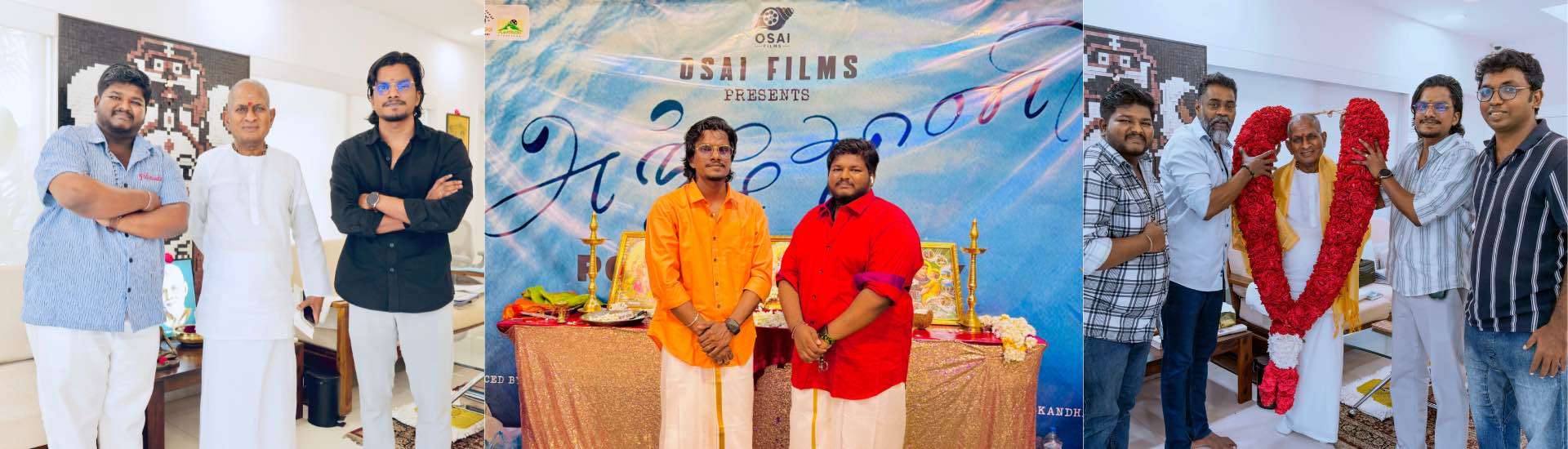
views 476Today on Buzz with Danu, I’m chatting with the two creative minds behind the Sri Lankan Tamil film Anthony directors — Sukirthan Christhuraja and Jenosan Rajeswar.
This conversation goes beyond just talking about a film. It’s about passion, identity, storytelling, and having the guts to make cinema that feels real and grounded. It’s honestly exciting to see young filmmakers stepping up with stories like this, because Sri Lankan cinema really needs voices that are ready to take chances, spark conversations, and bring authenticity back to the screen.
A lot of people forget that Sri Lankan Tamil cinema had a strong presence back in the 70s and 80s. There was a unique energy, culture, and storytelling style that really connected with audiences. Somewhere along the way, that faded a bit. But seeing filmmakers like Sukirthan and Jenosan coming into the spotlight now, it genuinely feels like a fresh new chapter is starting to take shape.
In this interview, we talk about the journey behind Anthony, what filmmaking in Sri Lanka is really like, the future of Sri Lankan Tamil cinema, and why stories like these matter now more than ever.

1. Anthony arrives at a time when conversations around Sri Lankan Tamil cinema are finally becoming louder and more visible. Did you feel a sense of responsibility while telling this story?
Answer:
Yes, we truly felt a huge sense of responsibility while telling this story. This is not just another Sri Lankan Tamil film among many others. Anthony was a dream project created with the intention of building our Tamil cinema — with a unique and refined storyline, talented actors, skilled technicians, and a grand musical vision.
The film has already opened new chapters in the history of Sri Lankan Tamil cinema and created opportunities for many artists to continue working in the industry. This is a film made for the people, with the belief that they would embrace it. Today, Anthony has proven that belief to be true.
⸻
2. For years, Sri Lankan Tamil cinema struggled with visibility, funding, and proper platforms. What do you think needs to change for the industry to truly grow beyond niche audiences?
Answer:
Quality films need to be released consistently in theatres. Many Tamil films here begin production but end up stopping after screening in only one or two theatres. The main reason is the lack of high-quality productions.
If Tamil films continue to release regularly, audience engagement will increase, and people will begin celebrating our Tamil cinema.
More importantly, there must be a proper association for film distributors. Tamil film distributors should unite and create a system to distribute our films globally, especially in European countries, and help achieve commercial success internationally.
If all these things happen properly, Sri Lankan Tamil cinema will very soon become a major force.
⸻
3. This film feels emotionally rooted in identity, struggle, and humanity. How important was it for you to tell a story that reflects realities many Sri Lankans silently carry?
Answer:
It is our moral responsibility to bring our stories to the world. With that vision, we began our journey into commercial cinema through stories rooted in our own land and lived experiences.
Anthony is a film that portrays human emotions. Through themes like love, family unity, social harmony, and dedication to one’s profession, we spoke about issues that ordinary people can easily connect with.
Telling stories about our society and empowering our people is one of the most important things cinema can do.
⸻
4. Do you believe Sri Lankan Tamil cinema is now entering a new era, where stories can travel internationally while still remaining deeply local?
Answer:
Even if it is not happening on a massive scale yet, we strongly believe that films carrying our stories to international platforms have already begun emerging. Many continuous film projects are being created now.
So, we have no doubt that Sri Lankan Tamil cinema will soon receive international recognition.
⸻
5. As directors, how difficult is it to balance commercial expectations with meaningful storytelling in a market like Sri Lanka?
Answer:
There are definitely challenges in telling meaningful stories. Audiences here are often used to celebrating mainstream commercial cinema, so when we suddenly present stories deeply rooted in our soil and culture, people need time to adapt to them.
But over time, this difficulty will fade. Once people truly believe that we have our own cinema industry, we will absolutely be able to create commercially successful films consistently.
Future cinema planning must also focus on ensuring commercial recognition not only in Sri Lanka but in every country where Tamil communities live.
⸻
6. What conversations did you want Anthony to spark among younger Sri Lankan filmmakers and audiences?
Answer:
Our wish was for Anthony to become a quality film loved by the people within Sri Lankan Tamil cinema. But the audience went far beyond our expectations and showered the film with immense love and appreciation.
Young artists now look at Anthony as a model film. Many have told us they feel inspired to create similar high-quality productions.
People across the world who watched the film have deeply connected with it. The greatest reward we received is the love and appreciation from the audience.
⸻
7. Cinema has the power to heal, question, and even challenge society. In your opinion, what role should Sri Lankan cinema play today in a post-war generation?
Answer:
Cinema is the greatest weapon we have to raise our voices for our rights and tell the world about the injustices we faced. We must use this powerful medium responsibly.
Instead of focusing only on sensationalism, drugs, prostitution, and superficial commercial elements, we should create films about the pain of our land and the stories that belong uniquely to us.
These are not just films — they are historical memories of our Tamil people that will be passed down through generations and preserved as timeless treasures.
Cinema is both our political weapon and a medium that brings joy to people.
⸻
8. Were there moments during the making of Anthony where you felt emotionally overwhelmed by the subject matter or the performances?
Answer:
Throughout the shoot, because of the incredible contributions of the actors, we found ourselves becoming emotional almost every moment. Beautiful scenes were unfolding right before our eyes, and Anthony was transforming into a massive cinematic experience. The joy we felt during those moments was beyond words.
One particularly unforgettable moment was while filming the climax sequence. The dedication of our artists was extraordinary.
For two days and nights, we had to carry out all the coordination work inside the sea itself. Fire trucks were brought from Dambulla for the rain scenes, along with three water tankers. More than seventy artists worked in the freezing sea wind with complete dedication. Even now, remembering those days feels deeply emotional.
⸻
9. Sri Lankan Tamil stories are often underrepresented globally. Did you consciously create Anthony with an international audience in mind as well?
Answer:
Anthony has now transformed into a film that has received international recognition. That recognition is extremely important for our cinema to grow into a globally successful industry.
So yes, one of our goals was for the film to gain international attention. Anthony has already won awards at several film festivals.
To help the film reach wider audiences internationally, it was dubbed into Sinhala and Malayalam. It was also released in France with French subtitles and screened for three continuous weeks to packed theatres, where it was celebrated by audiences there.
From the very beginning, our intention was to create a film of international standard that would be talked about globally.
⸻
10. What were the biggest production challenges you faced while making this film in Sri Lanka — financially, technically, or emotionally?
Answer:
Financially, we did not face major difficulties because of the support given by producers Osai Films Ramanan and Sugandhini.
However, technically, Anthony became the first Sri Lankan Tamil film to be shot using the Arri Alexa SXT camera. Because of that, all the technical equipment, including lighting systems, had to be imported from abroad. Co-producer Sreeskandarajah joined the project specifically to help make that possible.
So we had to complete the film while overcoming many technical challenges. In addition, finding producers willing to invest such large amounts of money and successfully completing the project itself was a massive task.
⸻
11. Many talented Sri Lankan Tamil actors and technicians leave the industry because of limited opportunities. How do we create a stronger ecosystem that keeps talent here?
Answer:
If the number of films being made increases, we can retain our artists. Anthony has already done this successfully. More than seventy artists worked on the film for thirty days with paid employment opportunities. All of them were trained actors and technical professionals.
Right now, because there are not enough opportunities to create quality films, we hesitate to commercialize cinema properly. Only through continuous contributions can we build a strong commercial cinema ecosystem.
If more films are made regularly, many artists will continue to have employment, and fewer people will leave the industry. It will create the foundation for a professional cinematic transformation.
⸻
12. Did you ever feel pressure to make the story “safer” or more commercially acceptable, instead of staying authentic to your vision?
Answer:
As I mentioned earlier, creating stories rooted in our land requires great care. Even if a story contains fictional elements, it is still important to work toward commercial success. Producers naturally prioritize financial returns, while creators value artistic recognition and uniqueness.
So the truth is that we are forced to carefully balance both aspects while making films.
⸻
13. What does success for Anthony truly mean to you — box office numbers, critical recognition, or emotional impact?
Answer:
People all over the world who watched the film in theatres have praised and appreciated it immensely. Commercially too, the film has crossed significant milestones. Overall, Anthony has become a complete success.
Especially for a debut project, we experienced many extraordinary achievements. We happily accept the love, opinions, and recognition given by the audience.
Most importantly, the success of Anthony has opened doors for us to continue creating more films. After its success, many others have also begun pursuing their own film projects. Anthony has brought us fame, success, and financial rewards.
⸻
14. Looking at the current landscape, are you hopeful about the future of Sri Lankan Tamil cinema, or do you still think we have a long way to go?
Answer:
I believe we still have a long moral journey ahead of us. We need to cultivate the habit of audiences watching our films in theatres. Only if this continues consistently will Sri Lankan Tamil cinema become a truly recognized cinematic space.
The gaps must continuously be filled with new cinematic creations. Otherwise, the industry will collapse.
⸻
15. Finally, if Anthony becomes a turning point for Sri Lankan Tamil cinema, what do you hope future filmmakers will learn from your journey?
Answer:
At a time when cinema industries around the world are growing into massive commercial businesses, Sri Lankan Tamil cinema has long been trapped in complaints about lacking money and producers. Anthony has broken that barrier. It has become known as one of the biggest-budget films in Sri Lankan Tamil cinema history.
We believe Anthony will remain a landmark film for future artists. We hope upcoming filmmakers will aim to surpass its milestones and create many new achievements.
More importantly, filmmakers must strive to use proper technical equipment and create films of high quality. We must move away from producing low-quality films that condition audiences to accept non-commercial cinema standards.
Anthony has shown future directors the importance of creating quality cinema and understanding the techniques needed to distribute films globally in theatres.









0 Comments