Aug 13 2026.
views 122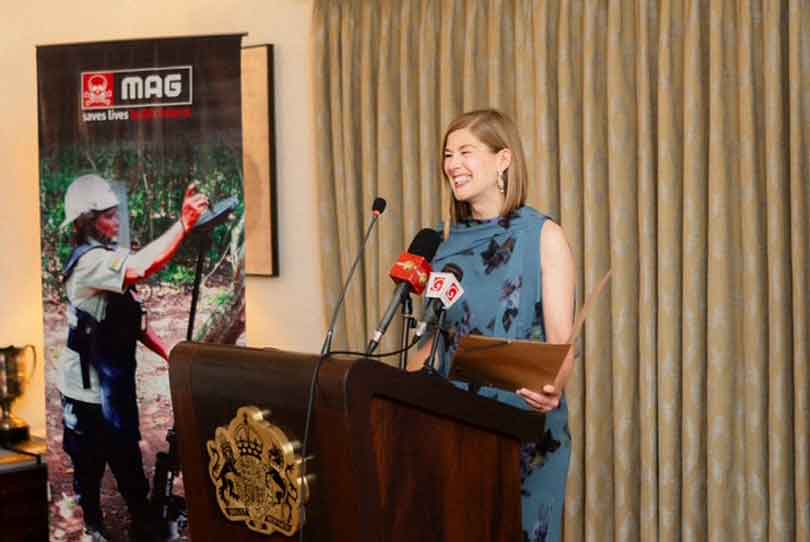
There are some evenings where you go expecting a pleasant conversation, perhaps a photograph, a familiar face or two, and something decent to eat. And then there are evenings that send you home thinking. This was one of those.
I had the pleasure of meeting award-winning British actor Rosamund Pike at the residence of the British High Commissioner in Colombo. Most of us know Rosamund from the big screen — the films, the awards, the red carpets and, of course, Gone Girl, which probably made an entire generation slightly more careful about whom they marry. But this visit to Sri Lanka wasn’t about cinema. It was about something buried beneath our soil. Literally.
Rosamund is an Ambassador for the Mines Advisory Group (MAG), which has been working in Sri Lanka since 2002 to remove landmines and other explosive remnants of war. And the numbers she shared were staggering. More than one million landmines have been cleared in Sri Lanka. MAG teams alone have cleared around 103 square kilometres of land. Around one million people have been able to return home, and landmine casualties have fallen from approximately 250 a year to just three in 2024.
One million mines. It’s one of those numbers you hear and perhaps applaud without really stopping to understand what it represents. One million objects buried in the ground, each capable of changing somebody’s life forever. And then think about the people who had to find and remove them. One by one.
I was fortunate enough to have a few words with Rosamund, and what immediately struck me was how affected she was by what she had seen. She told me about travelling to the North and seeing the land herself — not from a report, photograph or presentation, but actually being there and meeting the people involved in clearing it. There is obviously a huge difference between hearing the words “landmine clearance” and standing on land where someone has to determine whether the next few centimetres are safe.
Rosamund had even worn the protective gear. She explained that once you include the equipment and tools, you’re carrying around 20 kilos of additional weight, in Sri Lanka’s heat and humidity, for hours. I complain when my jacket is too heavy at an event, so clearly I will not be applying for this job anytime soon. But behind that little moment of humour is an extraordinary reality. These men and women work in conditions where concentration isn’t simply about doing your job well. A mistake can mean losing a limb or a life. It requires precision, discipline, courage and, above everything, absolute trust in the person working beside you.
One part of Rosamund’s speech particularly stayed with me. She spoke about a woman working with MAG whose own life had been deeply affected by the conflict. She was left with two children under the age of two and has now worked with MAG for 13 years. Think about the circle in that story. A woman whose life was changed by war now spends her working life helping remove the physical remnants of that same war. There is something incredibly powerful about that. She isn’t metaphorically removing scars; she is actually removing them from the earth.
Rosamund also spoke about how moving it was to see women playing such an important role in mine action. We often talk about women rebuilding communities after conflict. Here, they are quite literally making the ground beneath those communities safe again.
Those of us living comfortably in Colombo use the word “safe” rather casually. “Drive safe.” “Get home safe.” “Is that area safe?” But imagine waiting for someone to officially tell you that the land where your family once lived is finally safe enough to walk on. Safe enough for your child to run across. Safe enough to plant something. Safe enough to build a home. Safe enough to return.
When MAG releases cleared land back to communities, it isn’t simply returning a piece of property. It is returning possibility. People can farm again. Children can walk without fear. Families can build homes. Communities can begin rebuilding livelihoods. Rosamund said something during her speech that I thought was particularly beautiful: trust is earned metre by metre through painstaking, careful work. And Sri Lanka certainly knows something about rebuilding trust.
Perhaps the most hopeful part of the evening was hearing how close we are. Just over 21 square kilometres of contaminated land remain, spread across 11 districts. Rosamund put it into perspective: that’s roughly half the size of Colombo. After everything that has already been cleared, 21 square kilometres sounds almost manageable. Except these are the hardest kilometres.
As Rosamund put it, we’ve plucked the low-hanging fruit. What remains is at the top of the tree. These areas are difficult to access. Contamination can be scattered unpredictably through dense undergrowth and forests, with bunkers and trenches from the war still remaining. And that means the final stretch requires sustained funding.
This is perhaps the dangerous point in any long journey. When the finish line becomes visible, everyone assumes somebody else will get you there. But without continued support, families continue waiting. Waiting for safe land. Waiting for safe homes. Waiting to farm. Waiting to return.
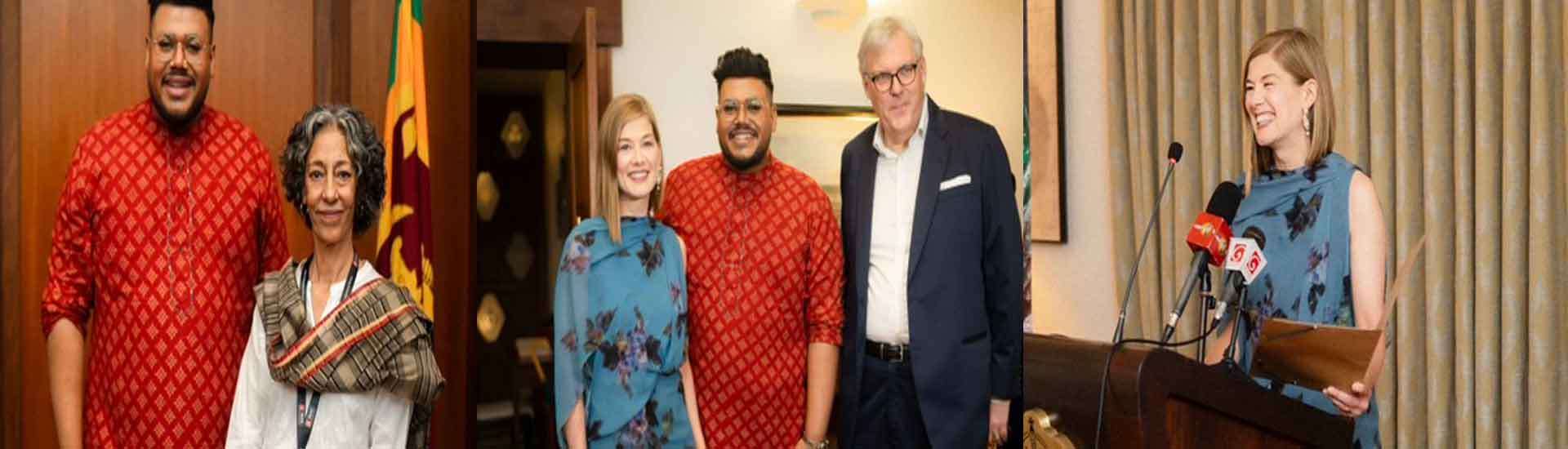
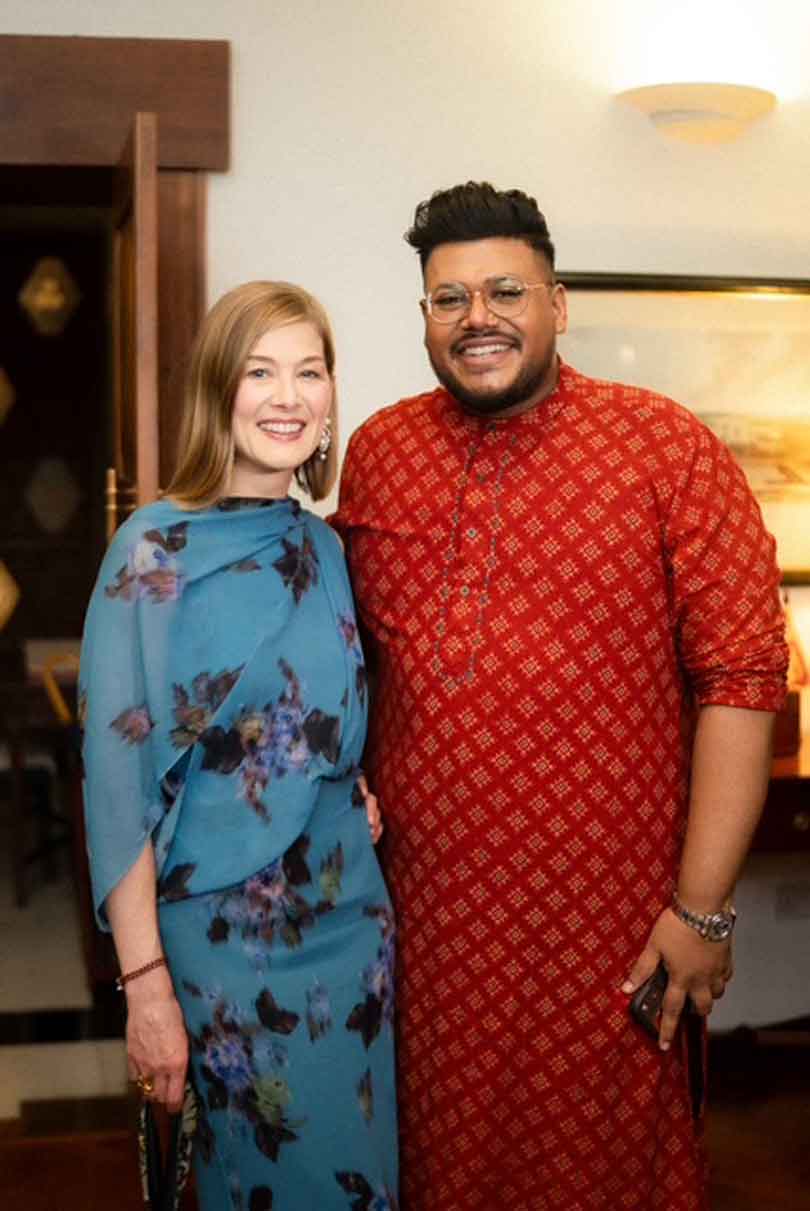
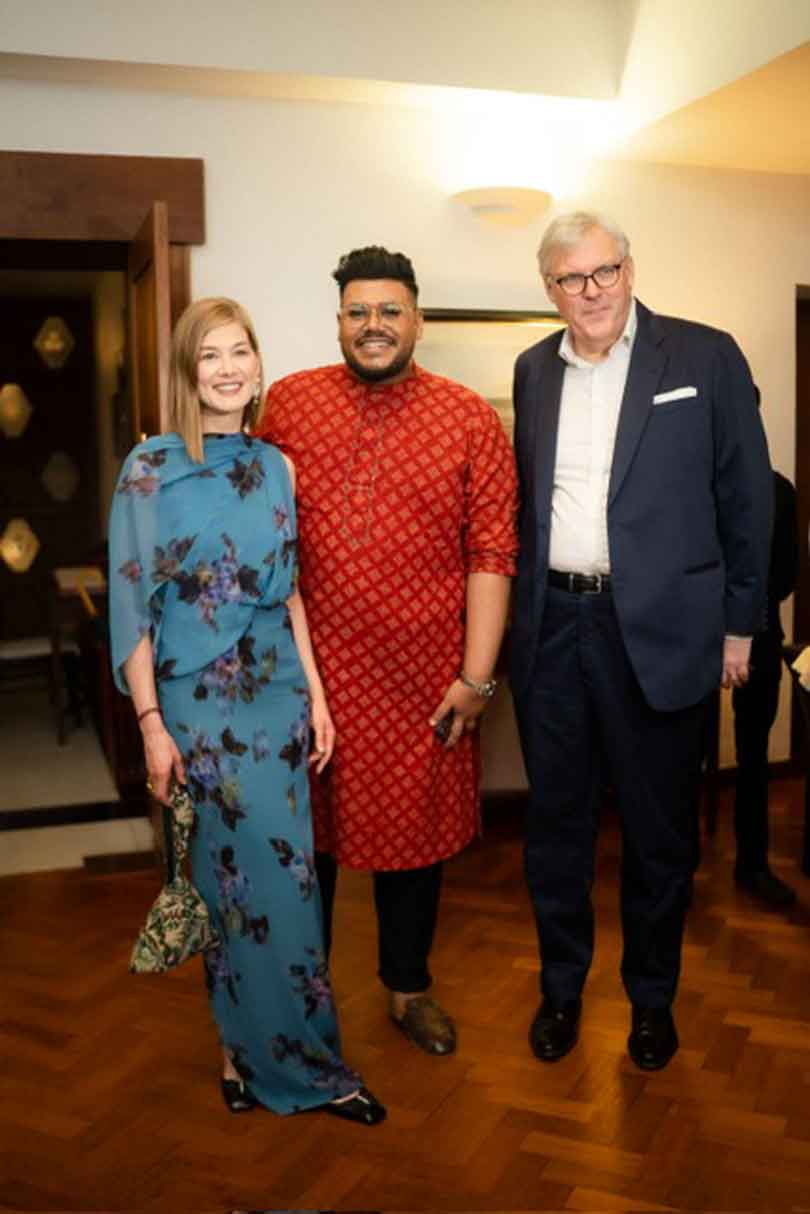
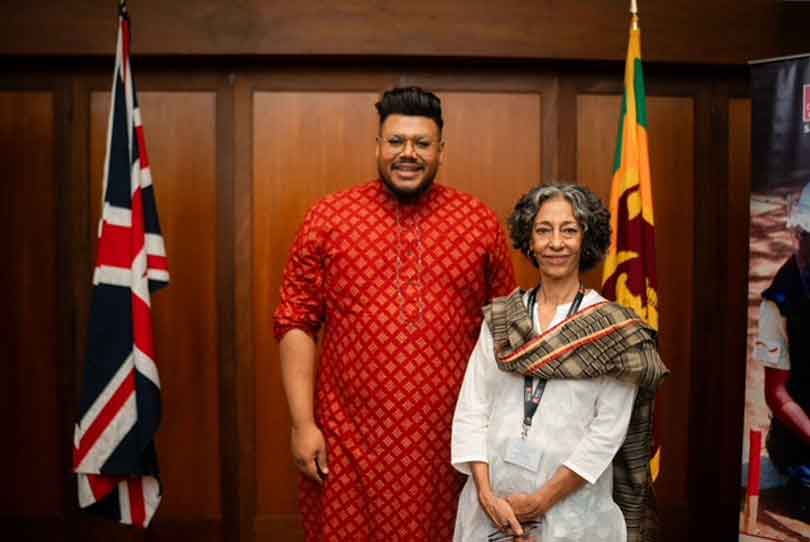
When an international celebrity comes to Sri Lanka, we tend to become slightly excited. Where are they staying? What did they eat? Did someone get a selfie? And yes, I met Rosamund Pike. Of course I was delighted. And yes, a photograph was necessary — I am still Danu, after all. But the photograph wasn’t the most important thing I took away from the evening. The conversation was.
Rosamund travelled beyond the comfortable version of Sri Lanka that visitors often see. She went North. She stood on the land. She met the people clearing it. She listened to their stories. And then she came back to Colombo and asked us to talk about them.
Mine clearance isn’t glamorous work. There is no grand celebration every time somebody safely removes another explosive device from the ground. There is simply one less mine. One less danger. One more metre of safe land. And eventually, one more family able to go home.
Sri Lanka has spent decades explaining our conflict to the world. Imagine one day being able to say, “Sri Lanka is landmine-free.” Think about the significance of that statement internationally. But more importantly, think about what it would mean here. A generation of children growing up knowing that the war is something they learn about in history books — not something still waiting underneath their feet.
That, to me, is the most powerful part of this story. Rosamund’s final request that evening was actually very simple: help. And helping doesn’t necessarily mean writing a massive cheque. Talk about it. Tell someone what you learned. Keep the conversation alive. Because the closer we get to finishing this job, the easier it becomes to forget that the job isn’t finished yet.
I walked into the British High Commissioner’s residence excited to meet Rosamund Pike. I walked out thinking about people whose names most of us will never know, wearing heavy protective equipment under the Sri Lankan sun and clearing our country metre by metre.
More than a million landmines have already been removed. Now come the hardest kilometres. And wouldn’t it be wonderful if, after everything this little island has lived through, one of the next great stories Sri Lanka tells the world isn’t about war at all, but about finally removing its last hidden footprints?
Buzz with Danu





0 Comments