Sep 10 2026.
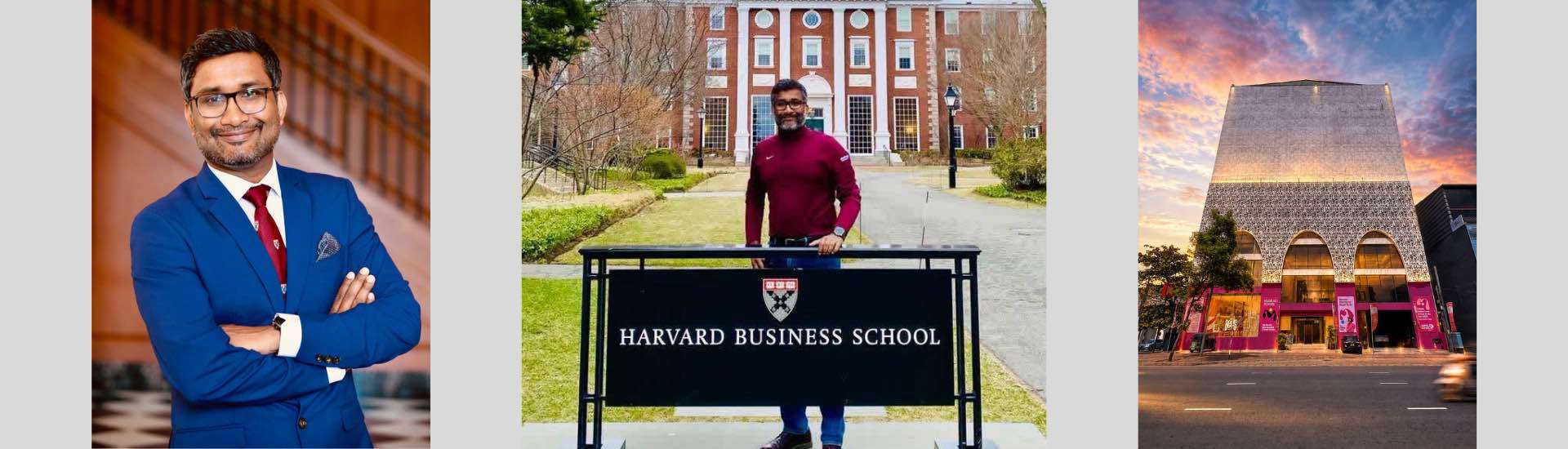
views 223I’ve known Kandeepan for many years, and I’ve watched his journey take some interesting turns. His love for media was always evident, but over time, that passion evolved into something much bigger: a commitment to education, innovation and creating opportunities for others.
What has remained constant is his determination. He is hardworking, ambitious and clearly not afraid to dream big. Today, as the Founder and CEO of EMBRAX, Kandee is working to bring new ideas, global learning experiences and opportunities to Sri Lanka, including an upcoming executive leadership programme featuring Harvard Business School Professor Elie Ofek.
And apparently, that’s not all. There’s something new he’s ready to reveal too!
So, from media to education, from an idea to building something with a bigger purpose, today on Buzz with Danu, I catch up with Kandeepan Balendran — Kandee — to talk about the journey, the vision, what’s coming next, and perhaps get that big reveal out of him as well.
1. Kandee, before we get into what EMBRAX is today, take me back to 2020. What made you look at Sri Lanka’s education system and think, “I want to do this differently”?
For over two decades, I was part of the media and corporate world, alongside our family business, and throughout that journey I always believed in the power of media to influence people, open minds and, at its best, change lives.
Wherever I worked, that was something I tried to do together with the teams and organisations I was fortunate to be part of.
Harvard challenged me to think about what came next.
As part of my journey there, my personal project was to develop the idea of an education institution - one that could bring some of the best learning, ideas and opportunities closer to people here at home.
That project became much more than an academic exercise. It made me question my own comfort zone after more than 20 years in the corporate world and Media, and helped me realise that the next chapter of my life should be about transforming lives and helping build our dream Sri Lanka – and I chose education and entrepreneurship.
I began to see education as perhaps the most powerful way to help people discover their true potential - because when you transform a person, that person can go on to transform a family, an organisation, a community, even a country.
That is what led us to launch Academics Group in 2020, just two months before COVID changed the world.
The timing couldn't have been more challenging. But the purpose was clear: to bring the best we can to our students and professionals, right here at home, and help people become more than they thought possible.
Everything we have built since has grown from that belief.
2. EMBRAX sits at the intersection of education, technology and innovation. What was the gap you saw in the market that you felt traditional education simply wasn’t addressing?
The world changed faster than the classroom.
Knowledge is now everywhere. AI can give you information in seconds. So education can no longer be primarily about transferring information from a lecturer to a student.
One of our first big decisions was bringing Miami Ad School, the world's most awarded creative school, to Sri Lanka. Five years later, what began as a Sri Lankan campus has evolved into a regional school that has served over 1,000 learners and hundreds of organisations.
Along the way, we built Ivy Future Leader Academy for teenagers and young professionals, and Mozhi.com, focused on language and learning.
Different audiences, different subjects - but one philosophy connects them: education must unlock human potential.
The future isn't going to reward people simply for knowing more. It will reward people who can think, create, communicate, adapt and lead.
3. You’re now bringing Professor Elie Ofek of Harvard Business School to Sri Lanka for a three-day executive leadership programme. How did that conversation begin, and how difficult was it to make something of this calibre happen in Colombo?
Professor Elie Ofek was one of my professors at Harvard Business School, which makes this personally very special.
But there is also a longer story here. When I returned home, I founded the Harvard Club of Sri Lanka together with some incredible leaders because I wanted the Harvard experience to translate into something meaningful back home - a community that could connect, contribute and create opportunities.
Together with our board and the wider Harvard community in the region, we later built Big Bold Brave, the Harvard APAC regional conference, bringing Harvard alumni and ideas from across the region together in Sri Lanka.
So bringing Professor Ofek here is part of that same journey.
The question has always been: why must Sri Lankans always travel across the world to access extraordinary people and ideas? Why can't we bring more of the world here?
It takes enormous effort to make something of this calibre happen, but that question made the effort worthwhile.
4. There’s an important distinction between a “Harvard-style programme” and a Harvard qualification. What exactly will participants experience over these three days, and what do you want them to walk away with?
Absolutely - and this distinction is important. This is not a Harvard University programme or Harvard qualification.
What participants will experience is three intensive days of learning with Professor Elie Ofek of Harvard Business School, built around case discussions and highly participative learning.
The case method changed the way I learned. You aren't simply sitting there receiving somebody else's answer. You are confronted with a real situation, incomplete information and competing choices. You have to take a position, listen to people who see the problem differently, defend your thinking - and sometimes have the humility to change your mind.
The real takeaway isn't the certificate.
I want people to leave on Thursday thinking differently from how they walked in on Tuesday.
5. Executive education at this level is often something Sri Lankan business leaders travel overseas for. Was part of your thinking to bring that global classroom experience here instead of expecting Sri Lankans to always go looking for it elsewhere?
Absolutely.
Not every brilliant Sri Lankan executive, entrepreneur or emerging leader can take a week off, fly halfway across the world and spend thousands of dollars accessing executive education.
But geography shouldn't determine the quality of thinking you can access.
Our ambition is not to pretend Colombo is Harvard, INSEAD or any other institution. It is to bring exceptional professors, thinkers and practitioners closer to our people, and eventually create world-class programmes of our own that are grounded in the realities of this region.
For years, we have travelled to the world's great centres of learning.
Why can't Colombo become one of them?
6. AI, innovation and marketing leadership are at the heart of this programme. Of those three areas, where do you think Sri Lankan businesses are currently falling furthest behind?
I would actually say all three - because they are increasingly interconnected.
On AI, we have access to the same tools as the rest of the world. The bigger gap is understanding what AI really means for an organisation. It isn't simply a technology project to be delegated to IT or marketing. It will reshape business models, productivity, customer experience, talent and decision-making. The AI conversation belongs in the boardroom.
Then there is innovation. We have exceptionally talented Sri Lankans, here and around the world. But we have to ask ourselves honestly: how many globally significant innovations have we created from Sri Lanka? Talent alone isn't enough. We need to give our people exposure, opportunity, the freedom to experiment, and connections to the best ideas and people in the world.
And marketing and branding are equally important. Look at Sri Lanka itself as a brand. We are blessed with two extraordinary forms of wealth: our natural capital and our human capital. Yet in tourism, for example, we can sometimes become too focused on arrival numbers rather than asking a more important question: what unique value does Sri Lanka offer the world, and how do we position that value?
We have to get that right - not only for tourism, but for Sri Lankan businesses, products, talent and ideas.
I genuinely believe we have everything we need. Our challenge is turning what we have into what we can become.
That requires all three: innovation to create value, marketing to position that value, and AI to help us reimagine and scale it.
7. We hear the word AI everywhere today. From the conversations you’re having with CEOs and business leaders, are Sri Lankan companies genuinely transforming with AI, or are many still at the stage of talking about it?
There are some organisations doing meaningful work, but I think many are still experimenting rather than transforming.
People are using ChatGPT, buying tools, running workshops and adding AI to presentations. That's useful, but transformation is something deeper.
Transformation begins when you ask: if we were designing this organisation today, with AI available from day one, what would we do differently?
That requires leadership, culture and sometimes the willingness to disrupt your own business before somebody else does.
8. You speak about education reform, but reform can be uncomfortable because it means admitting that something in the existing system isn’t working. What do you believe Sri Lankan education needs to unlearn?
The first thing we need to unlearn is the idea that qualifications equal capability.
But there is something else I feel very strongly about: we need to change how we value teachers.
We can talk endlessly about curriculum reform, technology, AI, examinations and new buildings. But no education system can rise above the quality and dignity of the people we entrust to teach our children.
I believe we should invest significantly more in teachers - pay them what they deserve, and where possible, more; continuously train and expose them to new ways of teaching; attract some of our brightest people into education; and restore dignity and aspiration to the profession.
If we want extraordinary students, we need to create the conditions for extraordinary teachers.
Education reform doesn't begin with a new syllabus.
It begins with the teacher standing in front of the classroom.
9. EMBRAX was founded only in 2020. In a relatively short period, you’re attempting some fairly ambitious things. What has been the biggest gamble you’ve taken with the brand so far?
The journey actually began with Academics Group in 2020, two months before COVID. So you could argue the first gamble was simply starting!
Since then, we have taken several.
Bringing Miami Ad School to Sri Lanka when we were a young education company was one. Believing we could build it into a regional school was another.
But taking over a 14-storey, 70,000-plus-square-foot building in the heart of Colombo and beginning to create EMBRAX Multiversity is probably our biggest physical and financial commitment.
Yet I don't see the building itself as the gamble.
The gamble is our belief in Sri Lanka.
At a time when the dominant conversation is often about leaving, we are investing here because we believe extraordinary things can still be built from here.
10. There is sometimes a perception that world-class executive education is only accessible to a privileged few. How do you balance bringing premium global expertise into Sri Lanka while making sure the larger vision of education remains inclusive?
This is important because access to opportunity has been at the heart of why we entered education.
There is a genuine cost to bringing exceptional international faculty and creating small, high-quality executive classrooms. We shouldn't pretend otherwise.
But inclusion doesn't mean every educational experience has to have the same price. It means building multiple pathways to opportunity - scholarships, partnerships with organisations, technology, different programme formats and learning experiences at different stages of life.
That is partly why our ecosystem is deliberately broad. Ivy Future Leader Academy works with younger people. Miami Ad School develops creative and business talent. Mozhi addresses language learning. And my wife Vidhya and I co-founded Beeboobaa around an even earlier stage - creating a place where children can explore, imagine and create, while building a community around children and parents.
The common belief is very simple:
Talent is everywhere. Opportunity isn't.
Our job is to keep narrowing that gap.
11. If you could put one Sri Lankan CEO into Professor Ofek’s classroom — not naming names! — what type of leader would you choose: someone resistant to change, someone struggling with AI, or someone who thinks they already know everything?
Why choose one? I would put all of them in the classroom!
The leader resistant to change, the one trying to understand AI, and certainly the one who thinks they already know everything - because there is always something more for all of us to learn.
But I would go beyond CEOs too. I would want young, aspiring leaders sitting alongside experienced senior leaders; entrepreneurs alongside corporate executives; people who are already successful alongside those still discovering what they are capable of.
That diversity is what makes a great classroom powerful. You don't learn only from the professor - you learn from the experiences, questions and perspectives of the people around you.
One thing my own learning journey has taught me is that the best leaders never lose their curiosity or their hunger to learn. No matter how much they have achieved, they keep asking questions, challenging their own thinking and remaining open to new possibilities.
The moment we stop being curious, we stop growing. The best leaders remain hungry to learn throughout their lives.
In a world changing this quickly, I don't think learning has an age, a title or a finishing point.
The best leaders remain students throughout their lives.
12. When you look at Sri Lanka’s next generation of leaders, what worries you more: a lack of opportunity, a lack of skills, or a mindset that still measures success through qualifications rather than capability?
Opportunity. Because I see extraordinary talent here.
Through Miami Ad School, Ivy and the different communities we've built, I have seen what happens when young Sri Lankans get the right exposure, the right teacher, the right network and, importantly, somebody who believes in them.
They don't lack ambition or intelligence.
Sometimes they simply haven't been given the platform to discover how good they can be.
That's why I keep coming back to human potential. Our biggest national resource isn't something beneath our soil. It is our people.
If we unlock that potential, we can change the trajectory of this country.
13. Now, I know you’re also getting ready to reveal something new. So I’m going to give you the floor — what have you been keeping under wraps, and what exactly are you announcing?
We are launching EMBRAX Business School.
In many ways, everything we've done over the last six years has been leading us here.
Our focus will be very clear:
BUSINESS. AI. LEADERSHIP.
We want to build a premier business school from Sri Lanka for Sri Lanka and our connected region.
We will bring exceptional professors, thinkers and practitioners from around the world here, while also developing programmes and intellectual experiences of our own that address the challenges facing businesses and leaders in this region.
Professor Ofek's programme is an important beginning.
We are starting small. But the ambition isn't small.
14. And once you’ve made that reveal, tell me why it matters. Is this simply the next chapter for EMBRAX, or does it signal a much bigger direction for you and the organisation?
It's much bigger.
At 318 Galle Road, Colombo, we are creating EMBRAX Multiversity - a place to learn, create and work. It brings together education, entrepreneurship, creativity, children, professionals, businesses and communities under one ecosystem.
But I keep reminding our team:
The building is not the dream. The people are.
The leaders we inspire. The entrepreneurs we enable. The teachers we empower. The young people who discover abilities they didn't know they had. The businesses that become more competitive. The ideas that begin here and eventually create opportunities for thousands of others.
EMBRAX Business School is another expression of that larger purpose.
Because ultimately, Sri Lanka's destiny will not be changed by a building, a government or an institution alone.
It will be changed by people who believe they have the ability and responsibility to build something better for us and generations to come.
15. Five years from now, when we look back at EMBRAX, what do you want us to say Kandee changed — not just within his company, but within education and leadership in Sri Lanka?
I don't need people to say Kandee changed education.
I'd be much happier if they said we helped people realise what they were capable of.
Harvard changed the way I think and, in many ways, helped me realise my purpose. I cannot recreate Harvard - nor am I trying to. But I can take what that experience taught me about the transformative power of education and build something meaningful from our own home. And I hope EMBRAX has become a place where some of the world's best minds come to teach - and some of this region's brightest minds come to learn, question, create and lead.
If, five years from now, there are leaders, entrepreneurs and young people who think bigger, lead better, create opportunities for others and choose to build a better Sri Lanka because something they experienced at EMBRAX changed their trajectory, that would mean far more to me than the size of the institution.
The future we are trying to build isn't really EMBRAX's future. It is ours.
Because ultimately, this isn't about building another education company.
It's about investing in the people who will build the future of our home, Sri Lanka – the region and our connected world.











0 Comments