Aug 18 2026.
views 23By Rihaab Mowlana
I have eaten durian for years without ever really knowing anything about it.
That sounds ridiculous when you say it out loud, but it is probably true for a lot of us. We know the smell. We know the texture. We know whether we like it. We know that it can clear a room faster than most people can finish a sentence. What we do not necessarily know is what variety we are eating, where it was grown, or what makes one durian different from another. A few days in Malaysia changed that for me.
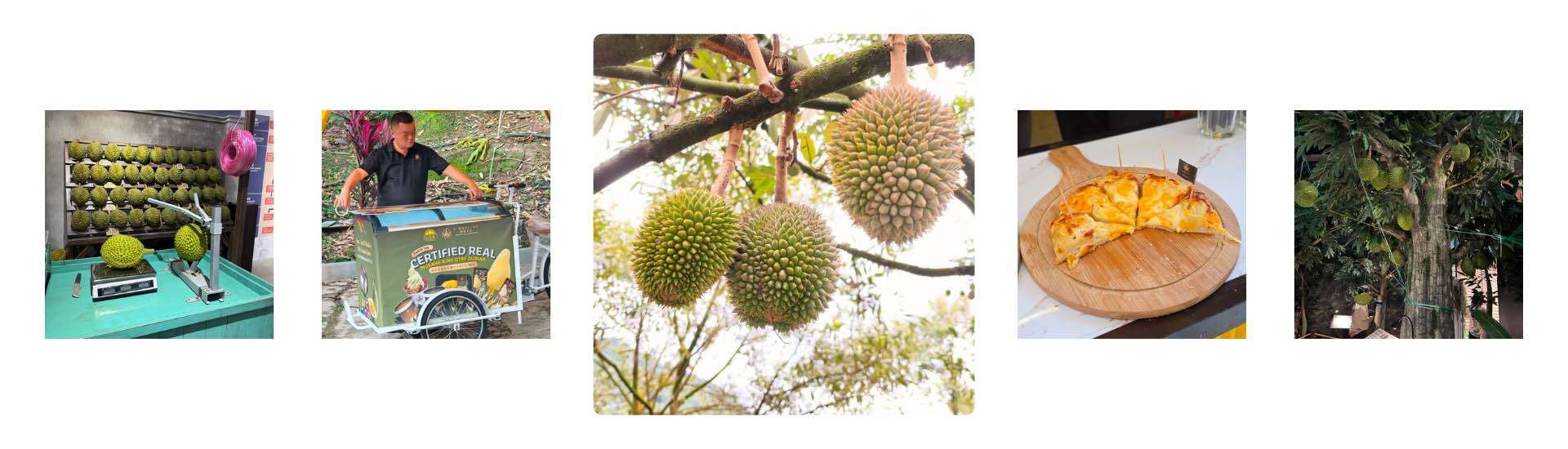
At a durian orchard in Bukit Tinggi, Pahang, I watched Musang King being cultivated, saw a harvesting demonstration and learned about the traceability of the fruit from the orchard onwards. The tasting afterwards was probably the least surprising part of the visit. There were people who were wary of the fruit, people who refused it altogether and people who spoke about durian varieties with the seriousness of wine drinkers discussing a vintage. I found myself listening. It wasn’t because I was a durian expert. Far from it. It’s because I realised how little I knew.
In Malaysia, “durian” is often an inadequate answer. There are varieties with names people recognise immediately, each with its own reputation, flavour and following. Musang King is perhaps the best known internationally, but it is hardly the only name that comes up. Black Thorn and D24 have their devotees too. In Thailand and Indonesia, particular varieties have their own loyal audiences. Back home, I had never thought to ask the same question. What kind of durian is this?
A little research revealed that Sri Lanka has named varieties of its own, including Kasun, Ambatenna, Horana Gold, Horana Jumbo and Gannoruwa Sweet. Somehow, I had managed to live in a country where durian grows quite happily and never learned any of those names. The embarrassment was useful. I suppose that is what happens when something is familiar. You stop asking questions about it.
We know our food because it is ours. We eat it without needing to interrogate it. A fruit from a home garden is simply a fruit from a home garden. A variety that has been grown for generations does not necessarily come with a label explaining its provenance, characteristics or history. Malaysia's relationship with durian is different. It has taken something familiar and looked at it closely.
At DSR Taiko in Bukit Tinggi, the story begins with the orchard. The programme included an orchard discovery tour, a look at the Musang King tree, a harvesting demonstration and a traceability showcase, followed by a tasting and product experience. It is a very different way of encountering durian from buying one at a roadside stall, because you are made to think about the fruit before it becomes food.
You see the tree, the cultivation and the people who know when and how to harvest it. You start to understand that what looks like a rather intimidating piece of fruit has an entire agricultural story attached to it.
Once the fruit is sitting in front of you, it is easy to forget that it had to grow somewhere. Someone had to tend to that tree. Someone had to understand when it was ready. There is an entire chain of knowledge hidden behind the thing we eventually hold in our hands.
And then there is KLDEX. The Kuala Lumpur Durian Experience Centre is the point at which the whole thing becomes slightly extraordinary. A durian experience centre is, objectively, a strange idea. It is also a rather brilliant one.
The idea is wonderfully specific: use durian as a way of introducing people to Malaysia. KLDEX brings together a Durian Culture Museum, guided tastings, a theatre, an art gallery, food and retail, with orchard tourism also forming part of the wider experience.
The museum looks at Malaysia's durian-growing regions, varieties and terroir, while the guided tasting focuses on things such as aroma, texture, sweetness and finish, as well as the importance of origin. The theatre brings Malaysian stories into the experience through performance, music and emotion, and the art gallery takes the fruit somewhere even further removed from the dinner table. It is a slightly mad idea until you think about it for a while.
A museum about durian sounds funny. Then you remember that the fruit sits at the intersection of farming, food, regional identity, commerce and tradition, and suddenly there is plenty to talk about.
That is probably the cleverest thing about the Malaysian approach. The durian is not being treated simply as a product to sell to tourists. It is being treated as a story worth telling. And there is a lot in that story.
It is also about naming things. Remembering things. Knowing where they come from. Understanding why one variety exists and another became popular. Knowing who grows it and what knowledge has been passed down with it.
That may be why the durian is such an effective vehicle for Malaysia's tourism story. It is unmistakably local, slightly eccentric, deeply loved by some and deeply disliked by others. It already has a personality. All Malaysia has had to do is give that personality some context.
And it has done so in ways that make the fruit surprisingly difficult to dismiss as just another food. At one end of the journey is the orchard. At the other is the museum. Somewhere in between are tasting rooms, cafés, desserts, drinks, souvenirs and conversations about varieties. The fruit has become an experience.
There is a lesson in that, although I am not fond of turning every travel experience into a lesson. Sometimes a durian is just a durian, and sometimes a holiday is just a holiday. But this one did leave me thinking about Sri Lanka.
We have our own foods that could carry much bigger stories than we currently tell about them. Tea is the obvious example, but there is also Ceylon cinnamon, kithul, jackfruit, king coconut, regional produce and the extraordinary variety of rice that sits quietly beneath much of our cuisine.
How many of us know the names of those varieties? How many could tell you why one is different from another, where it is grown, who grows it or what makes it special? More importantly, how many of us have ever been curious enough to ask?
It would be easy to look at Malaysia and say that the country has done a wonderful job of turning durian into a tourism product. It has. But that is only half the story. It has also done something less commercial and more valuable: it has encouraged people to look again at something they thought they already knew.
Maybe that is what we sometimes miss when we talk about preserving food heritage. Preservation is not only about keeping an old recipe alive or putting a traditional dish on a restaurant menu. It is also about knowing the thing well enough to care about its differences.
I arrived in Malaysia expecting to encounter a fruit I had eaten many times before. Instead, I encountered a whole vocabulary I did not have. And that made me curious about the vocabulary we have been overlooking at home.
I still cannot tell you that I have become a durian connoisseur. I am not about to start arguing over the superiority of Musang King at dinner parties. But I now know that the next time I see a Sri Lankan durian, I will probably wonder which one it is. That feels like a small thing, and maybe it is. But curiosity has to start somewhere.
Pic Credits: Rihaab Mowlana, DSR Taiko & KLDEX











0 Comments