Mar 10 2026.
views 181By Rihaab Mowlana
By the time you read this, Women’s Day is already behind us.
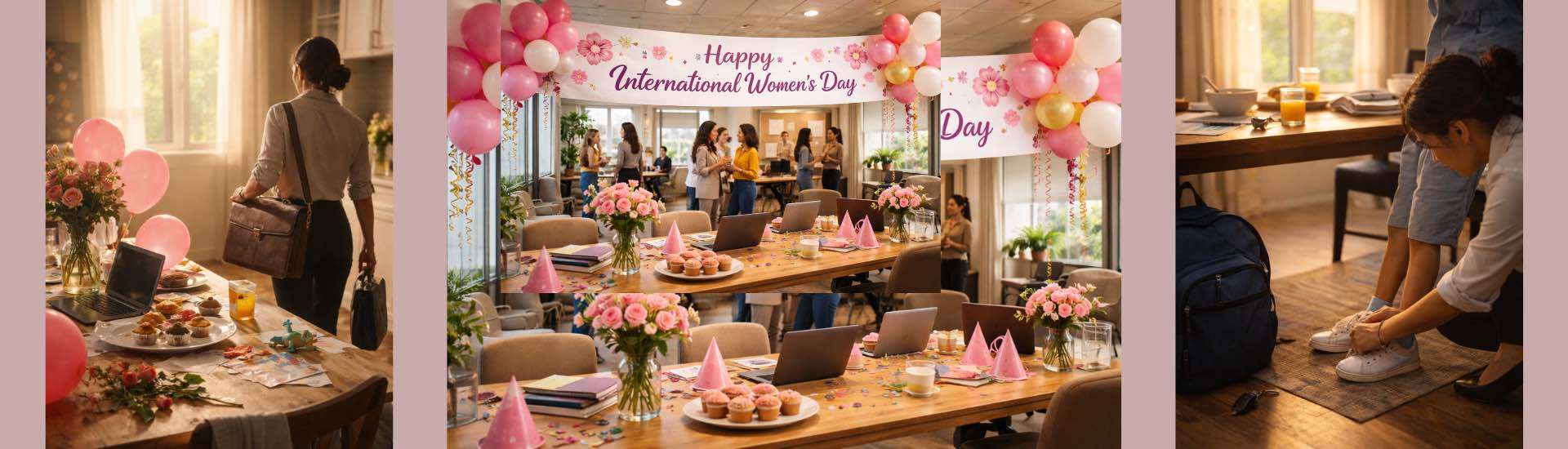
The pink graphics have slowed down. The WhatsApp forwards declaring “Here’s to strong women” have finally stopped circulating. Offices that organised small celebrations have quietly packed away the balloons and finished the leftover cake in the pantry.
It is March 10, which means the internet has already moved on to the next trending topic. And that, perhaps, is exactly why this moment matters.
Because Women’s Day itself is rarely the interesting part. The speeches are familiar, the messages well rehearsed. What reveals more about how society actually views women is what happens after the celebration ends.
Every year, the pattern looks almost identical. On March 8, women are celebrated everywhere. Offices post photos of their female employees. Brands upload inspirational quotes. Panel discussions appear across LinkedIn and hotel ballrooms with titles like “Breaking Barriers” or “Empowering Women in Leadership.”
None of this is inherently bad. Recognition matters. It is good when women’s contributions are acknowledged and when conversations about gender equality reach a wider audience.
But appreciation, by itself, has a short shelf life. Because by the time March 10 arrives, most women are already back in the rhythm of ordinary life. The emails are waiting. The deadlines have not shifted. The traffic on Galle Road is exactly as unforgiving as it was before the celebration began.
For some women, the contrast between celebration and reality can feel slightly surreal. “I got a rose from the office on Women’s Day,” says Nadeesha, a 32-year-old marketing executive. “It was sweet. But the same day, I was asked if I was sure I could handle a project because I might ‘eventually get married and have other priorities.’ So the flower was nice, but the conversation that followed felt very familiar.”
Others laugh about the symbolic gestures that appear every March.
“My office had cupcakes that said ‘Empowered Women Empower Women,’” says Dilini, who works in finance. “But the leadership team is still entirely male. Every year, we take the same group photo with the cake. It is becoming a bit of a tradition.”
These small contradictions do not necessarily come from bad intentions. In many cases, they simply reveal how complicated progress can be.
Because the reality is that Sri Lankan women today occupy spaces that would have been far less accessible a generation ago. Women are building careers across industries, from media and medicine to entrepreneurship, technology, and law. They are starting businesses, leading teams, and shaping conversations in ways that are visible and powerful.
Many women still navigate what sociologists refer to as the second shift. A full day of professional work followed by a second round of responsibilities at home.
“For me, the funny thing about Women’s Day is that it usually ends with me doing the same things I do every evening,” says Sajini, a working mother of two. “Dinner, homework, planning the next day. I joke that the real Women’s Day gift would be someone else remembering where the school socks are.”
The humour in these comments is telling. It reflects something many women understand instinctively but rarely articulate out loud. The mental load of daily life is often carried quietly.
Many Sri Lankan women wake up before the rest of the household. They prepare breakfasts, organise school schedules, answer early work messages, and begin the quiet logistics of making an entire day function before they have even had their first cup of tea. By the time they arrive at the office, they have already completed a shift of work that no one officially counts.
Later in the evening, after the formal workday ends, another set of responsibilities often begins. Groceries, homework supervision, family care, planning tomorrow’s meals, remembering birthdays, managing household details that rarely make it onto any official job description.
Sociologists call this the mental load. Most women simply call it life.
What makes this particularly interesting is that the modern image of women has expanded dramatically over the past few decades. Sri Lankan women today are lawyers, entrepreneurs, journalists, scientists, designers, teachers, executives, artists, and political leaders. Many are building careers that would have been difficult to imagine a generation ago.
But the expectations surrounding them have not shrunk to make space for these achievements. If anything, they have multiplied.
Women are expected to succeed professionally while also maintaining the emotional and logistical infrastructure of family life. They are encouraged to be ambitious, but not intimidating. Independent, but still agreeable. Assertive, but never too much.
The list is long. The balance is delicate.
This is why the morning after Women’s Day is a fascinating place to pause and observe. On March 8, the narrative is simple. Women are strong. Women are inspiring. Women are resilient. By March 10, the conversation becomes more complicated.
Because strength and resilience, while admirable, are often qualities that people celebrate when someone has no choice but to endure difficulty. When women are constantly praised for being resilient, it quietly raises a question. Are we celebrating their strength, or are we normalising the circumstances that require them to be strong in the first place?
Across Sri Lanka, progress for women is real and visible. Girls outperform boys in many academic spaces. Women are increasingly entering fields like technology, finance, and entrepreneurship. Female leadership in media, education, and business continues to grow.
These shifts matter, and they deserve recognition.
At the same time, challenges persist in ways that are sometimes subtle and sometimes painfully obvious. Women still report feeling unheard in professional environments. Leadership positions remain disproportionately male in many industries. Safety concerns continue to shape everyday decisions, from how late someone feels comfortable staying at work to how they navigate public spaces.
Then there are the quieter pressures that rarely appear in policy discussions.
The expectation to hold everything together.
The emotional labour of maintaining relationships. The responsibility of ensuring that family systems function smoothly. The constant mental calculations that many women perform every day go unnoticed.
None of this fits neatly into a celebratory Instagram post.
Yet these everyday realities are why Women’s Day cannot simply end with appreciation. The day should do something slightly more uncomfortable. It should make us pause and ask whether the systems around us are actually changing, or whether the expectations placed on women have simply grown heavier.
Because empowerment rarely comes from symbolic gestures alone. It comes from the quieter changes people rarely post about online. Workplaces that recognise talent without bias. Homes where responsibilities are shared rather than quietly assumed. Policies that make it easier for parents to work and raise families at the same time.
It happens when young girls grow up believing that their ambitions will be taken seriously, and when young boys grow up understanding that equality benefits everyone.
These are long-term shifts. They unfold slowly, often invisibly. Which means the real work of Women’s Day does not actually occur on March 8. It happens on the ordinary days that follow.
The quiet mornings when the balloons have deflated, and the cupcakes are gone. The moments when the slogans disappear, and the systems remain. The everyday decisions made in offices, homes, and institutions about whose voices are heard and whose labour is recognised.
March 8 celebrates women. March 10 is when everything quietly goes back to normal. The real question is whether, one day, normal will finally look different.








0 Comments