Apr 28 2026.
views 14By Hafsa Rizvi
Think about the last time a password caused you a problem. You forgot it. You reset it. You chose something simple because the complicated ones are impossible to remember. Or worse, you used the same password for everything, hoping for the best.
You are not alone. And the people who build the systems you log into every day have finally decided to do something about it.
In 2026, passwords are beginning to fade. What is replacing them is simpler, faster, and far more secure. It is called a passkey, and if you have ever unlocked your phone with your fingerprint or your face, you already understand how it works.
What a Passkey Actually Is
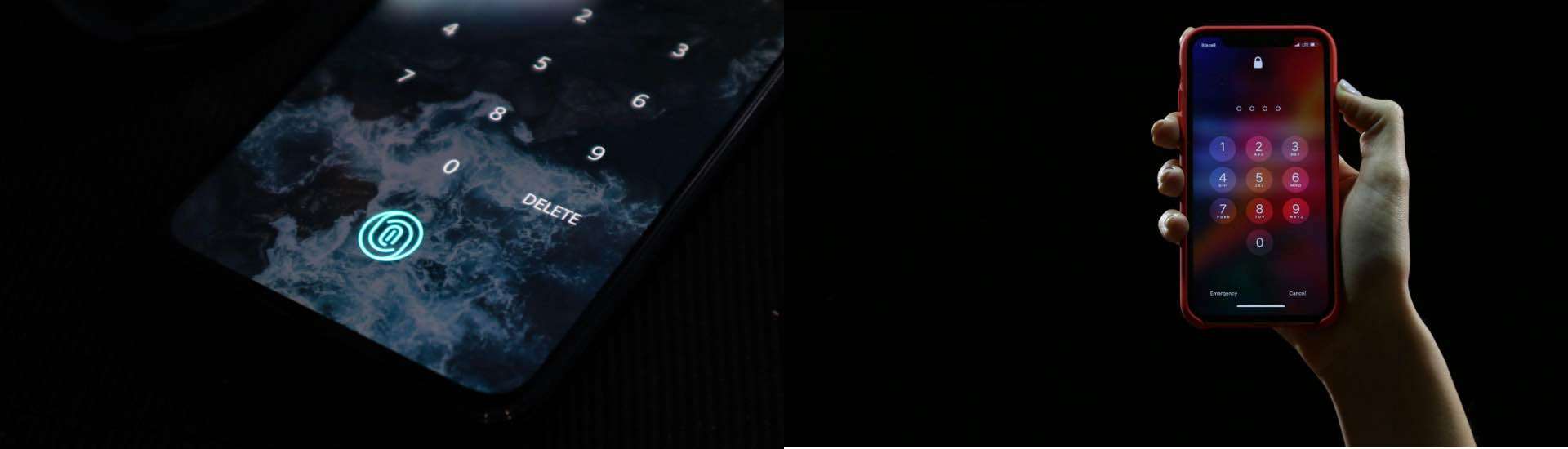
A passkey is a way of proving you are you, without typing anything at all. Instead of memorising a string of characters, your device, whether that is your phone, your laptop, or a tablet, uses your biometric information to confirm your identity. Your fingerprint, your face scan, or your screen unlock PIN becomes the key. That key never leaves your device, and it cannot be guessed, stolen from a database, or tricked out of you by a fake website.
When you create a passkey on a site or app, your device generates a unique cryptographic pair: one part stays on your device, the other lives on the website's server. When you log in, the two parts communicate to verify who you are. No password is typed, no OTP is waited for, and no one can intercept anything useful.
The result is a login experience that takes seconds and requires nothing to remember.
How Far This Has Already Come
Passkeys are not a concept being tested in a laboratory. They are already in use at a scale that is difficult to overstate.
According to the FIDO Alliance, the global body leading the push toward passwordless authentication, more than one billion people have activated at least one passkey, and over 15 billion online accounts now support passkey authentication. Google alone reports that more than a billion users are now signing in to Google services using passkeys. Amazon says 175 million customers have enabled passkeys on their accounts.
The performance numbers are just as striking. Passkeys achieve a 93% login success rate compared to 63% for other authentication methods. Microsoft found that passkey logins are three times faster than traditional passwords and eight times faster than a password combined with standard two-factor authentication.
Nearly half of the top 100 websites in the world now support passkeys, more than double the number that offered them in 2022. That list includes Google, Apple, Microsoft, Amazon, PayPal, WhatsApp, and a growing number of banking institutions globally.
Why Passwords Are Such a Security Problem
To understand why passkeys matter, it helps to understand exactly why passwords keep failing us.
Passwords fail in two directions. They are either too simple and easy to guess, or too complicated and impossible to remember. Most people solve this problem by reusing the same password across multiple accounts. That means when one service is hacked and its user database is leaked, every other account sharing that password becomes vulnerable instantly.
Then there is phishing. A convincing fake login page, a fraudulent SMS, or a realistic email can trick you into typing your password directly into a scammer's system. You never know it has happened until the damage is done.
Passkeys eliminate both of these problems by design. Because they are cryptographically tied to the specific website where they were created, they simply do not work on fake pages. A passkey cannot be phished. There is no password to steal from a database breach because no password exists. And because passkeys are stored on your device rather than on a company's server, even if that company's systems are compromised, your credentials remain safe.
As the FIDO Alliance's CEO has noted, passkeys can stop AI-generated social engineering attacks in their tracks, precisely because there is no knowledge-based credential for an attacker to manipulate or replicate.
What This Means for Everyday Life in Sri Lanka
For many Sri Lankans, particularly those using smartphones as their primary internet device, passkeys are already closer than they think. If your phone runs a relatively recent version of Android or iOS, it is passkey-ready. Most modern devices from the past three to four years support the technology natively.
The practical experience of logging in with a passkey looks like this: you visit a website or open an app, tap the sign-in button, and your phone shows you a fingerprint prompt or face recognition request. You authenticate once with your biometric, and you are in. There is no OTP to wait for, no password to type, and no risk of an autocorrect mistake or a forgotten character.
For older family members who struggle with password management or frequently get locked out of accounts, this is genuinely a relief. For anyone who has received a suspicious "enter your bank password" SMS, passkeys remove the vulnerability that makes those attacks possible in the first place.
Banks, email providers, and social platforms are the most important places to enable passkeys if they offer the option. Check your account settings on Google, your banking app, and your primary social media accounts. A growing number already give you the choice.
What You Should Do Now
Not every service offers passkeys yet, but enough do that it is worth starting today. Here is a practical approach:
The shift away from passwords is not happening overnight, and it will not be complete in 2026. But the direction is clear, the technology is here, and the major platforms have already made their choice. The question now is simply how quickly each of us chooses to follow.
Forgetting a password may soon be a problem that belongs to the past. That is a change worth welcoming.












0 Comments