Jan 13 2026.
views 269By Hafsa Rizvi
You've seen them everywhere. Pinterest-perfect vision boards with dream vacations, fitness goals, and career milestones. Maybe you've even created one. You pinned the images, felt motivated for a week, and then... nothing happened.
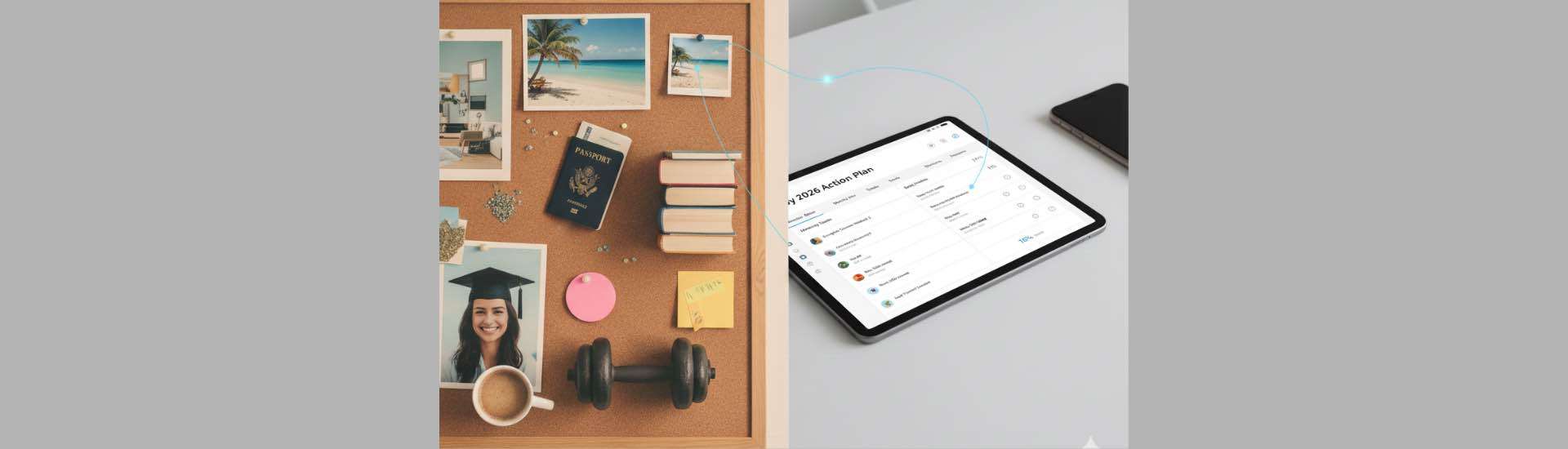
Here's the uncomfortable truth: vision boards inspire you, but they don't build you. The gap between "I want this" and "I did this" isn't motivation. It's execution. And that's exactly where most people fall apart.
January is almost over. You have 11 months left in 2026. The question isn't what you want to achieve. It's how you'll actually make it happen. That's where technology stops being a distraction and becomes your advantage.
Vision boards tap into something real. Visualising your goals matters. The problem? They stop at visualisation. You see the beach body, the corner office, the published book. But you don't see the 200 workouts, the skill-building courses, or the daily writing sessions that get you there.
Goals without systems are just wishes. If you want to run a marathon, "run a marathon" isn't a plan. Running three times a week, gradually increasing distance, and cross-training on rest days is a plan. That's the difference between dreaming and doing.
This is where tech tools transform everything. They take your big, intimidating annual goals and break them into monthly milestones, weekly tasks, and daily actions. Suddenly, "write a book" becomes "write 500 words today." That you can do.
Digital vs Physical: Which Vision Board Wins?
Physical vision boards have charm. There's something satisfying about cutting images from magazines and arranging them on a poster board. They're visual, tangible, and you can hang them where you'll see them daily.
But here's what they can't do: send you reminders, track your progress, adjust when life changes, or integrate with your actual schedule. A picture of a fit body on your wall won't remind you to hit the gym at 6 AM.
Digital vision boards solve this. Apps like Notion, Trello, or even Pinterest let you create visual goal boards that link directly to action plans. You can embed deadlines, attach resources, and update goals as you grow. Your vision board becomes a living document, not a static poster collecting dust.
The best approach? Hybrid. Keep a physical board for daily inspiration, but use digital tools for execution and tracking.
Turning Goals Into Systems Using Apps
Start with the outcome you want, then reverse-engineer the system. Want to save $10,000 this year? That's roughly $830 per month. Use budgeting apps like YNAB or PocketGuard to automate savings transfers and track spending categories.
Want to learn Spanish? That's 15 minutes daily on Duolingo, plus one conversation exchange weekly via apps like HelloTalk or Tandem. Schedule it. Make it non-negotiable.
The magic happens when you connect multiple tools. Use Google Calendar or Apple Calendar as your command centre. Block time for goal-related activities like you would for meetings. Pair it with Todoist or TickTick for task management. These apps let you set recurring tasks, so "gym session" appears automatically every Monday, Wednesday, and Friday.
For habit tracking, try Habitica (which gamifies your habits), Streaks (which visualises your consistency), or the simple grid method in a notes app. The key is picking one system and sticking with it, not downloading 15 apps you'll never open.
Monthly and Quarterly Planning That Actually Works
Here's a framework that prevents burnout while maintaining momentum:
Start each month with a planning session. Review last month's wins and misses. Set three to five focus areas for the coming month. Not 20 goals. Three to five. This could be "complete online course module 2," "meal prep every Sunday," and "apply to five new job openings."
Break these into weekly actions. Every Sunday evening, spend 15 minutes reviewing your monthly goals and planning the week ahead. What needs to happen this week to move each goal forward?
Every three months, do a deeper quarterly review. This is where you assess what's working, what's not, and what needs to be adjusted. Maybe your initial timeline was too aggressive. Maybe you discovered a better approach. Quarterly reviews let you course-correct without abandoning ship.
Use tools like Notion or Obsidian to document these reviews. When December 2026 arrives, you'll have a clear record of your entire journey. That's incredibly motivating and helps you plan even better for 2027.
Progress Without Burnout
Track progress, but don't obsess over it. Check your systems weekly, not daily. Constant monitoring creates anxiety, not achievement. Trust your system and let it work.
Build in flexibility. Life happens. Sick days occur. Unexpected opportunities arise. Your system should bend, not break. If you miss a workout, don't spiral into guilt. Just hit the next one.
Celebrate small wins. When you complete a monthly milestone, acknowledge it. Take yourself out for coffee. Share it with a friend. Small celebrations fuel long-term consistency.
The vision board showed you where you want to go. Now you have the roadmap to actually get there. Eleven months is enough time to transform your life, but only if you start building systems today.
Stop pinning. Start planning. Start doing.












0 Comments