Jan 15 2026.
views 456By Kamanthi Wickramasinghe
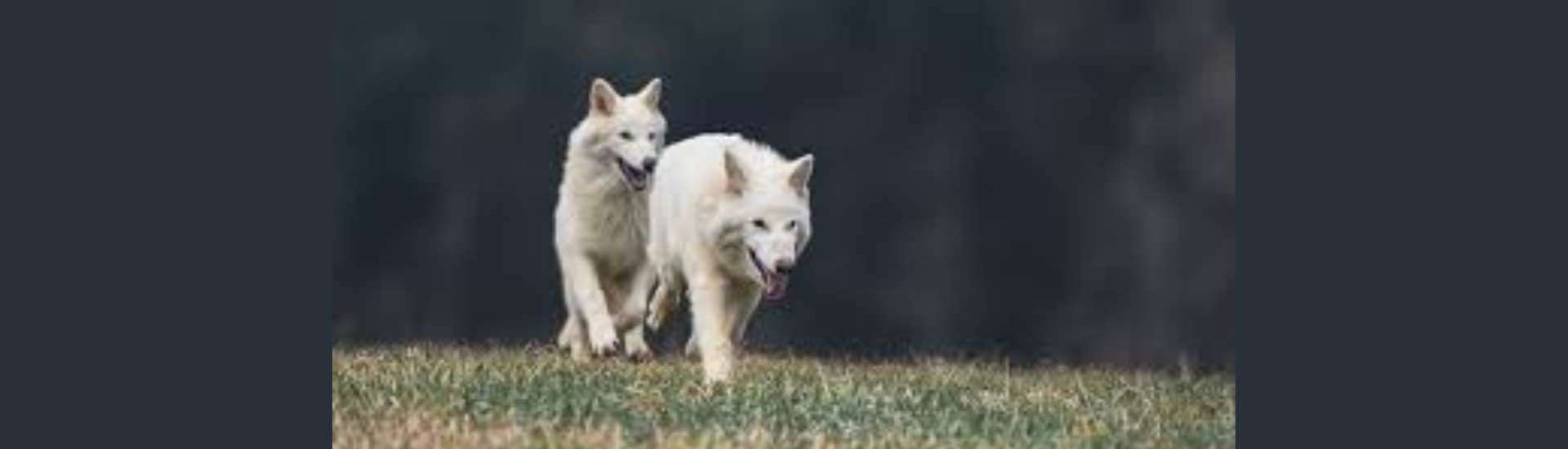
The thought of having the Woolly Mammoth, Dodo Bird and many other extinct species roaming around in their usual habitats may be some exciting news for conservationists. Even though Charles Darwin saw extinction as a permanent end of a species, modern science begs to differ from this idea. This is exactly what Colossal Biosciences – an American biotechnology and genetic engineering company working to de-extinct several extinct animals attempted in October 2024, with the revival of the Dire Wolf through the science of de-extinction. This experiment marked the birth of Romulus and Remus.
The Science of De-extinction
In their first attempt to resurrect the Dire Wolf, an animal that disappeared at the end of the last ice age, Colossal tweaked the DNA of grey wolves. The Company states that it had edged closer to bringing back the Woolly Mammoth with the creation of genetically engineered ‘woolly mice.’ Colossal has also launched projects to revive the Tasmanian tiger, Dodo and the Moa – a 3-metre-tall bird that has been extinct for 600 years. The Dire Wolf was revived by doing 20 edits to the DNA of grey wolves, since it is impossible to bring back an animal identical to a species that used to be alive. However, their announcements and attempts at de-extinction have been met with much scepticism.
Ethical concerns
One of the major ethical concerns is the term ‘de-extinction’ itself, which, according to scientists, is a misleading term. “What the de-extinction scientists are doing is gene editing, but that doesn't sound nearly as catchy as de-extinction,” said biodiversity scientist Dr Rohan Pethiyagoda.

In a candid interview with Daily Mirror Life, Dr Pethiyagoda spoke about his observations on the concept of de-extinction, whether it is a threat to current conservation efforts and the importance of investing in garden methods of conservation to protect Critically Endangered species.
Excerpts :
Q : What are your observations on the ‘de-extinction’ of the dire wolf?
There is at present no scientific method that facilitates de-extinction. This is a misleading term. The Dire Wolf is extinct, period. What is possible, and has been done, is to edit the genome of an extant wolf species, such as the Grey Wolf, so that you get an animal that resembles, in some respects, a Dire Wolf. That is not the same as "de-extinction" in that what you get at the end of the process is still a Grey Wolf, not a Dire Wolf.
Q : Are de-extinctions a threat to current conservation efforts?
They are not so much a threat as a distraction. We would all like to see Woolly Mammoths roaming the Arctic tundra again. Given that we have the entire genome of Woolly Mammoths, it may be possible to get to the point of modifying an Asian Elephant egg so that it is functionally the egg of a Woolly Mammoth. But what then? You still need an Asian Elephant to carry the embryo to term. It would be rather like implanting a human embryo in a female chimp. The chimp's immune system will simply reject it. The biochemistry of different species is different. Perhaps one day in the future, such problems can be overcome. But we're nowhere close to that yet.
Given that they are only experimental, I don't see de-extinction efforts as a threat to conservation. Those involved in these efforts contribute enormously to science. If they have the money for the research and think it makes sense to do it, of course, they should be free to do so. After all, similar concerns were expressed when mammal cloning began three decades ago. But now, even dogs can be commercially cloned. That said, I think conservationists would not like to see conservation dollars being diverted to long shots like de-extinction, especially given that only a fraction of that investment can save thousands of species that are on the brink of extinction.
Q : What are the ethical concerns regarding these processes?
Any intervention that involves living beings carries with it a large number of ethical concerns, not least the welfare of the animals concerned. But my biggest worry is the potential for misallocation of resources. Politicians tend to be simple-minded folk with a poor understanding of science. They live by headlines, not by a thoughtful analysis of scientific content. It would be bad for conservation if politicians got it into their heads that extinction doesn't matter because we can just de-extinct these species.
That is why I dislike the term "de-extinction". It is completely misleading. What the de-extinction scientists are doing is gene editing, but that doesn't sound nearly as catchy as de-extinction. The fact that you, as a journalist, are using this term shows how easy it is for a catch-phrase to take root. But that is the fashion now: declarative statements such as "black lives matter" or "trans-women are women" have far greater appeal because they are pithy but deliciously misleading nevertheless. To me, de-extinction is a bit like that: a cool term which people will increasingly use without the foggiest idea of what it really means.
Q : What are the alternatives to de-extinction from your experience?
Simple. Invest in common or garden methods of conservation. Prevent species from going extinct. We have in Sri Lanka 35 species of reptiles, 17 species of amphibians and almost 200 species of flowering plants that are Critically Endangered. Yet, we do not have a recovery plan for even one of these. THAT is where investment should be prioritised.












1 Comments
Puni Selvaratnam says:
Jan 20, 2026 at 08:31 pmWhen the physical conditions of the environment change some biological species that cannot cope with the changes in the environment die down and new species that can survive in the new conditions slowly appear. This is evolution. The work of Colossal Biosciences will put us all in danger. Thank you, Kamanthi for reporting this and interviewing Dr Pethiyagoda.