Feb 18 2026.
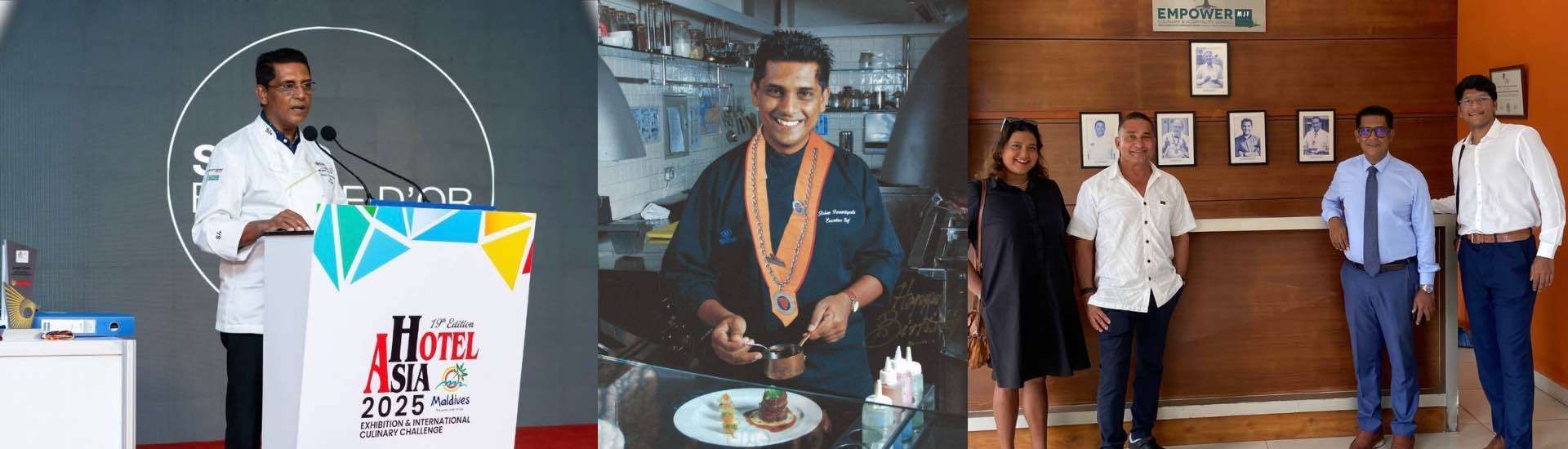
views 653Chef Rohan Fernandopulle is not just a name in the culinary industry; he is a movement that has simmered, evolved, and stayed relevant for over four decades. From walking into a hotel kitchen by pure coincidence to becoming one of the pioneering Sri Lankan Executive Chefs in South Asia, his journey is proof that destiny sometimes wears a chef’s jacket.
He has trained hundreds, possibly thousands, of young chefs who now lead kitchens across the world. He has witnessed the transformation of Sri Lankan hospitality from strict, military-style kitchens to modern, collaborative culinary spaces. And today, he sits firmly and confidently on the judging panel of MasterChef Sri Lanka — not just as a judge, but as a mentor shaped by fire, discipline, and resilience.
What I love most about Chef Rohan? He carries old-school structure with modern awareness. He respects tradition but understands innovation. He believes in pressure — but only because he knows it reveals potential.
Today he speaks about his 40 years and more on the Buzz.
Q: You’ve spent four decades in the culinary world. When you look back at young Rohan stepping into his first kitchen, what would you tell him today?
A: It was never part of a grand plan. I started as a laboratory technologist. Hospitality happened almost by coincidence. I joined the hotel industry in the front office and, within three months, was transferred to the kitchen at Palm Garden Hotel in Beruwala. (where I met my wife)
If I could speak to that young man today, I would say: trust the unexpected turns. What feels accidental today may become your life’s calling tomorrow. Stay patient, stay humble, and embrace every challenge.
Q: In 40 years, what has changed the most in ingredients, techniques, attitude, or ego?
A: Everything combined. Ingredients have evolved, techniques have advanced, and technology has transformed kitchens completely.
But the biggest change has been in leadership style. Kitchens used to be autocratic and strict, almost military. Today, they are more collaborative and expressive. The industry has matured, and so have chefs.
Q: Being a chef wasn’t always glamorous. Today, it’s a celebrity status. Did you ever imagine that shift?
A: No. When I left lab technology to join hospitality, my mother strongly opposed it. It wasn’t considered prestigious back then.
Today, chefs are respected and celebrated. During my time as Executive Chef at Hilton, people would come looking for me like I was a public figure. I am proud to have witnessed and contributed to that transformation.
Q: Are we finally getting the international recognition Sri Lankan cuisine deserves?
A: We are on the journey, but not fully there yet. Sri Lankan cuisine has incredible depth, heritage, and rare indigenous ingredients.
Recognition requires consistent global positioning. As individuals, corporates, and as a tourism-driven nation, we must actively market Sri Lanka as a culinary destination. Our cuisine deserves a strong global identity.
Q: Today’s young chefs are bold and social-media savvy. What excites you and what worries you?
A: Training young chefs has always been my passion. Many I mentored are now Executive Chefs and entrepreneurs. Seeing their growth gives me immense satisfaction.
What excites me is their confidence and creativity. What worries me is impatience. Success takes time. Mastery cannot be rushed.
Q: Which builds better chefs — old-school discipline or modern creativity?
A: The ideal kitchen balances both.
Without discipline, creativity becomes chaos. Without creativity, discipline becomes a limitation. A great chef must master structure first, then innovate.
Q: With modern trends like molecular gastronomy and fusion food, are we innovating or forgetting our roots?
A: Trends will come and go. Tradition remains forever.
Innovation must have a foundation. If you don’t understand your roots, your food lacks identity. True innovation respects tradition; it does not erase it.
Q: What was the toughest moment in your journey?
A: There was a time when I constantly had to prove that a Sri Lankan chef could lead at the highest level, especially with European chefs arriving and leaving.
Eventually, I became one of the first Sri Lankan Executive Chefs in South Asia. That journey taught me resilience. Competence, consistency, and patience will always break barriers.
Q: Now, as a judge on MasterChef Sri Lanka, what kind of judge are you?
A: I come from an old-school background. My judgment is firm and honest. But behind that firmness is mentorship.
Pressure reveals potential. I push contestants to help them discover their strength.
Q: When you sit in that MasterChef chair, what are you really looking for in a winner?
A: Taste is king. Technique matters.
But resilience, adaptability, and growth are equally important. I look for someone who evolves throughout the competition, not just someone who cooks one good dish.
Q: Where do you see the culinary industry in the next 10–15 years?
A: AI and automation will enter kitchens from inventory management to precision cooking. Technology will improve efficiency and reduce waste.
But cooking is still an emotional craft. A machine can replicate precision, but it cannot replicate soul. Sustainability will no longer be optional; it will be a responsibility.
Q: After 40 years, what do you want your legacy to be?
A: I want to be remembered as Chef Rohan, the teacher and mentor who shaped thousands of young chefs.
My motto has always been: Passion, Pride, and Commitment. If that is what people remember when they hear my name, then I have fulfilled my purpose.






0 Comments