
Sep 22 2026.
views 3By Adrian Jesuthasan
At what point did fitness stop being about getting healthier and start becoming about getting noticed? It's a question I've found myself asking more and more recently. I've spent more than thirteen years around gyms. I've watched fitness evolve from something relatively simple into an enormous industry involving brands, influencers, events, sponsorships, content creators, supplements and social media.
Some of that evolution has been fantastic. More people are exercising. More people are talking about health. Fitness is more accessible than it has ever been. But somewhere along the way, I think we started confusing fitness with spectacle.
The more unusual something looks, the more attention it gets. The more extreme it is, the more people talk about it. And the more people talk about it, the more brands want to be associated with it. That is where things get uncomfortable.
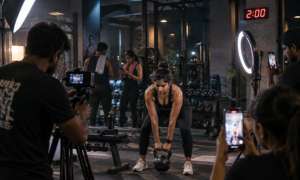
Recently, I saw an event promoted around a gym workout taking place at 2 a.m. The following day, social media was filled with posts celebrating the experience. People were talking about the incredible pump they got at two in the morning, the atmosphere, the energy, the experience.
And I couldn't help asking myself:
What exactly are we promoting here?
If the message is that exercise is good for you, why does the workout need to happen at two
in the morning?
There is nothing inherently unhealthy about exercising late at night. Some people work night shifts. Some people genuinely prefer late training. The body doesn't suddenly stop functioning when the clock strikes midnight. But that's not really the point. The point is what we're selling. Are we encouraging people to exercise because it improves their health, strength, cardiovascular fitness and quality of life? Or are we creating increasingly unusual fitness experiences because they make better content? Those are two very different things. We need to be honest about that distinction. Fitness is built on some remarkably boring principles. Move regularly. Build strength. Improve cardiovascular fitness. Eat reasonably well. Sleep. Recover. Be consistent. Do it for years.
There isn't much about that which makes a spectacular Instagram Reel. So perhaps we've started looking for ways to make fitness more entertaining. And this is where influencer culture can become dangerous. Influencers aren’t inherently bad. Some are fantastic educators. Some have helped people who would never have stepped into a gym begin exercising. Some have built communities around healthy living and genuinely changed people's lives.
But influence comes with responsibility. When a person with a large following turns something into a trend, people don't always question whether the trend makes sense. They see thousands of people doing it. They see the cameras. They see the excitement. They see the brands. And they assume: This must be fitness.
We've seen this happen with running as well. I recently came across another example that made me question where we are heading: a running event organised inside a shopping mall. Again, I understand the attraction. It's different. It's visually interesting. It's easy to film. It creates a unique experience. And perhaps for a one-off event, it can be perfectly enjoyable. But we need to ask a more important question. What exactly are we trying to achieve?
If the goal is to get people moving, why does the event need to happen in an environment that may not have been designed primarily for running? A mall isn't automatically an unsafe place to run. Conditions matter. Surface, crowding, ventilation, temperature, route design, supervision and the participants themselves all make a difference. But that is precisely why fitness events should be designed around health and safety first, not Instagram first. Because when the event becomes more important than the activity, we've reversed the priorities. The event becomes the product. Fitness becomes the decoration. And the influencer becomes the brand. This is happening across the industry. We've turned workouts into content. We've turned personal records into content. We've turned running into content. We've turned transformation into content. We've even turned waking up at ridiculous hours to exercise into
content. And somewhere underneath all of that is a person who may simply want to become healthier.
I worry about what this does to beginners. Imagine someone who has never exercised before. They open Instagram and see people training at two in the morning. People running enormous distances. People lifting extraordinary weights. People completing brutal challenges. People with physiques that seem almost impossible to achieve. What do they conclude? They don't necessarily think, "Exercise looks healthy."They may think: "Fitness isn't for someone like me." And that's the tragedy.
Fitness was never supposed to be a performance reserved for people willing to do the most extreme thing. It was supposed to be about helping ordinary people live better lives. A mother getting stronger. A father lowering his health risks. An older person maintaining independence. A teenager developing confidence. Someone recovering from an illness rebuilding their strength. A person who has spent ten years sitting at a desk finally deciding to move. None of those stories needs a drone camera. None of them needs a sponsored hashtag.
None of them need an influencer standing in front of a banner. They just need someone to start. There is also something else we need to acknowledge. Fitness has become a business. There is nothing wrong with that. Gyms need to make money. Trainers need to make a living. Brands need customers. Events need sponsors.
But when commercial interests become stronger than the health message, we need to question what we're actually selling. If an event exists primarily because it gives a brand exposure, let's call it what it is. A marketing event. Don't dress it up as though it represents the future of fitness.
If an influencer is promoting a challenge because it genuinely encourages people to become more active, fantastic. But if the challenge exists because it creates views, engagement and brand deals, we should be honest about that too. The problem isn't promotion. The problem is pretending promotion is the same thing as progress. I've always believed that fitness should be accessible, sustainable and, above all, useful. You don't need to train at two in the morning to prove that you're committed. You don't need to run around a shopping mall to prove that you love fitness. You don't need to lift the heaviest weight in the gym. You don't need to destroy yourself every workout. And you certainly don't need to turn every healthy habit into content. Sometimes the healthiest workout is the most ordinary one. You wake up. You train. You go home. You eat a decent meal. You sleep. You do it again tomorrow. And nobody sees it. That's okay.
Because the real purpose of fitness isn't to make people watch you. It's to make sure you're healthy enough to enjoy the life nobody is watching. Perhaps that's where the industry needs to return. Not away from social media. Not away from influencers. Not away from brands. But back towards responsibility. Influence should make people healthier, not simply make them more impressed. Events should encourage movement, not just generate photographs.
And fitness should be measured by what it adds to someone's life, not by how much attention it receives online. Because if the only reason something is considered successful in fitness is that it went viral, we have missed the point. The best fitness transformation may never get a million views. It may happen quietly in a small gym, with an ordinary person who simply wants to feel better.
And perhaps that's the kind of fitness worth promoting. Not the loudest. Not the most extreme. Not the most marketable. Just the kind that helps people live healthier, stronger and longer lives. Because fitness was never supposed to be a PR stunt. It was supposed to be about people.







0 Comments