Nov 25 2026.
views 15We often celebrate men for their strength, success and ability to provide, but how often do we stop to ask how they are really doing? In a society where men are expected to remain strong, hide their emotions and carry the weight of responsibility, conversations about their mental health are often left unheard.
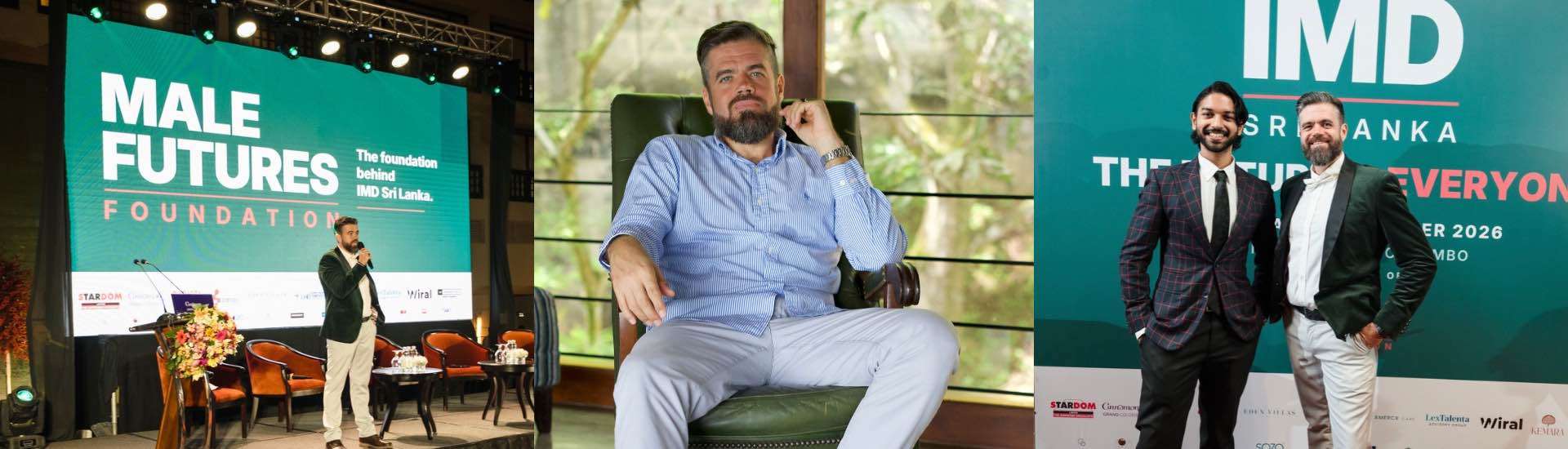
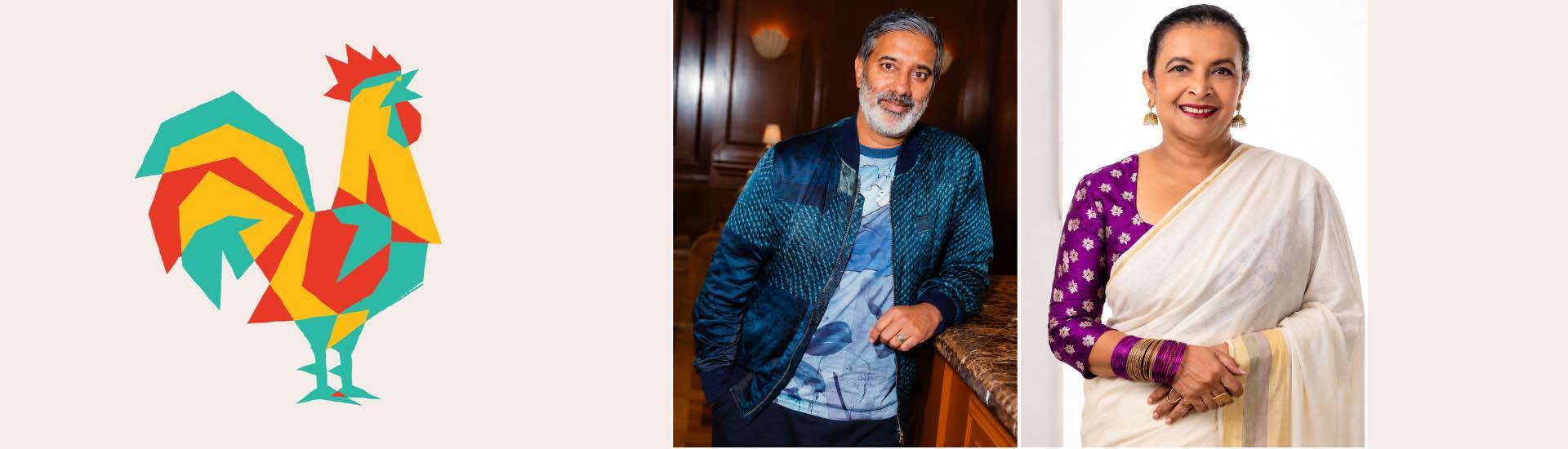
This week on The Buzz with Danu, I speak with Christopher Murray, cognitive hypnotherapist and Sri Lanka’s Ambassador for International Men’s Day, about the importance of recognising men’s emotional well-being and creating a culture where asking for help is seen as strength rather than weakness.
With International Men’s Day 2026 embracing the theme “The Future Is Everyone,” Christopher has been leading an important conversation in Sri Lanka, bringing together business leaders, professionals and advocates to address the challenges men face, often in silence.
For me, this is a conversation worth having because mental health should never be defined by gender. Behind every strong man is a human being who deserves to be heard, understood and supported.
Today, we get to know Christopher, his journey, his work and why he believes it’s time we started asking the men in our lives how they are really doing.
1. Christopher, let’s start with the man behind the title. Who is Christopher Murray, what brought you into the world of cognitive hypnotherapy, and was there a particular experience in your own life that made you want to understand the human mind?
I'm just a normal guy. I grew up in a working-class family in the middle of England, and I spent years in telecommunications before moving into health and wellbeing. I've always been fascinated by human behaviour. What moved me out of the corporate world is fairly dark. My business fell apart when COVID arrived; I became very depressed, and I was later diagnosed with ADHD. I ended up in a very dark place until a distressing conversation with my wife, Naomi, changed everything. Money and business mattered less, and understanding myself and others mattered more. I trained with Trevor Silvester, the founder of cognitive hypnotherapy and The Quest Institute, and became a practitioner. Today I live in Galle with my wife Naomi, and I work with people who are stuck, anxious or low, many of them capable people who look fine from the outside. I know what it is to wear the mask, so I don't judge it. Through a lot of pain and sadness came the man you see today.
2. You’ve been appointed Sri Lanka’s Ambassador for International Men’s Day by its founder, Dr Jerome Teelucksingh. How did this appointment come about, and what does this responsibility mean to you personally?
In 2023, days after arriving in Sri Lanka, I was asked to write a piece on International Men's Day and interviewed its founder, Dr Jerome Teelucksingh. He later asked me to be Sri Lanka's ambassador. I declined, because I wasn't ready and I didn't want to do it half-heartedly. Earlier this year I told him I could now see how to help. To me it means being trusted with something bigger than myself. I truly believe that men doing better is better for everyone. I want men seen in a positive light, as we rightly do for women, by lifting up the good men in our communities. My wife Naomi and I have since founded the Male Futures Foundation, so the work can continue beyond a single day. I haven't always got it right myself, and that is exactly why I care.
3. We celebrate International Women’s Day with tremendous enthusiasm, but International Men’s Day often receives far less attention. Why do you think that is? What is International Men’s Day actually about, and why should both men and women care about it?
International Women's Day has decades of attention and funding behind it, and it needed that. I celebrate it just as warmly, and nothing about International Men's Day takes anything away from it. International Men's Day began in 1999 in Trinidad and Tobago, and is now marked in more than 80 countries. It rests on six pillars: positive male role models, men's contribution to society, men's health and wellbeing, discrimination against men and boys, better gender relations, and a safer world for everyone. Mental health is one part of that. Men in Sri Lanka live about six years less than women, 74.4 years against 80.7, which tells you this is bigger than one issue. And it is about men and women working together, and equality that works for everyone, not one side. Men doing better is better for everyone.
4. Growing up in Sri Lanka, boys are often taught that men must be strong, provide for their families and never show weakness. Do you think this traditional understanding of masculinity is preventing men from expressing their emotions and asking for help?
The mask is the same in London as it is in Colombo: be strong, provide, never show weakness. I wore it myself until it slipped. Strength isn't the problem. The belief that asking for help cancels it out is. A man will happily get his car serviced or see a doctor about his knee, but ask him about his head and he goes quiet. The strongest men I know can be strong and say "I'm struggling" in the same breath. If you can name the feeling, you can tame the feeling. That is where it starts, and it is learnable.
5. Your International Men’s Day initiative highlighted a disturbing statistic: according to 2022 national police data, men in Sri Lanka died by suicide at approximately five times the rate of women. What do you believe is contributing to this situation, and what are we failing to recognise about men’s mental health?
Men find it harder to open up, and culturally there is shame attached to it. The latest national figures, from 2022, show about 27 male suicides per 100,000 against 5 for women, and hanging has been rising among older men. What we fail to recognise is how quiet it is. Most of these men never told anyone they were struggling, and often the people around them had no idea. Most men aren't struggling alone because nobody cares. They're struggling alone because nobody asked twice. That is why we're running a campaign called Ask Twice. If you ask a man how he is, he'll usually say "I'm fine". If you sense he isn't, ask again: how are you really? It costs nothing, and it can change everything. I've lost a few friends to suicide, and I always wondered if I could have helped; I will never know the answer.
6. You’re a cognitive hypnotherapist, which is a profession many Sri Lankans may not fully understand. What exactly is cognitive hypnotherapy? How does it work, how is it different from traditional psychological therapy, and what can it realistically help people overcome?
It was developed in the UK by Trevor Silvester, who created the Quest Institute, and it combines hypnosis, neuro-linguistic programming, positive psychology and cognitive behavioural therapy. As far as I know, I'm the only practitioner in Asia. I've worked with what people would call depression, trauma, anxiety and addiction. We don't work on a diagnosis. We work on how people feel and how they want to be. Practically, I help someone locate what is actually driving the problem, step in at that point, and then stabilise the change so it lasts. It isn't magic, and it isn't stage hypnosis. People stay in control throughout. The results I get are profound.
7. We live in a society where men are often judged by their success, financial stability, careers and ability to provide. Do you think this pressure to constantly prove themselves is silently affecting men’s emotional well-being? And how can men learn to separate their self-worth from their achievements?
Yes, quietly and heavily. Many men measure themselves by the job title, the salary and being the provider, so a bad year feels like a personal failure. I've been there. When my business fell apart, I felt I had lost who I was. Ask yourself who you are when the title is taken away, and what the people closest to you actually value in you. It is rarely the salary. Then talk to someone. Your worth was never the thing you were achieving, and a man is not his results.
8. The theme for International Men’s Day 2026 was “The Future Is Everyone.” What does that message mean to you? How can women, families, employers and society as a whole become part of the solution rather than treating men’s mental health as something men must deal with alone?
It's inclusive, and I love that. Imagine how well families and workplaces would do if men were functioning at a high level. Women ask what they can do: show love, be in his corner, and let him know he's appreciated. When a man is struggling, a partner who pulls away makes it worse, because he reads it as proof he is a burden. Friends can do the simplest thing, which is to turn up. Employers can treat men's wellbeing as seriously as safety. Nobody fixes this alone, and nobody is left out of the fix.
9. You brought together CEOs, founders and influential voices at Cinnamon Grand for Sri Lanka’s first national evening dedicated to men’s health. What conversations emerged from that gathering, what impact do you hope it will have, and what practical changes would you like Sri Lankan workplaces to introduce?
The main theme was role models and mentorship. Most of us on stage had a positive role model, and mine was my older brother. We also talked about loneliness, and about the pressure to become an engineer, doctor or lawyer, when a young person might be a wonderful writer, painter or singer. The cost is depression in your 40s. For workplaces, the changes are practical. Put mentoring frameworks in place, train managers to notice and ask twice, and make support easy to reach and free of stigma. A man who feels seen at work is more likely to be well, and to stay.
10. Christopher, you said something very powerful: “Most men aren’t struggling alone because nobody cares. They’re struggling alone because nobody asked twice.” I want to end with that thought. If there’s a man watching us today who is silently struggling, feeling overwhelmed or believing he has nobody to turn to, what would you want to say to him? And what should the people around him do differently?
You'd be surprised how many people will be there for you when you're open about how you feel. There's no judgment from the right people, and if someone does judge you, they aren't the right people for you. Start with one person, and say it plainly: I haven't been okay. If it feels too heavy, call 1926 (National Mental Health Helpline) or 1333 (CCCline), both free and open 24 hours. To everyone around him: ask how he really is, and when he says "fine", ask again. Stay with the answer, and don't rush to fix it.
A message I want to get across: recognition for International Men’s Day in Sri Lanka
I'd like the government to formally recognise International Men's Day on 19th November, as it marks International Women's Day with a national programme, and to give men's health and mental health the attention that recognition brings. That means data, services and funding that reach men, not just a date on the calendar. In the UK, Parliament has held a debate for International Men's Day for a decade, and England launched its first men's health strategy around the day. Sri Lanka has the people and the will. We are not asking for anything to be taken from anyone.








0 Comments