
Mar 05 2026.
views 237Compiled by Imaaya Perera
As we approach International Women’s Day, we look at a few women whose names and legacies live on even today. From pioneers to specialists and national heroes, these women are reminders of our own strength and capabilities if we only have the determination to succeed.
Helena Wijewardene
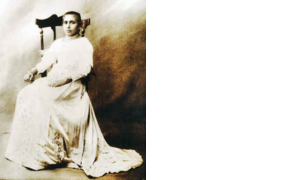
Wewage Dona Helena Dep Weerasinghe, born in 1864, was known as a landed proprietor, philanthropist, and Buddhist patron, and is acclaimed as a woman who rendered great service to our country. Known as Helena Wijewardene of Sedawatte Walawwa, she was married to Muhindiram Don Phillip Wijewardene, an acclaimed timber merchant and notable aid in several construction projects in Sri Lanka. Upon his death in 1903, Helena took up the mantle of sole officiator of their estate and properties, including the development of many temples, including the ancient ‘Weheragodella Temple in Sedawatte’.
Despite the patriarchal time, Helena continued her husband’s work and even took steps to further their businesses, managing the family estates and acquiring several pieces of land in Colombo, Maradana, Pettah and Fort, which would become a part of the family legacy and beneficial for all their future endeavours. Her most notable and commemorated works remain her revival of the old Buddhist temples, including Bellanvila, Kuruwita Aramaya, Kuppiyawatte, the Ratnapura Purana Viharaya, Dematagoda Abeysingharamaya, Peliyagoda Vidyalankara Pirivena and Maligakanda Vidyodaya. She provided temples with property and alms, ensuring their longevity. Her most significant renovation project remains the revival of the ‘Kelaniya Raja Maha Viharaya’, the site of Buddha’s third visit to Sri Lanka. After visiting the ruined temple that had been destroyed during the time of the Portuguese invasion in the country, its state spurred her to initiate its restoration.
Her contributions towards its development went on for years from the year 1888. It included replacing the wooden altars with marble ones and even commissioning Solis Mendis, a master painter and artist, to redo the temple’s murals, many of which are still considered some of Sri Lanka’s finest works of art. She and her family became patrons of the temple, and for many others, ensuring that a large portion of her fortune was used to secure financial stability for these religious institutions.
With great foresight, she initiated the ‘Wijewardene Charitable Trust Fund’, which was then used to support the development of Buddhism through the renovation of temples and sacred relics. To this day, many Sinhala art enthusiasts owe a lot to her for her extensive support and actions towards ensuring the prosperity of Sri Lankan art and architecture, solidifying Mrs. Wijewardene as a patron of the arts. The monuments and art that still stand today remain proof of her pious character and munificence.
Lady Adeline Molamure
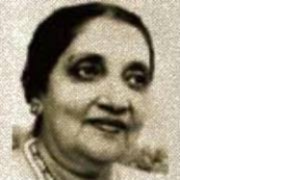
Born in 1890, Adeline Molamure, ‘Lady Molamure’, was the first female member of the Legislative Council of Ceylon. Thereby being the first elected female legislator in Sri Lanka. After conducting her schooling at Bishop's College, Colombo, she went on to be a member of the State Council of Ceylon. She was elected to the state council in the year 1931, following her father's death, in his electoral seat. She was later elected to the Senate in 1947 and was appointed Deputy President of the Senate in 1955. She was then appointed Commander of the Order of the British Empire in the 1955 Birthday Honours.
Dr May Ratnayeke
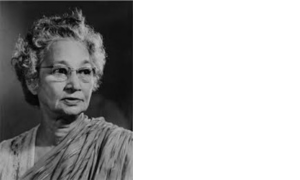
Dr May Ratnayeke, born in 1892, was a pioneering doctor in Sri Lanka. She is credited with being the first female doctor in Sri Lanka as well as the second woman to study medicine and graduate in the country.
Born in Kandy, Dr Ratnayeke attended local schools and then went on to carry out their higher education at the Ceylon Medical College in Colombo. Despite the turbulent climate for women in the field, she received her medical degree(Licentiate in Medicine and Surgery) in 1916. She started working at the American Mission Hospital post graduation and then moved on to Lady Havelock Hospital. Between the years 1925 and 1927, she attended an elite program at the Royal Free Hospital for Women in London. In 1927, she became a surgeon at the Lady Havelock Hospital. Following this, she attended another training programme at the University of Edinburgh Medical School. After this, she was promoted to Chief Surgeon. She also taught medicine at the medical school at the University of Ceylon.
She made many milestones in female medicine. In the 1930s, she wrote articles for international newspapers concerning many important and groundbreaking topics on women's health. Educating doctors from around the world. In 1953, she was chosen as the President of the Ceylon Branch of the British Medical Association. She was also a part of the Medical Women's International Association for most of her career, marking an illustrious career, paving the way for many other women in the medical field.
Siva Obeyesekera
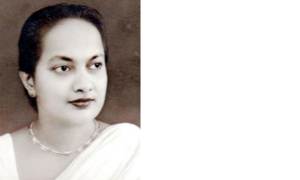
Ms Siva Obeysekera was a pioneer in promoting handicraft and handloom weaving in the country. She is acclaimed as the founder of the only state-owned handicraft marketing organisation in Sri Lanka, ‘Laksala’ in the year 1964 and afterwards ‘Lakpahana’. Through this, she hoped to revive the handicraft industry in Sri Lanka and to help preserve these crafting traditions as well as to boost the livelihood of the poor craftsmen and women in the country, gaining aid from the likes of Mrs Nalini Wickremesinghe and Mrs Sirimavo Bandaranaike while she was serving her first term as Prime Minister.
She became the first woman and the first Asian to become the President of the World Crafts Council from 1992 to 1996. She then became the President of the World Crafts Council Asian Pacific region from 1996 to 2000. She was also affiliated with UNESCO during that time period. She was a recipient of the ‘Kamala Saamaan Award’ in 2003 by the Crafts Council of India for her research in the profession for the development of ‘Laksala’ and was the first foreigner to receive the award. She was notably the first woman to be awarded the national honour of ‘Deshamanya’ in Sri Lanka by the late president Mr R. Premadasa in 1991. She continued to break records, winning the Mirigama seat in her own homeland.
She was also a prominent figure in the Girl Guides Association and a trustee in the Boy Scout Movement. Ms Obeyesekera was involved in several charitable cancer organisations with the Sri Lanka Cancer Society and with the School for the Deaf and Blind, Wathupitiwela, Home for the Elders and The Attanagalla Children's Home. Even years after her death, she continues to be an inspiration to all women in the entrepreneurial field for her phenomenal contribution to the fields of arts and crafts.
Vivienne Goonewardene
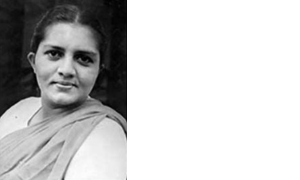
Violet Vivienne Goonewardene, commonly known as ‘Vivi’, was a Sri Lankan anti-colonial activist and prominent politician, serving as one of the first female ministers, as Deputy Minister for Housing and Construction from 1970 to 1977. While in secondary school, Goonewardene became involved in the anti-imperialist Suriya-Mal Movement, fighting against the prevailing injustices. She was adamant about pursuing a higher education, going on to have one of the most illustrious careers in Sri Lankan history, even volunteering during the 1934 Malaria Epidemic.
During her political career, she was instrumental in the rise of the Lanka Sama Samaja Party. With the beginning of World War II, Goonewardene fled to India under a false name, but not even the threats of violence could deter her from her goals, leading her to immerse herself in the Quit India Movement, integrating herself in achieving India's Independence from Britain in 1947. Upon her return to Sri Lanka, she brought her knowledge from abroad and integrated it into her own country, playing a significant role in achieving Sri Lanka's independence from the British in 1948. She then continued her role as a member of the Lanka Sama Samaja Party, which provided the main opposition movement that dominated elections from the 1940s to the 1960s. Upon coming to Parliament, even bringing in Sri Lanka's first female president, Goonawardene worked as a prominent member. She was also acclaimed as the President of the All Ceylon Local Government Workers Union from 1949 till her death.
Through this union, Goonewardene hoped to integrate new values in Sri Lankan society, developing it from a colony of the British Army to the Socialist Republic of Sri Lanka by nationalising organisations and encouraging national pride. To this day, she is credited as the only female National Hero of Sri Lanka, as one of the most prominent figures in the country’s leftist movement.
Minnette de Silva
Architect Minnette de Silva was an internationally recognised architect and is considered to be the pioneer of the modern architectural style in Sri Lanka. As she did not complete her studies the traditional way, she had to work as an apprentice for the Bombay-based firm Mistri and Bhedwar while taking private classes at the Architectural Academy before enrolling at the Sir Jamsetjee Jeejebhoy School of Art. She was a part of many cultural and political circles and was the architectural editor for Marg, a publication dedicated to the arts, in which she was a founding member. She attended schooling there at a time of much political upheaval and was
passionate about such matters. Accordingly, she was one of the many protesters who attended the Free Gandhi March and, as a result, was expelled from school for refusing to apologise to the administration for attending. She then started working for the emigre architect and planner Otto Koenigsberger in his office in Bangalore, working on prefabricated housing for the Tata Steel City plan in Bihar.
Upon returning to Sri Lanka, post-independence, she officially started work as a practising architect despite her parents' reservations. Her work was greatly influenced by Ananda Coomaraswamy and, like him, was an advocate for the preservation of the traditional arts and crafts, local craftsmen and the building methods and materials and would go on to become the first female architect globally to be a patron of the local craftsmen. She is also credited with creating a new style of architecture that is apparent even today, becoming the first architect to fuse Indian and Sri Lankan Architectural styles with Western influences. Her first building, the Karunaratne House in Kandy, is the first building designed by a woman in Sri Lanka. She revolutionised the concept of modernist architecture and dubbed the term ‘regionalism’ decades before most Western practitioners in her talks about Modern Regional Architecture in the Tropics. She went on to travel to countries like Greece, Iran, Pakistan, and Afghanistan and Hong Kong and cities like London, on her self-dubbed ‘journey of self-
renewal’.
She was the first Asian woman to be elected an associate of the Royal Institute of British Architects (RIBA) in 1948. Architect de Silva was also the first Asian representative of CIAM in 1947. In 1982, de Silva settled down to work at the Kandy Art Association and Centenary Culture Centre in her hometown. Later on, she was awarded the SLIA Gold Medal for her architectural works. In particular, her works on developing regional modernism for the tropics. Revolutionising architecture and cementing a legacy still prevalent in today's architectural modules.
Celestina Dias
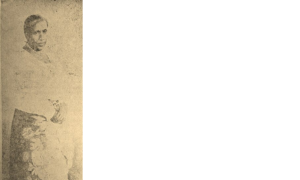
Ms Celestina Rodrigo, known as Mrs Celestina Dias, was a Sri Lankan philanthropist and businesswoman. She was well known for her philanthropic and social service activities. Thiswas later recognised, and she was appointed as a member of the Order of the British Empire (Civil Division) in the 1929 Birthday Honours for all of her charitable services to Sri Lanka.
She is also remembered as a pioneer for Buddhist girls’ education and women’s entrepreneurship activities. In 1917, she established the renowned girls' school Visakha Vidyalaya, Colombo. The funds to build it were managed by her, after which it was entrusted to the likes of D.S.Senanayake, Baron Jayatilaka and the Buddhist Theosophical Society. She also built a modern laboratory for Ananda College, Colombo, in 1916, which helped it to be recognised as a Grade-1 status institute of higher education and eligible for the government grant and Sanitarium for Buddhist monks. She was a former President of the Panadura Association and a chief patron-custodian of the Rankot Viharaya, Panadura and Vajiraramaya, Bambalapitiya. She assisted
in many religious and social initiatives and is widely regarded for taking steps to uplift Buddhism in the country.
Ezlynn Deraniyagala
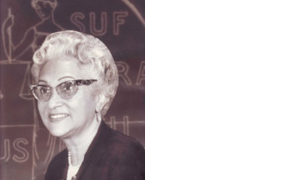
Ms Ezlynn Deraniyagala was a lawyer and a feminist and is remembered as the first female barrister in the country. She was born in Sussex but spent the majority of her life in Sri Lanka, bar the time she spent at St. Anne’s College, Oxford. She was the second woman from Sri Lanka to pass the bar exam in 1934. She was the first to be admitted to the Colombo Bar in 1935. That same year, she was appointed as an advocate in the Supreme Court of Ceylon, thereby becoming the first female barrister in the country. In 1948, she approached Oxford to produce a doctorate on ‘the advancements of women's rights and activities in Ceylon’. While practising as a lawyer, she spent much of her time overseas and engaged in several national and international women’s groups. She founded the Sri Lanka Women’s Lawyers Association in 1960 and became its first president from 1960 to 1961 and again in 1966. She also served as an influential president of the All-Ceylon Women’s Conference. She then served as the Vice President for the International Alliance of Women from 1952 to 1955 and eventually became President for the organisation from 1958 to 1964.



0 Comments