Sep 09 2026.
views 12The Wildlife and Nature Protection Society (WNPS) will bring the country’s wildlife conservation debate directly to the institution responsible for much of it, when the Director General of the Department of Wildlife Conservation (DWC), Ranjan Marasinghe, delivers the Society’s September Monthly Lecture.
Titled “Sri Lanka’s Wildlife Heritage: Conserving Nature for Future Generations”, the Nations Trust WNPS lecture comes at a time when the country’s wildlife is facing increasingly complex pressures — from habitat loss and fragmentation to illegal activities, development pressures, tourism impacts and the continuing human-wildlife conflict, particularly the human-elephant conflict.
The DWC carries a difficult and often highly scrutinised responsibility. Under the Fauna and Flora Protection Ordinance, it is mandated to protect and conserve Sri Lanka’s fauna, flora and their habitats, while administering a substantial network of protected areas. The Department also has responsibilities relating to protected species, law enforcement, wildlife management, research, international wildlife trade under CITES and public engagement.
The scale of that responsibility is considerable. Sri Lanka’s DWC-administered protected area network covers more than 1.25 million hectares, providing protection to ecosystems and species while also supporting important ecological, cultural and tourism values.
But the responsibility also comes with difficult questions.
How effectively can wildlife be protected when animals and people increasingly share the same landscapes? How should the country respond to the human-elephant conflict when elephants move beyond protected areas and into agricultural and human-dominated landscapes? What are the limits of enforcement? Where should conservation priorities sit when they collide with development, livelihoods and political pressures? And what can the DWC realistically achieve with the resources and authority available to it?
These are not questions that can be answered simply, nor should they be.
The September lecture provides an opportunity to hear directly from the person currently responsible for leading the Department, rather than through reports, headlines or public criticism.
Ranjan Marasinghe was appointed the 35th Director General of the DWC in January 2026. A career wildlife officer, he joined the Department in 1998 and has progressed through a number of positions, including Assistant Director, Director of Operations and senior technology-related responsibilities.
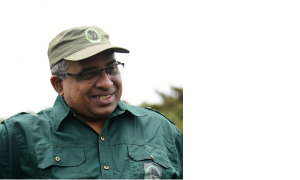
He has also gained field experience in wildlife management and brings a multidisciplinary academic background spanning agriculture, information technology, law, and forestry and environmental management.
His professional experience also includes work involving geoinformatics and elephant management, including the application of GPS, satellite remote sensing and GIS to understanding elephant movements and potential corridors.
The conservation community has legitimate expectations of the Department, just as the Department faces legitimate constraints and challenges. Understanding both sides is essential if Sri Lanka is to move beyond criticism alone and towards better conservation outcomes.
This September, WNPS invites the public to engage with the DWC’s perspective on the future of Sri Lanka’s wildlife heritage.
WNPS Monthly Lecture is supported by Nations Trust Bank and is free and open to all.










0 Comments