
Mar 10 2026.
views 155Rights. Justice. Action. For ALL Women and Girls
International Women’s Day is a global day, celebrating the social, economic, cultural and political achievements of women. The day also calls for action for accelerating women’s equality.
On 8 March 2026, rally with women and girls around the world to demand equal rights and equal justice to enforce, exercise, and enjoy those rights. Currently, no nation has closed the legal gaps between men and women. In many countries, the law allows for early and child marriage, which erodes the full potential of about 12 million girls annually. Right now, women have only 64 per cent of the legal rights that men hold worldwide. In fundamental areas of life, including work, money, safety, family, property, mobility, business, and retirement, the law systematically disadvantages women. If matters continue at their current pace, it will take 286 years to close legal protection gaps
As individuals, we can all take steps in our daily lives to positively impact women's advancement. We can call out stereotypes, challenge discrimination, question bias, celebrate women's success, and so much more. Most importantly – let’s work together towards a day when IWD is no longer a requirement, as EVERYDAY WILL BE A CELEBRATION OF WOMEN, A RECOGNITION OF THEIR ROLE IN SOCIETY AND THE UNIVERSAL ACKNOWLEDGEMENT OF, AND ADHERENCE TO HUMAN RIGHTS!
In keeping with the theme for IWD 2025, Anusha David poses a series of pertinent questions to a cross section of women who are all leaders in their own right, who give voice to their sentiments regarding this all-important day in the world’s calendar. Anusha David is the Chairperson of Headlines PR & Events, Partner of Interbrand Sri Lanka & the Maldives, and Co-founder / Trustee of Rescue Animals Sri Lanka
Nita Kundanmal, Esq, Attorney at Law [ USA ], Founder of the Law Office of Nita Kundanmal P.C., US Immigration Law Firm
QUESTION: What role do weak enforcement mechanisms play in denying women justice?
“Injustice anywhere is a threat to justice everywhere.” — Martin Luther King Jr.
More than 175 countries have ratified the Protocol to Prevent, Suppress and Punish Trafficking in Persons, making it one of the most widely adopted anti-trafficking treaties. Yet women and girls continue to be lured and trapped in a criminal underworld by promises of money and a better life. Many victims are hopeful of escaping poverty or abuse; vulnerabilities traffickers exploit through sophisticated schemes to ensnare unsuspecting victims.
Enforcement remains inconsistent due to limited resources, trafficking networks, and difficulties identifying victims. Too often, victims are treated as offenders rather than survivors, revealing a profound injustice: while the law promises protection, traffickers continue to exploit gaps in protection and accountability. True justice will exist only when laws against trafficking are enforced through investigations, protection for victims, and international cooperation.
Vera Wickramasinghe – Managing Director, Worldlink Shipping Colombo [Pvt] Ltd
QUESTION - How do discriminatory laws affect women’s everyday decisions and opportunities?
There are two sides to this question. First, from the Employer’s side, when you are selecting a candidate for a particular role, if the productivity of the employee of both genders is almost the same, I don’t think it is correct to consider the gender. However, depending on the job role/ duty, the employer should be able to select the correct candidate. For example, the job may require physical strength or may require multitasking ability.
Secondly, from the employee side, their commitment and dedication should not be based on any other circumstances, including gender. It is of utmost importance that you give your fullest to whatever task you are challenged with if you are looking for comprehensive professional development.
I think society and the legal system must realise that the responsibility of a career woman in the current world is more than that of a man. It is important that we develop the most conducive conditions for a woman to deliver her best. This includes strong legal protection against any kind of abuse, paid parental leave for all genders, and care-giving facilities of the highest standards, to be provided by the State. I am against any discriminatory laws which will prohibit or limit any Race, Religion, Gender, Age or community.
Kamaya Perera – Partner, KPMG
QUESTION - How can international pressure influence domestic legal reform?
Change is shaped at home, but international attention can help accelerate it, highlight gaps, raise priorities, and offer practical support through knowledge sharing, capacity building, finance, and clear benchmarks. Expectations from global partners can encourage organisations and governments to prioritise safety, education, fair work, and equal opportunity. Experience from other contexts shows what is possible and helps tailor solutions to local needs. Above all, international pressure is most effective when it is respectful, collaborative, and aligned with community priorities. On International Women’s Day, let us convert collective resolve into sustained progress for all women and girls.
Krishanti Perera - Joint Managing Director Rocco’s (Pvt) Ltd
QUESTION - Which legal gaps affecting women concern you most—work, safety, family law, property, or mobility?
As a partner of Rocco’s (Pvt) Ltd, I am most concerned regarding the legal gaps affecting women in Sri Lanka, which relate to workplace equality and protection from gender-based violence. Although the January 30, 2026, Extraordinary Gazette lifted restrictions on night work for women in hospitality and F&B, female labour force participation in Sri Lanka remains comparatively low. At Rocco’s, we are committed to empowering women by actively recruiting female staff, ensuring equal pay for equal work, and creating a safe, respectful workplace culture. Gender-based violence also remains a critical concern. Many women suffer in silence due to stigma, fear, and limited access to support systems. Ongoing safety concerns and inadequate action against street harassment continue to restrict women’s mobility, limiting their freedom, economic opportunity, and full participation in society.
Dr. Kavya Jayakody - CEO/Founder – International Management Centre (Pvt) Ltd (IMC CAMPUS)
QUESTION - How do laws allowing child or early marriage impact girls’ education, health, and independence?
“Laws that permit child or early marriage systematically limit a girl’s future before she has the opportunity to define it for herself. When a girl is married young, her education is often disrupted or permanently discontinued, significantly restricting her financial security and long-term independence. Early marriage also exposes girls to serious health risks, particularly those linked to early pregnancy and maternal complications, affecting both their physical and mental well-being. Beyond education and health, this is ultimately about dignity, autonomy, and breaking cycles of gender inequality. The ability to choose one’s own path should be a necessity, not a privilege. Strengthening laws and ensuring meaningful enforcement is not merely a legal obligation; it is a moral and developmental imperative that safeguards the rights, potential, and futures of young girls everywhere”
Ramani Fernando - Managing Director, Ramani Fernando Salons [ Pvt ] Ltd
QUESTION - What protections do girls need most to grow into empowered women?
Girls need protection that makes them feel safe, valued, and capable. They need safe environments at home, in schools, and in public where they are free from violence, abuse, and fear. A girl who feels safe can focus on learning and growing. They also need emotional support from parents, teachers, and communities who listen to them, believe in them, and guide them. Girls need protection that makes them feel safe, valued, and capable.
They need safe environments at home, in schools, and in public where they are free from violence, abuse, and fear. A girl who feels safe can focus on learning and growing. When girls are educated and encouraged, they develop confidence and independence. Most importantly, girls need to know their voices matter. When we protect their rights, nurture their confidence and give them opportunities, they grow into strong, empowered women. When girls are educated and encouraged, they develop confidence and independence. Most importantly, girls need to know their voices matter. When we protect their rights, nurture their confidence and give them opportunities, they grow into strong, empowered women.
Mano Sheriff - Managing Director, CEYLON NATURAL RUBBER (PVT) LTD
QUESTION - What does the theme “Rights. Justice. Action. For ALL Women and Girls” mean to you in practical terms?
The theme “Rights. Justice. Action.” reminds us that real change happens when we move beyond awareness and create opportunities that truly transform lives.
Across our workplaces and communities, empowering women with skills, safe environments, fair opportunities, and financial independence creates a powerful ripple effect. When a woman grows in confidence and dignity, her family is stronger, her community is stronger, and the nation benefits.
Today, the focus must be on practical action — investing in education, supporting women entrepreneurs, ensuring equal opportunities, and building workplaces where women are respected, heard, and able to lead.
When women rise, economies grow, and societies become more compassionate. Empowering women is not charity — it is nation-building.
Nilani Seneviratne - Head of Operations HSBC, Sri Lanka
QUESTION - How do discriminatory laws affect women’s everyday decisions and opportunities?
Discriminatory laws matter because they restrict the ability of women to work, own property, inherit assets, register a business or even access to finance. Silently, such laws shape the choices women can make in their everyday lives about safety, education, family, careers, health and independence, often limiting the economic independence of women.
Weak or absent legal protection against gender-based violence and harassment signals that the safety of women is a private matter rather than a public responsibility, thus reinforcing the idea that women must adapt to injustice rather than challenge it.
Discriminatory laws do more than deny rights—they shape women’s daily decisions, restrict opportunities, and reinforce unequal power structures. Ending legal discrimination is therefore not symbolic; it is the foundation of real equality, dignity, and freedom.
Christine Bandaranaike - CEO/Portfolio Manager, JB Financial
QUESTION - Women globally have only 64% of the legal rights that men hold. What does this statistic reveal about the state of equality today?
This statistic, published in the 2024 World Bank Group’s Women, Business and Law report, compares the legal and economic protections that women have compared to men and really challenges the assumption that the modern world has made big strides in gender equality. The comparison, done on a global basis across 190 countries, makes it clear - it’s not a handful of outlier countries dragging down the average. These inequalities translate to social and economic disparities for women, in areas of work, property ownership and protection from violence, leading to greater female poverty, vulnerability and lack of personal freedom, opportunity and voice. In Sri Lanka, legal systems are failing to protect women from violence and sexual harassment because the supportive structures and enforcement are overworked or just not reliable.
Particularly when it comes to violence against women, laws exist, but there are no clear enforcement mechanisms. While there are some countries that provide women with nearly equal legal rights with men, others have much larger gaps in areas like work, property ownership and protection from violence.
Ayoma Fernando, Adhirupini Tyagarajah & Surangi Munaweera – Directors of ABC Group of Schools
QUESTION - What long-term societal costs arise when girls are denied their full potential?
“Children are our greatest future”, Nelson Mandela
Early childhood is a critical stage of development. During these years, children form beliefs about themselves and their abilities.
Gender equality begins not in adulthood, but in early childhood. The way a girl is treated, educated, and encouraged in her early years shapes the woman she will become. If society truly wants independent, confident women in the future, it must first protect and promote the rights of the girl child today.
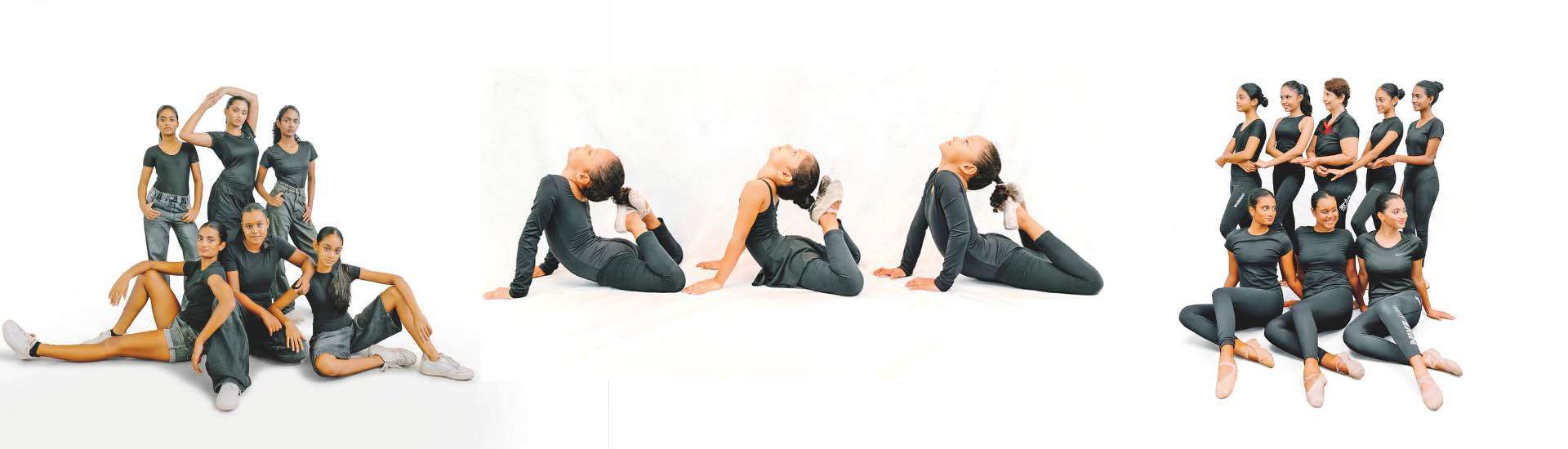
We at ABC Group of Schools, with 34 years of experience as early childhood educators, always provide the girl child with equal opportunities.
We believe that empowering girls through physical, creative, and skill-based activities helps build confidence, leadership qualities, and independence, preparing them to become strong and self-reliant women in the future. Happy International Women’s Day.
Anju D. Jessani, MBA, APM - Accredited Professional Mediator, Owner and Divorce Mediator, Divorce with Dignity Mediation Services
QUESTION - What message would you give young girls today about their rights and their power?
Do not let other people define who you should be or how much power you should have. Many of the people close to you, whether it be your parents, family, friends and even teachers, will try to define and limit you by their own view of the world. Try different coursework, hobbies, and friends. Explore the Internet for new careers. Paint a mental picture of what you want life to look like 20 years from now and then figure out the steps to get there. Travel and see how other people live, love, and learn. Try to find a mentor who can help you unleash your potential. And do not be afraid to fail… and then get up, dust yourself off, and try again.
Dilrukshi Kurukulasuriya - Executive Director, DIESEL & MOTOR ENGINEERING PLC
QUESTION - Which word in the theme—rights, justice, or action—do you think is most neglected today, and why?
Out of Rights, Justice, and Action, I believe Action is what we are missing most. We speak about rights and justice every year, yet many women still don’t fully experience them in their daily lives.
Laws may exist, commitments may be made, but without consistent follow-through, progress feels distant. For me, action is both structural and personal. It’s about building systems that truly protect and empower women, but it’s also about what we do every day. How we challenge bias. How we create opportunities. How we refuse to accept inequality as “normal.” Real change doesn’t happen in slogans; it happens in everyday decisions. If we want equality within our lifetime, action must become part of how we live, lead, and build: not just what we say.”
Shehara de Silva - Non-Exec Director Expack Corrugated Cartons
QUESTION: How can businesses and employers contribute to legal and economic equality for women?
Most critical is to have Mandatory Equal Compensation Policies and audited reporting on their compliance.
According to an ILO study in 2021, there is a 27% wage difference in Sri Lanka between a man and a woman doing the same job! This goes beyond social justice; it is criminal negligence and apathy, as it is more a systemic blind spot than ca onscious policy. According to Verite research findings in a study we commissioned on the USAID-funded youth employment programme YouLead, men jump around for pay increase and career prospects, while women tend to have more loyalty and stay longer in a place of work and don’t move for pay but for promotion. Companies don’t understand the acquisition cost benefits of staff retention, and don’t factor it into pay increases for those who perform and stay on. HR perpetuate the stereotype that women leave the workplace for childcare and thus cost more to retain; yet the same study found 20 % of women who leave the workplace post-childbirth wish to return to work after a break.
So a strong Return To Work programme would be a good intervention to get more women participating in the workforce.
India has some excellent programmes that can be replicated. Finally, creating safe work cultures must include discussing the elephant in the room, namely that 1 in 5 women in SL( acc UN report) say they have been abused by an intimate partner. That means 1 in 5 men in any workplace are possibly culpable of abuse.









0 Comments