Mar 23 2026.
views 249By Tina Edward Gunawardhana
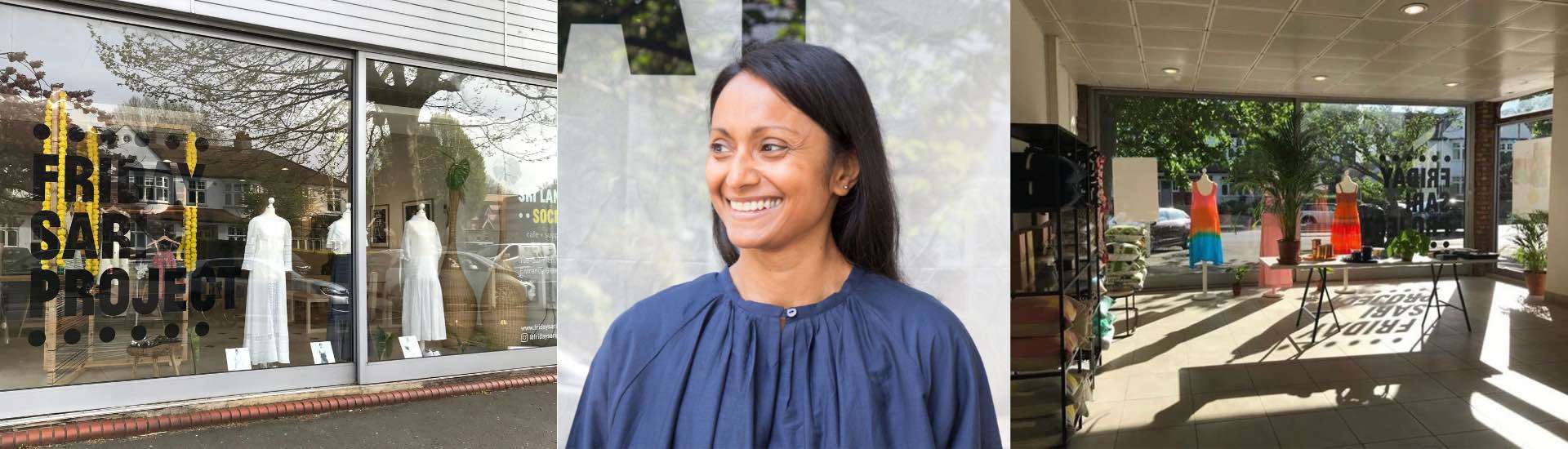
Friday Sari Project founder Mehala Ford is steadily emerging as one of the few independent champions working to secure meaningful international visibility for Sri Lankan craft, often doing so with remarkable personal commitment and, at times, her own financial resources. In a landscape where Sri Lankan makers possess extraordinary heritage skills yet often lack structured overseas representation, Ford’s efforts have become both timely and significant. Through her London-based platform, she is attempting to ensure that Sri Lanka’s handicraft traditions are not merely admired as heritage artefacts, but understood as living, evolving design languages capable of engaging contemporary global audiences.
For many in London’s South Asian design circles, Friday Sari Project is already known as a successful concept store and showroom that has introduced carefully curated contemporary labels from Sri Lanka and India to a discerning clientele. Over the years, Ford has worked with a wide range of Sri Lankan brands, including KUR by Kasuni, ANUK, MAUS, Sonali Dharmawardene and Arc en Ciel batik, the latter through a collaborative relationship with Annika Fernando of PR. Ford also offered space in the store and dedicated the windows to an installation featuring designer Amesh Wijesekera’s collection soon after his graduation, long before his international rise, reflecting her instinct for recognising talent early. Ford was also the only UK stockist for Barefoot clothing, further underlining her long-standing commitment to giving Sri Lankan design visibility in Britain.
That instinct has been shaped by decades in British retail and fashion. Ford began working in retail from a young age and by eighteen was already involved with a German agent representing young British brands. After studying Fashion Promotion at London College of Fashion, she worked at Alexander McQueen in the late 1990s before moving to department store Debenhams, where she helped launch the influential Designers at Debenhams ranges during the height of the British high street era. Later, through a PR agency, she worked in sales and communications for emerging designers and contributed to multiple shows during London Fashion Week.
It is this combination of commercial understanding and curatorial instinct that continues to shape her work today. By her own admission, her favourite area remains emerging designers—spotting talent early and helping nurture it.
That ambition takes an important step forward this May when Friday Sari Project secures a dedicated venue during London Craft Week, at 85 Heath Street in Hampstead, where Sri Lankan craft will occupy a prominent place within a curated week-long programme. Running from 11 to 17 May 2026, the showcase is designed not simply as a sales platform but as a conversation about materials, heritage and future direction.
For Ford, obtaining this space is itself an achievement: a rare opportunity to place Sri Lankan craft within one of the world’s most respected craft festivals, where international collectors, curators and design observers gather to explore innovation rooted in tradition.
The opening preview evening introduces contemporary designers from India and Sri Lanka through collections rooted in handicraft, land and people. Handloom, batik, lace, upcycling and recycled materials form part of the visual narrative, inviting visitors to see how heritage techniques can be translated into present-day design. A curated walkthrough the following day deepens this engagement, allowing audiences to hear the stories behind the materials and methods, and to understand the human labour and regional knowledge embedded in every piece.
For Sri Lanka, this visibility matters deeply. While the island’s traditions in batik, beeralu lace, handloom weaving and natural material craft remain rich, global recognition often comes sporadically and without sustained institutional backing. Ford’s initiative therefore, fills a critical gap. Her programme titled Sri Lankan Craft: Material Memory & Modern Design will focus directly on collections from Sri Lanka and ask how craft can move forward without losing its roots. It will also examine who is currently leading this transformation, highlighting those who are rethinking heritage techniques for modern markets while preserving authenticity.
Beyond the formal showcase, Ford is also actively seeking designers who are keen to present their work in London and whose creative ethos aligns closely with her own curatorial vision. Her interest lies not simply in selecting attractive products, but in identifying designers who understand material heritage, craftsmanship and responsible production in a contemporary context. She is particularly drawn to those whose work reflects authenticity, originality and a clear sense of purpose—whether through handloom, batik, lace, recycled materials or innovative craft techniques. Among the brands she currently champions are Rice & Carry, Old Railway, Source & Supply and Buffalo, all purpose-driven enterprises that create employment and support women within local communities. A designer she especially believes is ready for an international market is Studio Dimitra, whose wearable collections place hand embroidery at the centre of contemporary design.
Another key discussion, Circular Craft: Designing with Waste, reflects Ford’s growing interest in sustainability and social impact. Here, the spotlight shifts to designers and producers turning discarded materials into thoughtfully crafted objects, showing how waste can become both a design resource and a community opportunity. This aligns closely with Friday Sari Project’s wider philosophy: that slow production, ethical making and regional skill must sit at the centre of future fashion and craft narratives.
Perhaps the most significant development is the launch of the Craft Futures Sri Lanka Award, a new initiative created specifically to support contemporary Sri Lankan designers working where craft, sustainability and innovation intersect. The award introduces three categories: the Craft Practice Award for an established designer or studio demonstrating sustained commitment to craftsmanship; the Emerging Craft Voice Award for an early-stage creative voice with originality and promise; and the Purpose-Led Design Award for work centred on sustainability, circular materials or socially responsible production.
The winners will receive fully funded participation in the London showcase, including professional curation, retail opportunities and international exposure—an invaluable opportunity for designers who might otherwise struggle to enter overseas markets. In addition, a limited number of 50 per cent bursaries will be offered to Sri Lankan designers who meet the programme criteria, widening access for those whose work deserves international attention but may lack financial means.
What makes Ford’s effort especially notable is its solitary nature. While larger institutional support for Sri Lankan craft abroad remains limited, she continues to build bridges independently, often carrying much of the financial and organisational burden herself. In doing so, she has become an important cultural intermediary: one who understands both the expectations of international audiences and the complexities facing South Asian makers.
At a time when global design conversations increasingly value traceability, material integrity and handmade excellence, Sri Lanka has much to offer. Through the Friday Sari Project, Ford is ensuring that those voices are heard in London—not as decorative footnotes, but as participants in serious contemporary craft dialogue.
Designers interested in showcasing their work in London can contact Mehala at [email protected]











0 Comments