Nov 04 2026.
views 13The Man Behind the Lens: Capturing Memories, Finding Smiles and Keeping It Real
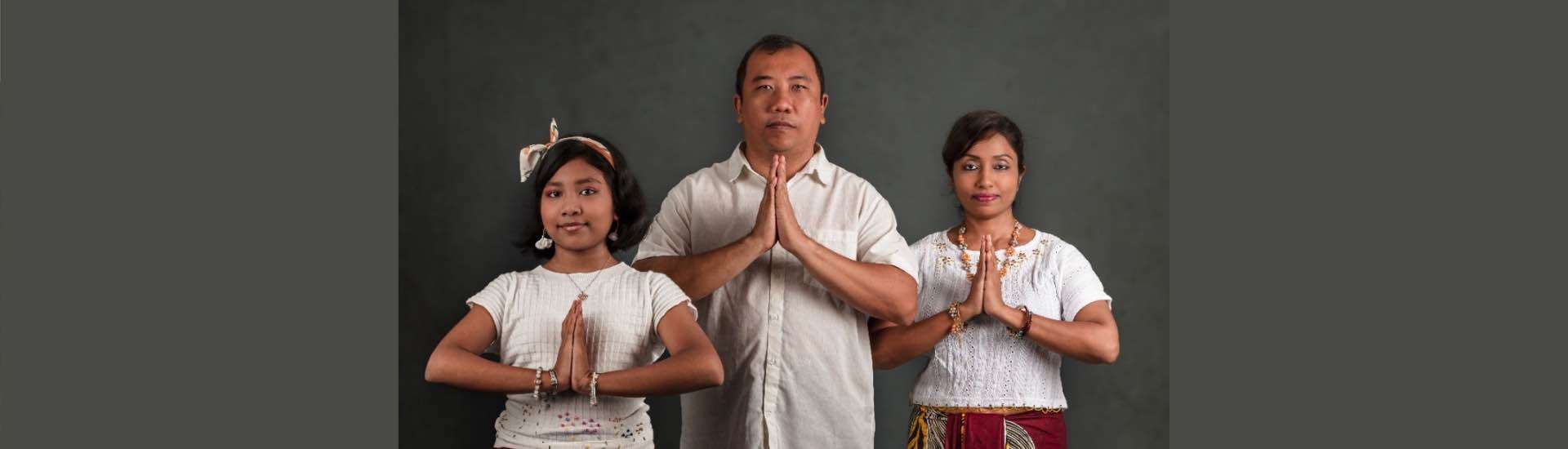
Some people take photographs, while others capture moments that stay with you for a lifetime. And then there’s Tai, a man who manages to do both while making everyone around him laugh!
On a personal note, Tai is one of those genuinely lovely human beings who makes life a little brighter. He is funny, incredibly kind and always ready to support people without asking questions or expecting anything in return. He has a heart as big as his personality, and I have always admired how effortlessly he makes people feel comfortable.
He is also, without a doubt, my favourite Chinese Sri Lankan man! And trust me, that title comes with a lot of affection!
Behind the camera, Tai is a talented photographer with an eye for detail and a passion for capturing people as they truly are. But beyond the beautiful photographs, what makes him special is his ability to connect with people, bring out genuine smiles and turn ordinary moments into extraordinary memories.
For this edition of Buzz with Danu, we get to know the man behind the camera, from his unexpected journey into photography to wedding madness, demanding clients, artificial intelligence and the emotional moments that remind him why he fell in love with photography in the first place.
And naturally, I had a few questions that might have made him wish he was safely hiding behind his camera!
In Conversation with Tai
1. Tai, before we get into the glamorous world of photography, tell me about the boy behind the camera. Were you always the creative type, or did photography happen completely by accident?
I don’t think I was creative at all, but looking back, there were signs. I used to draw, and I loved still life because nothing in it moved.
I also remember fragments from childhood. My aunt brought home a Kodak film camera, and I would take photographs without knowing how it worked. I would just point, click and wind the film with my thumb. My grandfather also had a camera and an enlarger, but by the time I was old enough to understand what it did, it was broken.
Later, I started shooting on a Nokia phone, and then I got my first DSLR while working a nine-to-five job as a gaming administrator. I started photographing events because I loved giving people memories that would live on.
Then the company closed my department, and my general manager gave me a choice: move into web development or try photography, because he had noticed how much I enjoyed it.
I chose photography. So I wouldn’t say it was an accident, but I never really planned it either.
2. You describe yourself as a realist. Now, that’s an interesting word for someone whose job is to make people look their absolute best! How much reality actually survives your editing process?
Truth be told, most of it survives, around 90 to 95 per cent.
When you have a good team behind you, from makeup to styling, there is very little to do in post-production.
Lately, even when I offer retouching, some clients tell me they prefer to keep their bumps and scars because those are part of who they are, and they don’t want to hide them.
In the end, it is completely subjective and depends on the client. So yes, I’m a realist, and so are many of my clients.
3. You’ve photographed weddings, events and all sorts of personalities. Be honest, who is harder to handle: a nervous bride, an overconfident groom or the aunty who thinks she’s the wedding planner?
Every situation has to be handled differently. At the end of the day, my focus is to bring out the best in each person on their special day.
I’ve been in the industry for some time now, so it comes naturally to look after everyone in their own way.
A nervous bride needs calm and reassurance, an overconfident groom needs a bit of humour, and the aunty gets a role, like keeping the family organised for group photographs.
Though the aunty with a clipboard and strong opinions definitely keeps me on my toes!
4. Every photographer has that one client who says, “Make me look natural,” and then proceeds to give you 75 instructions. How do you deal with people who want candid pictures but cannot stop posing?
Before any shoot, I always arrange a pre-shoot discussion, whether through a call, WhatsApp or email, to understand their ideas and what they are looking for.
It also helps me understand their personality, so on the day I can play it by ear.
During the shoot, I include a few of the photographs they have requested, but I also capture the shots I know will work.
If someone keeps posing when they want candid photographs, I start chatting about everyday things until they relax. That is when the natural expressions come out.
Later, I explain why those shots work, and from there, it is just me doing my job as usual.
5. Photography looks glamorous from the outside, but I’m sure you’ve seen absolute madness behind the scenes. What’s the funniest or most unbelievable thing that has happened while you were working?
I was working with a model who I think was new to the industry. She was a very sweet girl.
We did a few photographs, and then I positioned her for the next set and took those too.
After that, I turned away to change the lighting and adjust my camera.
When I turned back, she was still frozen in the same pose, with one leg lifted in the air, waiting for her next instruction!
6. Your clients often describe you as funny and easy to work with. Is humour your secret weapon for getting the perfect photograph, or are you naturally the person who cannot keep a straight face?
Yes, it is part of my secret sauce, and I use it to my advantage.
At the end of the day, everyone is human, and a little humour can break through someone’s seriousness.
Say you want a candid photograph. Are you going to tell someone, “Okay, now laugh like you mean it”? Or are you going to joke about something they are interested in that will genuinely crack them up?
The second one works every time.
7. Let’s talk about the famous Sri Lankan wedding. Have you ever witnessed a moment when you thought, “I really shouldn’t be photographing this, but this is photographic gold”?
Yes, of course. There are lots of moments like that.
One that stands out was between a grandmother and her step-granddaughter. They hugged each other tightly, and it felt so personal that I knew I was stepping into something private.
But it was exactly the kind of moment that mattered.
For me, a photograph worth its weight in gold is one the couple will cherish later in life when they look back on their special day.
8. Everyone has a camera on their phone now, and suddenly everyone’s a photographer! Does that frustrate you, or do you think it has pushed professional photographers to become even more creative?
Technology is changing very quickly, and even a simple phone can be a good camera.
However, there are certain things you cannot achieve with a phone camera.
As a photographer, you need to keep striving to reach a higher level. As you mentioned, it pushes anyone who is serious about photography to become better than they were before.
9. Let’s be a little controversial. With filters, Photoshop and AI making everyone look ten years younger, twenty kilos lighter and practically unrecognisable, are we losing the beauty of real photography?
Ha! Good question.
I don’t think we are.
Most people who use these filters and AI tools love them because they are quick and easy, and many of them have never needed a professional photograph.
For what they want, AI can get close enough, so it is serving a different need.
I don’t believe it is replacing real photography.
10. What’s the most ridiculous request you’ve received from a client? And have you ever had to politely explain that you’re a photographer, not a magician?
“Can you make sure I don’t have a double chin and make me look like the photograph that was taken in 2015?”
11. People see the final beautiful photograph but rarely the effort behind it. What’s something about your profession that you wish people understood, especially when they question a photographer’s price?
You are not paying for the click. You are paying for the thousands of shoots that came before it.
Knowing where to stand, how to read the light and how to relax a nervous person is what allows me to deliver good photographs consistently, even when conditions are not ideal.
12. You’ve spent so much time capturing other people’s happiest moments. Has there ever been a photograph or an experience that genuinely moved you emotionally, even after you put the camera down?
At an event, a woman I didn’t recognise came up to me and started talking.
A year before we met, I had taken a photograph of her and her father at another event.
She told me her father had passed away that year, and that photograph was the only one she had of the two of them together.
It was emotional for both of us.
I didn’t know what to say, so I just thanked her.
I had taken that photograph as part of a normal day’s work, and it had become something irreplaceable for her.
That moment stayed with me long after I put the camera down.
13. Let’s talk about competition. In Sri Lanka’s creative industry, do photographers genuinely support one another, or is there a little jealousy, copying and silent competition happening behind those friendly Instagram comments?
I can’t speak for everyone because I don’t see other photographers as competition.
The only competition is with yourself, making sure you are a better photographer than you were an hour ago.
For me, the community has been supportive. Many photographers helped me when I needed it, and I would like to do the same for others.
I would happily invite any photographer to copy me and replicate what I have done.
By going through that process, they will start changing things and adapting them to their own preferences. Eventually, they will find their own style.
14. You’ve made a career out of observing people. What has photography taught you about human nature, relationships and the difference between the person someone presents to the world and the person they really are?
What I have noticed is that when most people step in front of the camera, they go into a set routine: a practised pose and a laugh that isn’t genuine.
It is what they think a photograph is supposed to look like.
But once we start chatting about everyday things, they open up. Their real character comes out, and with it, a genuine smile.
That is the photograph I am looking for.
The person people present to the world is often a performance, and the real person shows up when they feel comfortable enough to stop performing.
15. Finally, Tai, you’ve captured so many people and so many memories. But if someone were to turn the camera on you today, what would you want that photograph to say about the man you’ve become?
I would want it to show a genuine smile because that is what I have spent my career looking for in other people.
I would want it to say that I am grateful for how things have turned out, grounded and humble about it, and happy.
I would also want it to show someone who is patient, confident and keen to help others because plenty of people helped me along the way.
I don’t think I’m finished, but I like the person I’ve become.




0 Comments