Dec 17 2025.
views 646It’s the season of sparkle, good conversations, and even better company, and today on Buzz with Danu, I’m chatting with someone who makes brands shine all year round, and a man with a heart of gold.
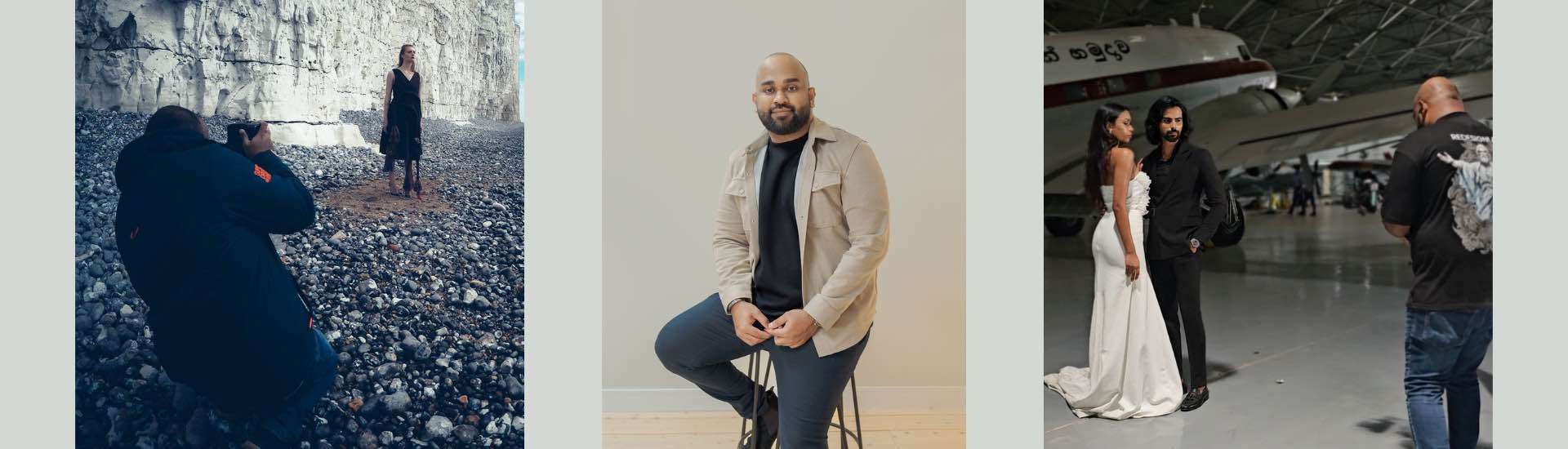
Panduka Ekanayake is a creative thinker, a marketing mind, and someone who knows how to turn vision into visibility. From fashion to faces that travel the world, we’re talking creativity, confidence, and why Sri Lankan talent deserves a bigger spotlight with a little festive cheer thrown
Q1. Panduka, you're known both as a creative force and a marketing mind. How do you balance those two identities — the artist and the strategist?
For me, the creative eye came first. I grew up with photography, drawing, and visual work, so I read brands through emotion and image before anything else. The strategy follows the feeling.
I start with what the brand should make people feel, then I build the data, the structure, and the positioning around that. My creative instincts lead the direction, and the strategy keeps it grounded.
People often see the visual side of my work before they see the research and planning behind it, but both parts work together. One gives clarity, the other gives intention.
Q2. You've worked with multiple global and Sri Lankan brands. What has that exposure taught you about how the world sees Sri Lanka as a market?
The biggest lesson is understanding the difference in approach. Sri Lankan creators often lead with craft and hope the commercial follows. European and UK brands lead with positioning and build the craft around it. Neither is wrong, but understanding both gives you an edge.
Working with brands like Vivienne Westwood, Ferragamo, and Sézane in Europe, then coming back to work with Sri Lankan designers like Indi Yapa Abeywardena, O:LIVE couture, LCY and Spa Ceylon — you see the gap isn't quality. It's sequencing. The craft here is exceptional. What's often missing is the strategic framing that makes international markets pay attention before they've even seen the product.
Sri Lanka doesn't lack talent. It lacks visibility. The pool is small, but the quality is high. My role has often been bridging that gap.
Q3. LCY has been one of your longest personal projects. How has the brand evolved under your creative direction?
LCY has always stood for Legacy at its core since 1997. Over the last three years, we've stopped treating that as a secondary identity and started building around it properly.
When I took creative control, the product was strong, but the perception didn't match. The brand needed repositioning, not reinvention. I rebuilt the visual language, tightened how we present collections, and elevated the entire communication — from campaign photography to how we speak to customers.
We've moved to a price point three to four times where we sat in 2019, and we're holding those sales. That shift doesn't happen through marketing alone. It happens when product, positioning, and presentation all align.
2026 is about taking that foundation further. Three years of refining what Legacy stands for — now it's time to push into the markets that appreciate what we're building.
Q4. You recently joined Panthera Management Agency as a Director. How does your marketing expertise strengthen the talent you represent?
My background is brand building, visual direction, and long-term strategy. So when I work with talent, I don't look at them as "models" — I look at them as brands. I build their identity, their visual language, and the way they present themselves in different markets.
A lot of models have the look, but they don't always have a clear direction. That's where marketing becomes useful. I can help them understand how to position themselves, how to communicate, and how to attract the bigger clients. Panthera already has strong talent. My role is to refine the narrative, sharpen their image, and make sure they're ready for international standards.
Q5. Let's talk about Elina Gunawardena. A video you shot changed her life and launched her into the international modelling scene. Did you feel, even then, that she was 'global material'?
Elina was already part of Panthera before I joined. I met her on a shoot down south, just a simple creative project. I edited it in my style to bring out the emotion, posted it, and it caught attention on Instagram.
Ford Models Paris saw it, reached out to Panthera, and things moved quickly from there. She signed with them and within weeks was walking Paris Fashion Week — Chanel, Hermès, Isabel Marant, Dries Van Noten, Rabanne. She opened Isabel Marant. That's nine shows in one season.
I can't take credit for her rise. The team on that shoot helped create something that let both of us shine, and Elina did the rest. What I remember from that day was how grounded she was — calm, present, aware of herself even when she wasn't posing. That quality translates internationally. You can't teach it.
She's carrying Sri Lanka onto stages that most models never reach. That's her achievement, not mine.
Q6. What is your personal formula for spotting star quality — whether in a brand idea or a human being?
Authenticity that doesn't need to announce itself.
With people, I look for presence without performance. The ones who go furthest aren't always the loudest or the most polished. They're the ones who are grounded in who they are. You can't manufacture that. Elina had it. You feel it when someone walks into a room and doesn't need to prove anything.
With brands, it's similar. I look for the truth at the centre. Something real that the business actually believes, not just a marketing line. When that core truth exists, my job is to find it and make it visible. When it doesn't exist, no amount of creative work will save it. I've turned down projects because the foundation wasn't there.
Q7. You're someone who understands global branding deeply. How do you plan to position Sri Lankan talent on the international stage through Panthera?
Sri Lanka has strong faces, but not enough visibility. The market is small, so the same models end up working across many brands. It limits how far they can go and how far the brands can go.
Our aim at Panthera is to widen that pool. We're bringing in new Indian and European faces to Sri Lanka to give brands more variety, and at the same time, creating a clearer roadmap for Sri Lankan talent to move outward.
We want Sri Lankan models to be represented with the same structure, consistency, and preparation that global agencies expect. It's not about comparing them to other markets. It's about giving them the tools to stand beside them.
Q8. What do you think Sri Lankan creators and models need to work on the most if they want to compete globally?
Consistency and self-investment.
The talent is here. What's often missing is the discipline to maintain a standard over time. International markets don't just want one great shoot; they want reliability. They want to know that if they book you, you'll deliver at the same level every time.
The other piece is understanding your own value. Too many Sri Lankan creatives undercharge or over-deliver without building equity in their own brand. You have to treat yourself as a product. Invest in your portfolio, your presentation, and your network. No one else will do that for you.
Q9. Your work spans storytelling, production, branding, and now talent management. What is the common thread in everything you do?
Elevation.
Everything I do comes back to taking something with potential and making it visible at a higher level. Whether that's a brand that needs repositioning, a collection that needs the right visual language, or a model who needs to understand their own value — the work is the same. Find what's real, refine it, and present it in a way that commands attention.
My background in luxury has shaped that. I've spent years working with brands and clients who understand that quality isn't just about the product — it's about how you present it, how you communicate it, how you make people feel when they encounter it. That thinking applies whether I'm directing a campaign, building a brand identity, or helping talent understand their positioning.
I don't separate creativity from strategy. They're the same discipline applied to different problems.
Q10. Panduka, looking forward to what's next? Bigger brands? More global models? What's the dream?
The next chapter is regional. India and the UAE are both markets where I see real opportunity, not just for Panthera, but for the kind of strategic creative work I've built my career on.
There's a gap in these markets between brands with serious budgets and people who can bridge creative and commercial thinking at an international level. That's where I want to operate. Taking the approach I've developed with Legacy London, with the UK brands I've worked across, and applying it at a larger scale.
For Panthera, the goal is clear: to become the bridge between South Asian talent and global opportunities. Elina walking for Chanel and Hermès is proof that the talent is here. The job now is building the pathway so she's not the exception.
For me personally, it's about influence at scale. Not just one brand or one territory, but shaping how South Asian creativity gets positioned on the world stage. That's the part I'm building towards.







0 Comments