Mar 04 2026.
views 411On Buzz with Danu today, we’re celebrating a brand that feels deeply Sri Lankan not just in fabric, but in spirit.
Common Folk is not just about handloom. It’s about heritage, innovation, and keeping the true essence of Lanka alive while pushing it confidently into the future. In a world where fast fashion moves quickly and traditions fade quietly, this brand has chosen to do something brave protect our craft, honour our artisans, and still make it cool.
From yarn to waterproof sneakers, from village looms to fashion week runways, Common Folk proves that tradition doesn’t have to stay in the past. It can evolve. It can surprise us. It can even lead global conversations.
I genuinely think this brand is amazing because it respects where we come from, while boldly asking — what can we become?
This is heritage with a heartbeat. This is innovation with soul. This is Common Folk.
1. What inspired you to start Common Folk, and what gap did you see in the Sri Lankan handloom space?
I was introduced to the handloom industry in 2016, and what immediately fascinated me was being involved in the creation of art from yarn to finished fabric. I’ve always loved being part of every step of a creative process, and handloom allowed exactly that.
During my early years working with artisans, many spoke about declining orders and reduced interest in handloom. They struggled to keep the craft alive due to limited exposure and innovation. I wanted to understand why this was happening.
I chose to focus my master’s dissertation on this issue and discovered that although Sri Lanka’s handloom capabilities had improved, export value had drastically declined. The biggest gap I saw was a lack of innovation. The craft was preserved, but it hadn’t evolved.
Common Folk was created to bridge that gap — combining heritage craft with contemporary technology. Through years of research and development, we experimented with apparel-industry technologies to transform handloom into multifunctional materials. Our goal is to inspire innovation within the heritage craft community while keeping its integrity intact.
2. The name “Common Folk” is powerful. What does it represent?
“Common Folk” refers to everyday people without rank or status. Throughout my journey, it was the so-called ordinary people who helped bring this brand to life — artisans, innovators, supporters.
From the weavers who taught me their craft to industry experts who guided us, I learned that we are all common people. But when we collaborate, we create something extraordinary.
The name is a tribute to community, collaboration, and collective innovation.
3. How do you make something as traditional as handloom feel contemporary?
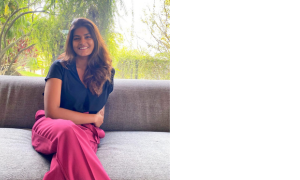
Handloom is considered an intangible heritage in Sri Lanka. We respect its non-negotiables: the artisan and the non-mechanical weaving technique.
Innovation begins without compromising those two elements.
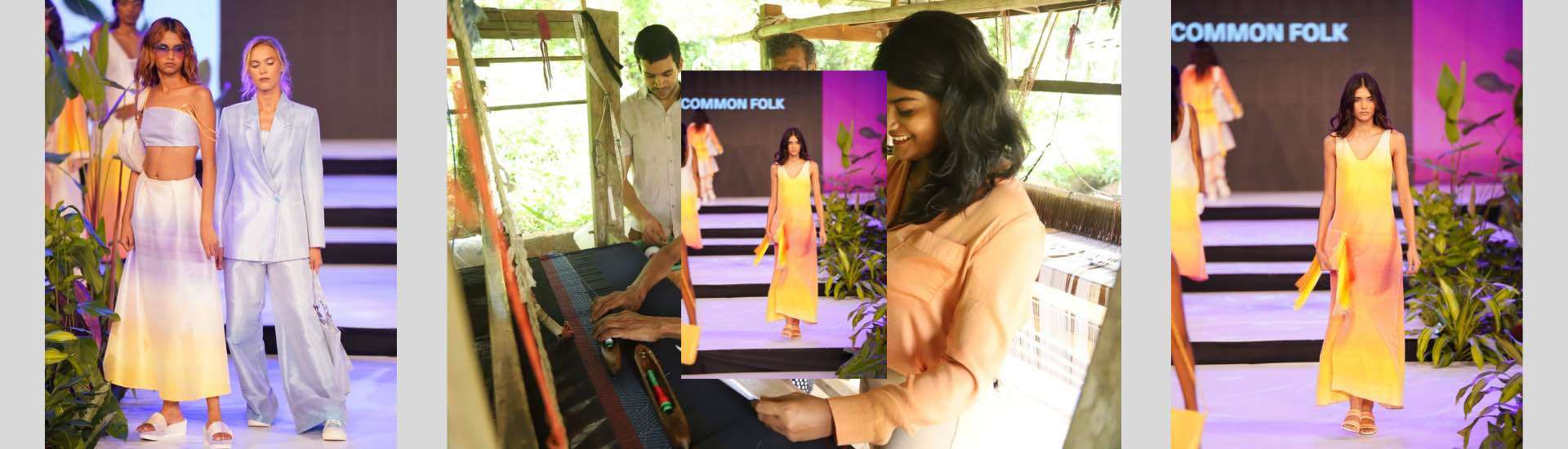
Traditionally, handloom fabrics feature stripes and uniform patterns. We experimented extensively to blur those lines and create seamless colour gradients. That’s how our signature Ombre handloom was born.
We also use premium threads and unexpected applications — such as footwear and contemporary accessories — to reposition handloom beyond sarees and cushion covers.
4. Sneakers made with handwoven fabric is bold. How did that happen?
It began almost by accident.
We developed waterproof handloom fabrics and showcased them at Mercedes-Benz Fashion Week Sri Lanka in 2018. The collection was contemporary and bold, and traditional footwear didn’t match the aesthetic. So we created sneakers using scrap handloom fabric.
The response was overwhelming.
We refined the waterproof technology, ensured durability, partnered with the right manufacturers, and officially launched our handloom sneakers. They became a defining product for the brand and demonstrated how versatile handloom can be.
5. What does innovation look like in your process?
Innovation happens in two stages.
First, at the weaving stage — through new designs, yarn experimentation, and weaving techniques. Our Ombre method is an example, where we created a seamless colour blending technique.
Second, after weaving — where we apply apparel-industry technologies such as bonding, lamination, and finishing to enhance functionality. We work with technology providers and testing facilities to ensure quality.
Our waterproof handloom fabrics are a result of this process.
6. Who are the artisans behind your fabrics?
From the beginning, I’ve worked closely with Latha Gnanawathi from Madampella and her husband, Uncle Bandula. Since 2015, they have welcomed me into their home and helped experiment with techniques that shaped Common Folk.
They are at the heart of our brand.
Our community also extends to technology providers, manufacturers, retail partners, and customers. Common Folk is built on collaboration.
7. What’s the biggest challenge in making handloom “cool” for younger audiences?
Younger audiences respond first to trend and functionality. If a product feels current, they engage.
But once they learn about the story — the artisans, the heritage, the impact — they connect more deeply.
We use contemporary products to demonstrate that handloom belongs in modern life.
8. How important are platforms like MBFW Sri Lanka?
Extremely important.
Craft-based brands often struggle to stand out. Platforms like MBFW Sri Lanka provide visibility, credibility, and networking opportunities without excessive cost. They helped us connect with customers and retailers and showcase innovation confidently.
9. How do you balance sustainability, quality, and pricing?
Handloom is inherently sustainable and zero-carbon at its core. While technology additions reduce that slightly, we counter this by sourcing locally and manufacturing within Sri Lanka.
Handloom also embraces imperfections — minor missteps are not defects but proof of craftsmanship.
The biggest challenge is cost sensitivity. Innovation increases production costs, but customers may hesitate to pay more. We prioritize fair artisan compensation while continuously working to balance traditional and modern cost structures.
10. Is Common Folk just a fashion brand, or something bigger?
We use fashion as a vehicle.
At its core, Common Folk is a handloom fabric development brand. We innovate materials for fashion, interiors, and beyond — including waterproof furnishing fabrics.
Our mission is to inspire a culture of innovation within heritage crafts and ensure these industries thrive for generations.
11. What has been your proudest moment?
Incorporating Common Folk (PVT) Ltd in 2022 was significant — it allowed us to work with world-class technology providers.
Launching our sneakers was another milestone, especially when they entered retail stores.
Showcasing our Freedom Ombre collection at MBFW 2024 and partnering with Isle of Rataa were also defining achievements.
12. Where do you see Common Folk in five years?
We aim to expand globally — if not retail internationally, then at least exporting our fabrics.
We also plan to create a handloom experience workshop to train the next generation of weavers, blending traditional knowledge with innovation.
Our vision is a global community of innovators uplifting heritage crafts.








0 Comments