Feb 13 2026.
views 20By Tina Edward Gunawardhana
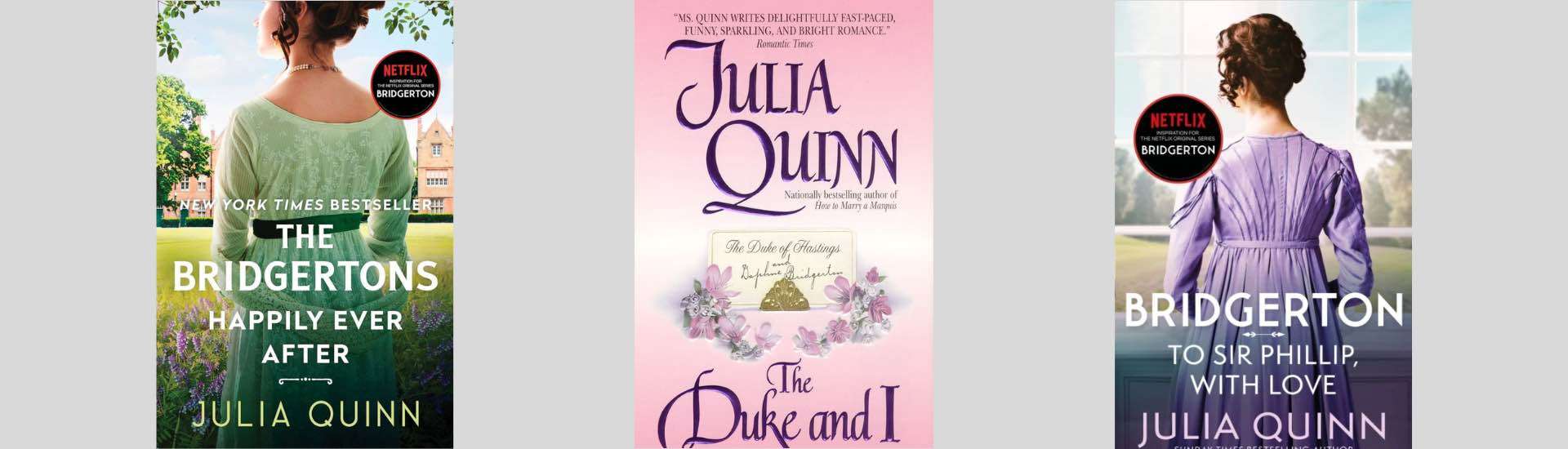
When Julia Quinn landed in Sri Lanka for the first time this week, it marked the fulfilment of a long-held dream. The bestselling author of the Bridgerton series is in Colombo for the HSBC Ceylon Literary & Arts Festival (CLAF), where she will appear in conversation in sessions including “The Bridgerton Way.”
Though widely travelled, Quinn describes this visit as particularly meaningful.
“I’m eager just to soak it all in,” she says. While she enjoys sightseeing, she explains that her favourite travel experiences are those that allow her to sit down and speak with local people. “That’s what I get to do at the Ceylon Literary & Arts Festival, and I’m so looking forward to it.”
This is Quinn’s second visit to South Asia, but her first time attending a literary festival in the region. She is especially interested in understanding the role books and reading play in people’s lives here. “I’m eager to learn about how books and reading play a part in people’s lives,” she says, noting that literary festivals offer a different kind of cultural exchange than traditional tourism.
At CLAF, Quinn joins writers from across genres and literary traditions. Best known for her Regency-era romances, she is aware that her genre is sometimes dismissed as light reading. She challenges that perception directly.
“I have found that those who dismiss romance as nothing but silly fluff have never read a romance,” she says. “Nor have they taken the time to speak with or listen to a romance author.”
Quinn is realistic about expectations. She does not assume that everyone she meets will become a romance reader. However, she hopes conversations at the festival will shift perspectives.
“I don’t expect everyone I speak with to suddenly decide to pick one up,” she says. “But I do hope they will come away with the understanding that there is great value in a novel that celebrates love and happiness, that emphasises that we are all worthy of love and respect.”
Since the global success of the Bridgerton television adaptation, Quinn has found herself addressing a younger and more diverse international audience. Despite that visibility, she says her message about the genre has remained consistent.
“Not really,” she replies when asked if she feels a responsibility to speak differently about her craft now. “I’m aware that because of Bridgerton I’ve become something of a spokesperson, but I’m generally saying the same things I’ve always been saying: romance novels are important.”
She argues that the genre plays a significant cultural role. “They are the reason millions of women choose to read instead of turning on the TV. And that is always a good thing.”
Although her novels are set in Regency England, Quinn believes their themes resonate globally. Love, family, hope and belonging are not bound by geography.
“It’s what most people want out of life. Love and family,” she says. While readers may not identify with the wealth or beauty of her fictional characters, they relate to their emotions. “We can relate to their hopes, dreams, and fears. This allows us to see ourselves in worlds that are fundamentally different from our own.”
Appearing at a South Asian literary festival has also prompted reflection. The Regency period she writes about was a time of aggressive British colonial expansion, including in South Asia. Quinn acknowledges that history.
“I write books set primarily in Regency England, which was a time of rampant colonialism,” she says. “I’m eager to learn more about how this history still lingers in the region, and how authors like me can write more sensitively about it.”
Her connection to Sri Lanka, however, began long before her writing career.
“My nursery school teacher was from Sri Lanka,” she recalls. “She wore a sari every day, and I thought she was the most beautiful woman I’d ever seen.”
Growing up in Connecticut in 1973, Quinn says her community had very little immigration and few non-European residents. Having a Sri Lankan teacher at such a young age made a lasting impression.
“That I was taught at such a young age by a woman with brown skin, a woman who wore non-Western clothes, was a gift,” she says. While she cannot say definitively whether it shaped her writing, it certainly shaped her worldview. “Ms. Silva taught me to yearn for far-off places, to wonder about other cultures, simply by sitting at a table with me and teaching me numbers.”
She does not know how to reconnect with her former teacher, but says she wishes she could tell her she has finally visited her homeland.
Quinn also believes festivals like CLAF are increasingly important in a fast-paced digital age.
“Reading is, by definition, a solitary exercise,” she says. “But literary festivals offer a place for readers to come together as a community. They provide an opportunity for connection we don’t always find in everyday life.”
As for aspiring writers attending the festival, particularly those from Sri Lanka and the region, Quinn is careful not to position herself as an authority on navigating global markets from a South Asian perspective.
“Honestly, I don’t know,” she says. “I think a South Asian author who has experienced global success would be far more qualified to answer this question.”
However, she does offer broader advice. “There is no one ‘right’ way to write a book,” she says. Some writers create detailed outlines; others begin without a plan. “What works for me may not work for you.”
Writing, she adds, requires patience and persistence. “It may take time to find your process and method. Writing isn’t easy. But it’s worth it.”
For Quinn, this first visit to Sri Lanka is about more than a festival appearance. It is about conversation, reflection and connection — values that, much like the love stories she writes, continue to resonate across borders.









0 Comments