
- Do you think that you have been able to make a change for women's equality - 'To break the Bias' and if so how did you achieve this?
- What more do you think needs to be done by both men and women to achieve a sustainable world, free of bias, stereotypes and discrimination, where difference is valued and celebrated?
Maud Meijboom-van Wel, Managing Director, HEINEKEN Lanka
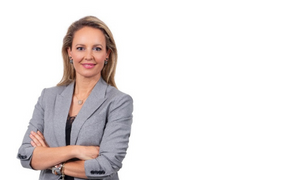
In all my teams I try to create a high performing environment of inclusivity, for both men and women, from all different backgrounds, people that walk the talk. Talent is about behaviour, people that go the extra mile, that have courage. Very often people who have faced more adversities bring exactly that courage and perseverance to the table. In Sri Lanka, I am honoured to lead the MT of HEINEKEN Lanka which has a 66% female to male ratio.
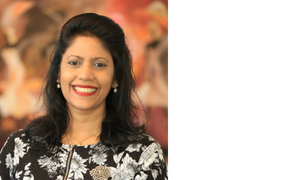
Much more needs to be done to sensitize Boards that bringing women onto their Boards and into management is SMART business. All research indicators portray a positive correlation between inclusivity of women and organizational performance in terms of financial metrics, risk management, corporate social responsibility etc.
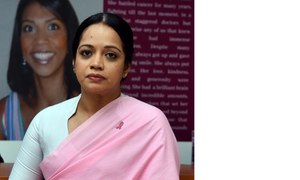
The majority of stereotypes and discrimination we see in our world stem from the lack of understanding and education. It’s extremely important that both men and women work to educate themselves on the unconscious biases that have been rooted within us by society.
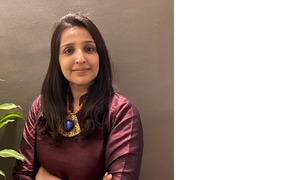
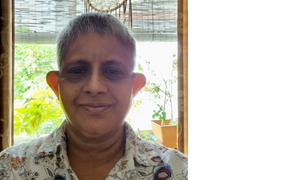
Every human being needs to create a conscious habit of mutual respect, be it at school, workplace or in society. Everyone has strengths that can add value, whilst weaknesses can be overcome. If we can create awareness for this, need of mutual respect and the right for equal opportunity the world will be a better place.
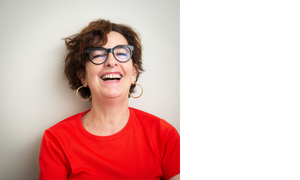
It starts with education at school giving a place to each of us, respecting each other, feeling empathy instead of judging. Parents are also responsible to teach these values, we tend to forget, to their children. It is important to start at ground level to meet different human beings such as migrants, disabled, LGBT, old people, poor people, minorities. To break the distance. To be in the world with our eyes open and to be the other.
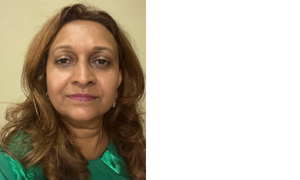
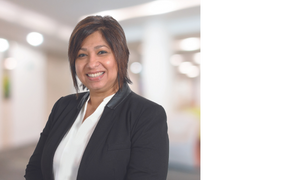
Women’s empowerment is a critical aspect of achieving gender equality. It includes increasing a woman’s sense of self-worth, her decision-making power, her access to opportunities and resources, her power and control over her own life inside and outside the home, and her ability to effect change. Upskilling and reskilling the female talent pool in the workforce is also a critical aspect and one that we focus on through the SLASSCOM Academy where most programmes are offered at no cost. SLASSCOM’s WTECH Forum brings together the tech women of our industry working in a voluntary capacity to impart their knowledge, experience, and time and above all their passion, commitment and focus to enable women entrepreneurship and female leadership.
Director, Heart Aid Center. Sajeira together with her husband, launched “The Heart Aid Center” (HAC) in February 2019, under the Sisili Group of Companies, as the Group’s first foray into privatized healthcare services.
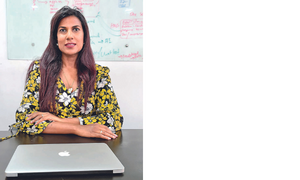
As a collective in Sri Lanka, we need to create an environment encouraging the economic self-sufficiency of women by helping them leave behind traditional cultural boundaries to establish their heart’s desire in the business world. One such way is to normalize standardized daycare. Whilst some of the bigger companies already offer such amenities, the backbone of Sri Lanka (ie. the SMEs) still do not have access to quality daycare. An idea is to collaborate with other similar geographically located medium/small-sized companies and set up a daycare facility that can be partially subsidized by the company. This will promote less of a #genderbias which exists when the question of hiring a newly married young woman arises due to the fear she will not return after giving birth. If the company itself can provide a solution at the outset – then it can hire without any #genderbias.
Visakha Tillekeratne
Development worker and activist for over 30 years, she is a Chemist and Food Technologist by profession. She was also the Chief Commissioner of the Sri Lanka Girl Guides Association 2017 to 2020.
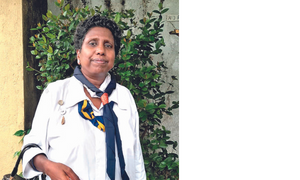
Eleven women have petitioned the Supreme Court, including myself, invoking fundamental rights enshrined in Articles 12(1 & 2) and 14(1)(g) of the Constitution to protect Excise Notification 02/2018 of January 10, 2018, from amendment and/or revoking. The said Notification which turned back the Excise Notification No 666 of 1979, permits women to purchase alcohol and to work in places where alcohol is sold. Following the issuing of the Notification, President Maithripala Sirisena announced that he would revoke it. Yesterday the cabinet of ministers unanimously decided to withdraw the Gazette notification on extending business hours of liquor shops and allowing females to buy or sell liquor.
The petition was filed by Nishanthi Bandaranayake, MDJB Fernando, Samanalee Fonseka, M.D. Chandima Ravini Jinadasa, Deepanjalie Abeywardana, Sabrina Esufally, Sharanya Sekaram, Randhula de Silva, Meneka Galgamuwa, Sujatha Gamage and Visakha Tillekeratne. This is just one example of my activism.
Work with children as young as 5 years up to 18, where they are keen to follow the correct path. But we adults pollute their minds and their values. If gender equality and equity are to be achieved, teach both girls and boy children to respect each other, share chores at home, not to be violent, to be able to communicate and resolve problems, and to protect the environment - TOGETHER.
Renu Samarasinghe
Renu is the National Representative for Trinity College London in Sri Lanka. She is also a Director of The Polytechnic Pvt Ltd, a tertiary and vocational education centre that has serviced the youth of Sri Lanka for over 100 years.
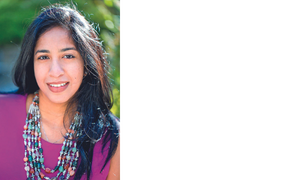
Yes, when I first entered Bristol University to read Mechanical Engineering I experienced a lot of unconscious gender bias. Not only from friends and family who were surprised at my choice of degree but when I arrived at University too. I was one of just eight females out of a class of 80 Mechanical Engineering students. This was a surprising statistic to me from the get-go. I was then informed that the percentage of women who dropped out of an engineering degree was very high. True to the fact it happened in my class too, with finally only four out of the eight of us - a dropout ratio of 50% - women ending up graduating with an Engineering degree. The problem was not the difficulty of the degree. It was the fact that especially the lab work, was heavily weighted towards the success of the men in the class. It was completely unconsciously done. I was adamant to stay my course, not only because I was passionate about my degree, but also as an added advantage I wanted to prove to myself that I could do it like a woman!
Women and men in the workplace and in all environments have to make a conscious effort to stand up for gender equality. There are steps that an organization can take to consciously stop gender bias and it’s important to have them as formal rules. If formal rules are established it becomes more difficult to stray from them. I also strongly believe in the importance of encouraging and creating opportunities for girls in the education system who want to pursue STEM. It’s about time that we start changing the female dropout rates in STEM programmes in schools and in Universities!
Director Aitken Spence PLC Head of Tourism and Leisure Chairperson Aitken Spence Hotel Managements (Pvt) Ltd
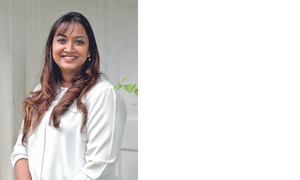
I understand that being in a leadership position is a significant responsibility as well as an opportunity to influence change. At Aitken Spence, our collective effort is always to enable an equal playing field for everyone to access opportunities. Our female representation is at roughly 27% in senior management and 40% in the overall workforce. We invested Rs. 70 million to open a safe, well-equipped ladies’ accommodation facility at our most iconic property in Sri Lanka, Heritance Kandalama. The parents and families of the female staff were invited to the opening to see for themselves where their daughter, sister or wife is going to stay. These are just a couple of examples, and we have several in the pipeline to promote an inclusive, performance-based, and values work-life balance.
I believe the most important change we still need to work on as communities are to change how we think and what we accept as normal. I feel that we often confuse ‘average’ with ‘normal’ and that is where the stereotyping and associated bias begins especially unintentional bias. Awareness of equality from a young age for both boys and girls can influence a generation where women are empowered to reach greater heights in whatever they choose to do.
BSc (Hons), UK Registered Midwife with over 16 years of clinical practice and former Midwifery lecturer at Oxford Brookes University.
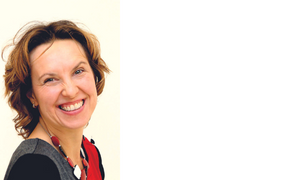
Of relevance to #BreakTheBias is me trying in a small way to use my passion, experience, and skills for the benefit of local women and their families; to give them choice, to give them a voice and to encourage health professionals to see them with increased compassion.
I facilitate specifically designed interactive workshops at the invitation of the government and private establishments to remove blind spots and help doctors, medical students, midwives, and nurses to have increased awareness of the impact their conduct has on childbearing women and understand how compassionate care makes such a difference.
Going back to the basics of humanity where each one of us continually reflects on our behaviour as part of everything we do and treats ourselves and everyone around us with kindness and respect as equals. Look outwards, not inwards and celebrate that diversity is strength. History teaches us how dangerous it is not to do this. When the young see all adults role modelling kindness and respect, they will follow.
Guest Relations Manager, Fort Printers Hotel, Galle Fort.
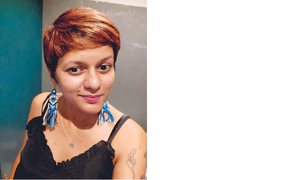
I think to some degree I have because I’m very vocal about the issues faced by women in many spectrums and encouraging women especially out of Colombo, to speak up when they feel they are being treated unfairly. As someone in the hospitality sector, whenever I meet with people higher up, I always stress how we need more women in hotel operations because we simply don’t have enough. And many don’t join because they don’t feel safe. Big hotels train staff to respect each other, but out of Colombo you don’t see that very often, thus they end up at home. I also use my social media spaces both IG and FB to create awareness on issues faced by women, the injustices we face, and how much the system has failed us primarily due to patriarchy.
It starts at home. Parents must teach kids from as young as kindergarten age to respect each other. No means no. The fact that boys can be sensitive and it’s OK to cry. That bullying even if it’s seen as ‘teasing’ is wrong. We live in a patriarchal society that teaches boys it's ok for ‘boys to be boys’ and girls are meant to be wives and baby-makers. We don’t teach our daughters they can become engineers, CEOs, or even entrepreneurs. We teach them that – girls are meant to be teachers, doctors, and nurses. ‘girly’ jobs. Change begins at home.
Director – Ninewells Hospital
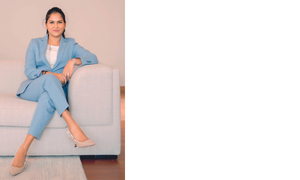
As a pioneer in women and childcare, we constantly strive to advocate women’s equality as well as equity in all that we do, from our recruitment processes, appraisals, promotions, and everything in between. With women making up nearly 75% of our workforce, we understand that men and women are different and that their circumstances are different. Therefore, our goal is to always level the playing field for all of our employees. This could mean a nursing mother being given the opportunity to work flexible hours while the rest of her team fills in for her during her absence, or a single parent being given the opportunity to attend to their child’s needs more often without being penalised for it.
I believe that the change and shift in the narrative we’re striving for should start at home, and within the smallest building block of society – family. A family where the husband and wife play equal roles in raising their children, doing the house chores, and providing for the family, is more likely to build a healthier, more balanced, and sustainable home environment over time.
Currently serves as the Vice President of Human Resources at Virtusa where she is responsible for HR tech automation globally
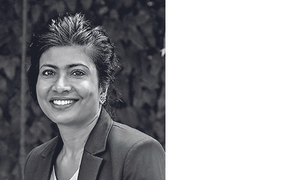
Throughout the years I have spent my time coaching and mentoring young girls and women during multiple touchpoints in their lives. I believe we need to create awareness in the entire ecosystem to really #breakthebias. I am fortunate to have been involved in many initiatives across multiple associations, such as the Lankan Angel Network, The Sri Lanka Association for Software Services Companies (SLASSCOM), The American Chamber of Commerce in Sri Lanka (AMCHAM), and the Association of HR Professionals (AHRP), to work towards gender equality. These organizations have been, and are focused on gender equality and there’s some amazing work that’s being done.
Organizations moving towards enabling all processes with technology, using AI, predictive analytics, etc. will definitely help us move away from human biases that come into play specifically during resume selection, hiring, promotions, and even right throughout an employee’s journey in the organization. Also, progress data must be broken down into bit size initiatives and measured in a transparent manner- because what gets measured, gets done. This will help inspire women and educate men, on how they can play their part in supporting gender equality in the workplace.
Currently serves as the 1st Vice Chairperson of the Women’s Chamber of Industry and Commerce (WCIC). She is also the Managing Director of Macbertan (Pvt) Ltd a Manufacturing Company which is a Subsidiary of McLarens Holdings Ltd.
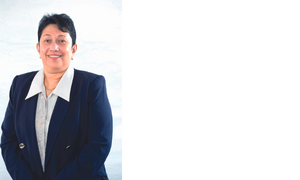
At the Macbertan Factory, we have employed women wherever possible in Finance, Production, and Quality Control. We have found them to be skilled, dedicated, and loyal even during the challenging times which we face today due to the Covid pandemic. In my personal capacity, I was elected to serve as the President of the Classic Car Club of Ceylon, which is the local representative of FIVA the International governing body for Classic Cars. I believe I was the First Lady to be the President of a Motoring Club in Sri Lanka.
I believe gender should never be an issue, especially at workplaces. As selection and promotion criteria both men and women involved in decision making should consider the candidates' dedication, efficiency, and past performance as the criteria. If we can collectively canvass this, starting from our own workplaces, and other environments which we have access to, in the future we could be celebrating a gender bias-free world.
Former War Crimes Prosecutor/ Senior Counsel, is the first Sri Lankan woman to serve as an international war crimes prosecutor. She also has the distinction of co-drafting one of the most important pieces of legislation of recent times, the Office on Missing Persons Act No.14 of 2016 passed by Parliament in 2016.
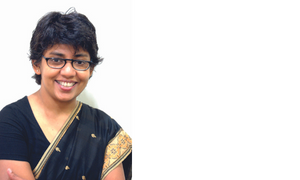
There should be well thought out reforms and changes at every level if we are to achieve a tangible difference - law reforms, policy reforms, educating and sensitizing the Police, the Security Forces and the bureaucracy re equality and equal rights, sensitizing children on equality through school curricula, and of course, we need more female cabinet ministers and parliamentarians. And I also think particularly for Sri Lanka’s patriarchal society, the terms “culture”, “tradition”, “values” and “ethics” need to be clearly and loudly defined and explained so that those words are not bandied around to purportedly justify patent inequality.






Comments (0)
Leave Comment